Aesthetic Attraction, Sensual Attraction and the Other Pulls You Feel
What aesthetic attraction and sensual attraction feel like, how to tell them from sexual attraction, plus platonic, alterous and newer terms like asensual.
General education, not medical advice. If something here worries you, talk with a clinician.
Table of Contents
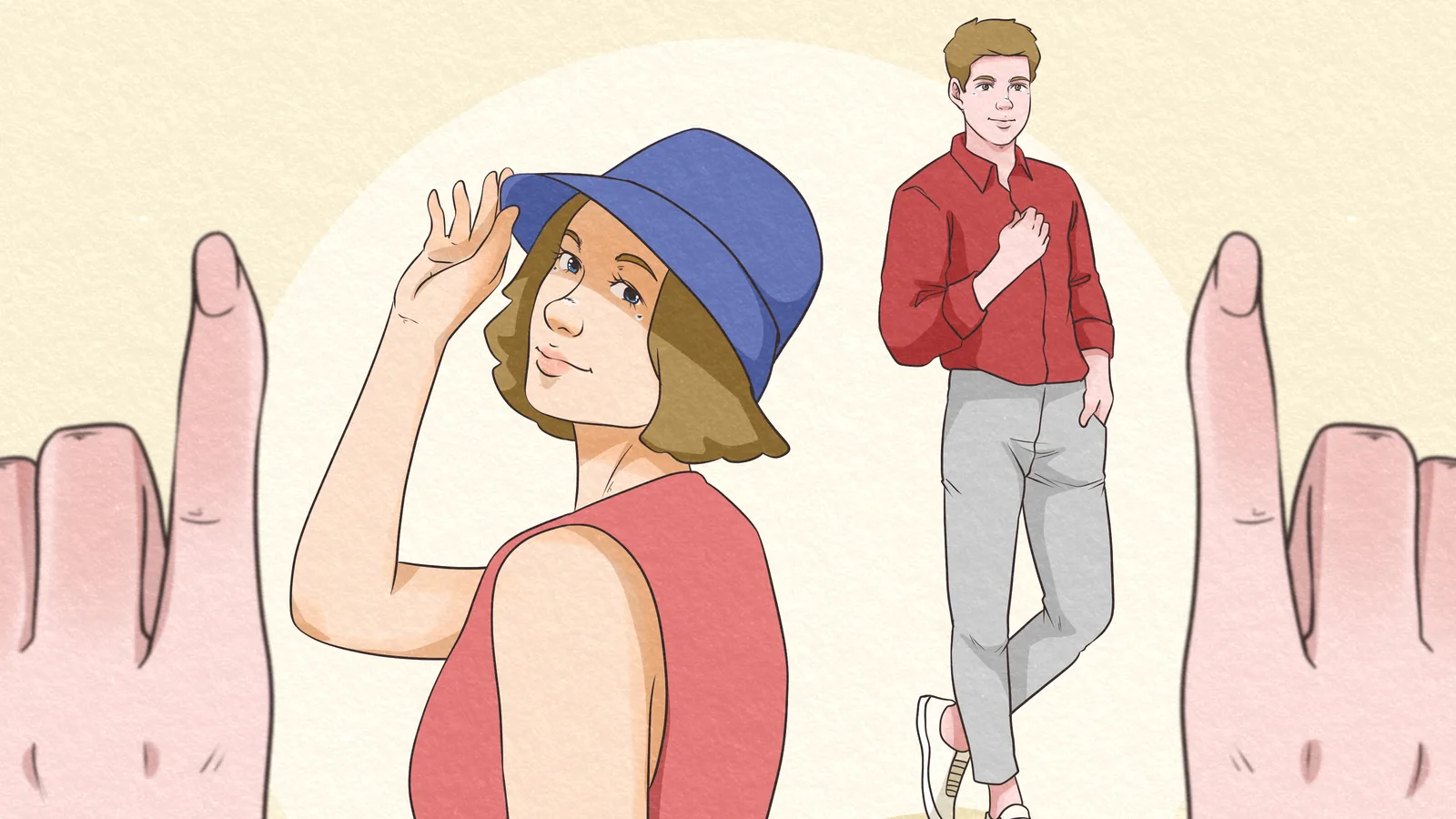
Aesthetic attraction is enjoying how someone looks without needing anything more from them. Sensual attraction is wanting non-sexual touch with a particular person, such as a long hug or a cuddle on the sofa. Both can show up with sexual attraction, and both can show up without it.
That is the short answer. The longer answer matters because many people have only two words for every pull they feel. Those words are “sexual” and “romantic.” Anything else gets squeezed into one of them, and the fit is often wrong.
This guide puts seven kinds of attraction in one table. It then gives each of the less familiar ones a simple test against sexual attraction. A hypothetical example shows how several pulls can sit inside one person, and a short glossary covers newer community terms.
Seven kinds of attraction compared side by side
The table below sets the main types next to each other. The definitions follow the glossary used by the LGBTQ Center at the University of North Carolina, which lists sexual, romantic, aesthetic, sensual, emotional and intellectual attraction as separate pulls. Platonic attraction comes from the same source’s description of a squish, a wish for a close non-romantic bond with one person.

| Type | What it feels like | What it makes you want | Everyday example |
|---|---|---|---|
| Sexual | A pull toward someone’s body and sexual closeness | Sexual contact with that person | Hoping a date ends with more than a goodnight |
| Romantic | Butterflies, wanting to be “a couple” | Dating, courtship, a romantic relationship | Planning a candlelit dinner for someone |
| Aesthetic | Admiring a face, a style, the way someone moves | To look, notice, appreciate | Staring a moment too long at a stranger’s outfit |
| Sensual | A wish to be physically close, without sex | Hugs, cuddles, hand-holding | Wanting to lean on a friend during a film |
| Platonic | Wanting a specific person in your life | A close friendship | Hoping a new coworker becomes your friend |
| Emotional | Being drawn to who someone is inside | To know them deeply | Long late-night talks that feel easy |
| Intellectual | Being drawn to how someone thinks | Conversation, debate, ideas | Seeking out one colleague for every hard problem |
A few cautions about reading this table. First, these pulls overlap. For many people, sexual, romantic and aesthetic attraction arrive together toward the same person, so they never notice the seams. Second, the same source stresses that attraction does not predict behavior. Someone can feel sexual attraction and choose not to act on it, or have sex without feeling it.
Third, this is descriptive language, not a diagnosis. Nobody is tested for “aesthetic attraction” in a clinic. The words exist so people can explain their own experience more precisely.
This way of splitting attraction into separate types is often called the split attraction model. It grew out of asexual and aromantic communities, and the site’s guides to sexual versus romantic attraction and to asexuality explain it in more depth. Here the focus stays on the types that get the least attention.
Aesthetic attraction: admiring how someone looks
Put simply, aesthetic attraction means being drawn to someone’s appearance, and it does not need sexual or romantic attraction to exist. You notice a person, like what you see, and the feeling is complete on its own.

What aesthetic attraction feels like
People often compare it to looking at a fine painting or a landscape. The urge is to keep looking, or maybe to point the person out to a friend. There is no need to touch them, date them, or even speak to them.
For many people, this feeling is bundled with sexual or romantic attraction, so it rarely stands out as its own thing. It can be easier to spot in people on the asexual spectrum, because it is not tangled up with sexual attraction. The ace writer Leah Kent describes aesthetic attraction as a common experience for many aces.
Communities have coined crush words for it, too. An aesthetic crush is sometimes called a swish or a thete, although neither term is widely used. AZE Journal notes that “squish,” the general word for a non-romantic crush, can also describe an aesthetic crush.
When looking comes with arousal
Here is where people get confused. Aesthetic attraction can involve arousal, though it does not have to. AZE Journal points out that a person can find pleasure in someone’s looks without wanting sex with them.
That sounds odd until you separate two signals. Arousal is a body response. Attraction is a feeling aimed at a specific person. Kent puts the difference plainly: arousal is the physical response, while attraction is directed toward someone. For many allosexual people, the two arrive together so reliably that they seem like one thing. For others, they come apart.
Test: is it aesthetic or sexual?
No single question settles it, but three can help.
- What would satisfy the feeling? If seeing the person, or a photo, feels like enough, aesthetic attraction fits. If you keep picturing sexual contact with them, sexual attraction is part of it.
- Does the feeling ask for anything? Aesthetic attraction is content to admire from where you stand. Sexual attraction, even toward someone you only see on screen, comes with a wish for sexual contact, whether or not it could ever happen.
- Do you want to be them, or be with them? Wanting someone’s look for yourself may be closer to gender envy, which AZE Journal treats as separate from aesthetic attraction.
Arousal alone is a weak test. As the next sections show, the body can respond in ways that do not match who you are drawn to.
Sensual attraction: wanting touch that is not sexual
Sensual attraction is a wish for non-sexual physical closeness with one particular person. Think of wanting to hug someone, hold their hand, or fall asleep against their shoulder, with no wish for it to turn sexual.

What sensual attraction looks like in daily life
AZE Journal describes it as a pull to engage with someone in a physical or tactile way, or through any of the senses. That can mean hugging, kissing, cuddling or hand-holding, with no wish for sex or romance. It is not limited to touch. Some people describe sensual attraction to a voice or even a smell.
Sensual attraction often gets misread. The same AZE essay notes that “I just want to cuddle” is commonly heard as a step toward sex, as if cuddling only counts on the way to something else. That assumption puts pressure on people who truly want the cuddle and nothing more.
Why slow, gentle touch feels good
There is a biological side to this, though it is less tidy than it sounds. Hairy skin, such as the forearm, contains C-tactile nerve fibres that respond to gentle, caress-like touch. Touch in the range of 1 to 10 centimetres per second is reliably rated as pleasant.
A 2017 study stroked people with a soft brush on the forearm and on the palm, which lacks these fibres. On both sites, stroking at 3 centimetres per second felt more pleasant than stroking at 30 centimetres per second. Slow touch also slowed heart rates more on both sites. Only one signal, a small rise in smile-muscle activity, was specific to the forearm and its C-tactile fibres.
So the slow-is-pleasant effect cannot simply be credited to these fibres, and the authors call the evidence that they encode rewarding social touch still limited. The study also used brushing, not hugs, which rely more on pressure. The biology hints at why gentle, unhurried touch can feel soothing. It does not prove that sensual attraction is “just nerves.”
Touch hunger is not the same as sensual attraction
A general need for touch is different from attraction to a person. The LGBTQIA+ Wiki separates sensual drive, or its intense form, touch starvation, from sensual attraction. Drive is a wish for touch in general. Attraction is aimed at someone in particular.
The difference shows up in how the need gets met. People can get sensual comfort from pillows, blankets or soft toys without feeling attraction to anything. If a weighted blanket meets the need just as well, the feeling is probably drive rather than attraction.
Test: is it sensual or sexual?
Ask where the wish ends. If you picture the cuddle and feel content, sensual attraction fits. If the picture keeps moving toward sexual contact, sexual attraction is involved.
Arousal during touch does not settle the question. AZE Journal notes that sensual contact can bring sexual arousal while still having no sexual attraction behind it. Pay more attention to what you want than to what your body does.
Platonic and alterous attraction: the pull toward closeness
Platonic attraction is a wish for a close friendship with one specific person. Alterous attraction is a pull toward emotional closeness that does not feel clearly platonic or clearly romantic. Neither one involves wanting sex, although either can exist alongside sexual attraction.

Platonic attraction and the squish
Most people know the feeling of meeting someone and thinking, “I need to be friends with this person.” Aromantic communities gave it a name. A squish is a non-romantic crush, the wish for a platonic relationship with someone.
Some of these bonds grow beyond ordinary friendship. The UNC LGBTQ Center describes queerplatonic relationships as non-romantic bonds that are often closer than a typical friendship. Because English has no good word for such a partner, some people jokingly call them a “zucchini”.
Alterous attraction: neither clearly platonic nor romantic
Alterous attraction is defined as emotional attraction and a desire for emotional closeness. For some people it sits between platonic and romantic feelings. For others it lies outside that split entirely.
The term is young. The LGBTQIA+ Wiki dates it to around 2015. It is also debated: since 2016, some definitions have been criticized for implying that platonic feelings are weaker than romantic ones. That debate is worth knowing about if you use the word. A close friendship is not a lesser version of romance, and alterous attraction should not be framed as “almost romantic.”
Test: is it platonic, alterous or sexual?
Picture the relationship that would feel right. Then ask three questions.
- Do you want a friend? If a deep friendship would feel complete, the pull is platonic.
- Do you want something closer, but not romance? If friendship feels too small and dating feels wrong, alterous may fit.
- Do you want sexual contact? If that is part of the picture, sexual attraction is present, whatever else is too.
Intense friendships are easy to mislabel. Two friends who text all day and feel jealous of each other’s new friends may get teased about “really” being in love. Sometimes they are. Often they simply have a strong platonic or alterous bond.
A hypothetical week: one person, four different pulls
This example is hypothetical. The person and the people around them are invented to show how the tests above work in practice.
Suppose Sam is an adult who has always thought of themself as “a bit picky.” Over one week, Sam notices four quite different feelings toward four people.
| Person | What Sam notices | What Sam wants | Best fit |
|---|---|---|---|
| A model in a clothing ad | Keeps looking at the photo; loves the styling | Nothing beyond looking | Aesthetic |
| Jo, a close friend | Feels calm when Jo sits close during a film | To lean on Jo’s shoulder, nothing more | Sensual |
| Priya, a new colleague | Lights up during their lunch chats | To become real friends | Platonic, maybe intellectual |
| Alex, Sam’s partner of two years | Feels a pull toward Alex physically | Sexual closeness, along with cuddling and long talks | Sexual, plus several others |
Run the tests and most rows sort cleanly. The ad passes the first test: Sam is content just looking. With Jo, the wish ends at the cuddle, so sensual fits better than sexual. For now, Priya brings no wish for touch or romance.
Alex is the interesting row. Sam feels sexual and sensual attraction toward the same person, and the long talks suggest an emotional pull too. This is common in long relationships, and it is why many people never notice the separate strands.
Now add a wrinkle. Suppose Sam feels a jolt of arousal while watching an actor in a film. Does that make it sexual attraction? Not on its own. Sam may simply be responding to the scene. If Sam has no wish for sexual contact with the actor, the arousal alone does not show attraction to them. Only if Sam also admires the actor’s looks would aesthetic attraction fit.
Some rows can stay blurry, and feelings can change. Months from now, the friendship with Priya could grow into something romantic, or it could stay platonic. That is fine. The categories describe feelings; they do not demand an answer by Friday. Sam can notice, wait, and check again later.
Notice what the scenario does not say. It does not label Sam asexual, demisexual or anything else. Someone with this pattern could use many labels, or none.
Newer community terms: asensual, demisensual, demiplatonic and two unsettled words
The terms below come from asexual, aromantic and wider queer communities. They are community vocabulary, not clinical terms, and their meanings come from community wikis and forums rather than medical manuals. Definitions can shift, and two people using the same word may mean slightly different things.
Terms with a settled community meaning
- Asensual. Someone who feels little or no sensual attraction. Some asensual people dislike being touched, while others still enjoy touch to meet their own sensory needs or a partner’s. Being asensual says nothing about sexual orientation, and some people who dislike non-sexual touch enjoy sexual touch. The community uses touch-repulsed, touch-indifferent, touch-favorable and touch-ambivalent to describe the range. The asensual flag dates to May 3, 2016.
- Demisensual. Someone who feels no sensual attraction until a deep emotional bond has formed. The bond can be platonic or romantic, and it makes attraction possible rather than certain. Wanting to hug close friends does not by itself make a person demisensual. Who coined the word is unknown, though its flag goes back to at least 2017.
- Demiplatonic. Someone who feels platonic attraction only after an emotional connection has formed. In plain terms, they rarely get “friend crushes” on new people. The MOGAI Wiki entry notes that it has no reviewed versions, which is a reminder of how informal these sources are.
Terms still without a stable definition
- Neutralized attraction. This phrase has no entry in the large community wikis consulted for this guide, so it has no settled meaning in ace vocabulary. If someone uses it about themselves, ask what they mean.
- Meta attraction. This term also lacks an entry in the community wikis consulted here, and people use it in different ways. Treat it as unsettled, and ask what a person means before assuming.
The main lesson from the glossary is that the “demi” and “a-” prefixes work the same way across attraction types. Once you know demisexual, you can read demisensual and demiplatonic without help.
What research can and cannot tell you about these attractions
The research is thinner than the vocabulary. There is solid data on how many people are asexual and on how often they feel sexual attraction. There is very little data on aesthetic, sensual or alterous attraction as such.
The numbers that do exist
About 1% of people are asexual or aromantic, according to a UC Santa Barbara resource center citing a 2018 estimate. Among people aged 18 to 24, the same source puts the share as high as 4%. A higher figure in younger adults may partly reflect wider awareness of the words.
Community surveys add detail. In the 2021 Ace Community Survey, which drew 12,226 responses, 54.9% of ace respondents said they never feel sexual attraction or desire toward another person. Another 31.1% said they feel it rarely. That leaves a sizable minority who feel it sometimes, which fits the idea of a spectrum.
These are self-selected samples, though. Over two thirds of ace respondents in that survey were aged 13 to 24. People who join online communities and answer surveys may not represent everyone who would fit the label.
Desire for others versus desire on your own
A 2024 study in Archives of Sexual Behavior surveyed 1,041 Italian-speaking adults on the ace spectrum. Asexual participants reported less partnered sexual activity than demisexual, gray-asexual or questioning participants. Yet the groups did not differ in solo sexual activity, which most reported doing sometimes or often.
The authors suggest separating desire for others from a more self-focused desire. That finding supports a point made throughout this guide. Arousal and solo desire can exist without attraction to any particular person, so they make a weak test of what you feel toward someone.
Why your own feelings can stay ambiguous
Self-knowledge has limits too. Writing in Archer Magazine, Nicole Brinkley notes that a so-called “girl crush” might be suppressed queer sexuality, or it might be aesthetic attraction. From the inside, those can feel similar for a while.
Labels can also change as people learn more about themselves. Using one for a year and then switching is common, and it does not mean the first one was a mistake. It was the best description available at the time.
Frequently asked questions
What are the four types of attraction?
There is no fixed number. Lists of four exist, but they do not agree on which four, and others name six or seven. The UNC LGBTQ Center, for example, lists sexual, romantic, aesthetic, sensual, emotional and intellectual attraction. No list is official, because these are community and educational terms rather than medical ones. Use whichever set helps you describe your own feelings, and add a type if a list leaves out something you feel.
Can someone be attractive but not sexually attractive to you?
Yes. That is what aesthetic attraction describes: finding someone good-looking without wanting sex with them. Many people feel it toward actors, models or strangers on the street. Many people on the asexual spectrum describe it as a common experience. It also works the other way round. Someone can feel sexual attraction toward a person they would not call conventionally beautiful.
Do asexual people like being touched?
It varies from person to person. Sensual attraction is separate from sexual attraction, so many asexual people enjoy hugs and cuddles. Others are asensual and feel little sensual attraction, though some of them still enjoy touch and some dislike it. Preferences can also differ by context, such as a hug from a friend versus a stranger. Asking each person what they like is the only reliable way to know.
What are asexual people attracted to?
Asexual people feel little or no sexual attraction, but that leaves many other pulls in place. They may feel romantic, aesthetic, sensual, emotional or intellectual attraction. Some are drawn mostly to personality, humor or the way a person thinks. Many aromantic people still want close relationships too, including queerplatonic ones.
Naming each pull on its own terms
None of the pulls covered here, from aesthetic and sensual to platonic and alterous, is a lesser form of sexual attraction. Each is a separate pull, and naming them helps you see what you actually want from someone. Sometimes that is a look. Other times it is a hug, or a friend who understands you.
The tests in this guide all come back to one question: what would satisfy this feeling? Ask that, and pay less attention to what your body does in the moment.
Treat the words as tools. They are useful when they help you explain yourself to a partner, a friend or yourself. They are not exams you pass or fail, and you can drop a label that stops fitting. If you want the bigger framework behind these types, the site’s guides on sexual versus romantic attraction and on asexuality are good next reads.
Related reading
- Sexual Attraction vs Romantic Attraction: How They Differ
- Romantic Orientation Explained: Labels, Combinations, and How to Tell
- What Is Asexuality? Meaning, Spectrum, Myths and Research
- Sexual arousal vs. sexual attraction
Sources
- Asexuality, Attraction, and Romantic Orientation - UNC-Chapel Hill LGBTQ Center
- What is Aesthetic Attraction? - AZE Journal
- Aesthetic Attraction - LGBTQIA+ Wiki
- Asexuality, Arousal and Aesthetic Attraction - Leah Kent, Notes in the Margins
- Sensual Attraction - LGBTQIA+ Wiki
- On Sensual Attraction: Yes, sometimes people do “just want to cuddle.” - AZE Journal
- C-tactile afferent stimulating touch carries a positive affective value - Pawling et al., PLOS ONE (Liverpool John Moores University repository)
- Alterous Attraction - LGBTQIA+ Wiki
- Asensual - LGBTQIA+ Wiki
- Demisensual - LGBTQIA+ Wiki
- Demiplatonic - MOGAI Wiki
- Asexual/Aromantic - UC Santa Barbara Resource Center for Sexual & Gender Diversity
- The Ace Community Survey - The Ace Community Survey
- Deepening Sexual Desire and Erotic Fantasies Research in the ACE Spectrum - Nimbi et al., Archives of Sexual Behavior (PMC)
- Aesthetic attraction and being on the asexual spectrum - Archer Magazine