Finding the Asexual Community: Reddit, Dating, Meetups and Support for Ace and Demi People
Where ace and demi people find each other: subreddits, AVEN, Discord, ace dating options, local meetups, online safety tips and affirming support.

General education, not medical advice. If something here worries you, talk with a clinician.
Table of Contents
The asexual community lives mostly online, in subreddits, forums, Discord servers and social feeds, with a smaller layer of local meetups, campus groups and LGBTQ+ centres. In the largest community survey of ace people, most respondents who took part in ace community did so online, and most had never joined an offline ace group.
This guide is for adults who are asexual, demisexual, somewhere else on the ace spectrum, or still working it out. It describes the main places people gather, what each type of space is good for, and where it falls short. It also covers ace dating options, offline groups, how to stay safe and well online, and where to turn when a forum is not enough.
Nothing here is a ranking or an endorsement. Platforms, features and prices change, so treat every detail as something to check for yourself.
Why ace and demi people go looking for each other
Community matters because asexuality is still poorly understood, and that leaves many ace and demi people feeling alone or doubted. Meeting people who share the experience gives you words for it, proof that it is real, and a place to ask questions without having to defend yourself first. If you are still sorting out the basics, our guides to what asexuality is and what demisexuality is are a good starting point.
What the research says about isolation
Research on ace wellbeing is thin, and most of it looks at young people. The Trevor Project’s 2020 survey of 40,001 LGBTQ people aged 13 to 24 found that 10% identified as asexual or ace spectrum. Those ace respondents reported slightly higher rates of anxiety and depression symptoms than the rest of the sample. The brief calls ace youth an often-overlooked group and says outreach needs to include them.
Mental Health America points to a likely reason. It reports that asexual people describe more everyday discrimination and stigma than lesbian, gay and bisexual people who are not ace. Some health providers still treat asexuality as a symptom of something else, which MHA says is invalidating and can push people away from care. None of this means being ace causes distress. It means being dismissed, again and again, takes a toll.
What community tends to give people
The Ace Community Survey, a volunteer project run with Northwestern University, offers the best picture of how people actually find each other. Its 2021 round drew 12,226 responses. The median respondent first questioned their identity at 16 and first joined an asexual community at 18. About a quarter had never taken part in an ace community at all.
That gap matters, because MHA suggests that connecting with other ace and LGBTQ+ people can ease loneliness and protect mental health. A community will not settle every question. What it can do is show you that your experience has company, and that many people built full lives around it.
The main online ace spaces, compared by type
The main online ace spaces fall into five types: large subreddits, the AVEN forums, Discord servers, Tumblr, and groups on mainstream social apps. Each one suits a different need, and none is the official home of the ace community. The table describes only what anyone can see from the outside, and it lists them by type, not by quality.

Side-by-side: what each type of space is good for
| Type of space | Public examples | Good for | Limits to know |
|---|---|---|---|
| Ace subreddits | Subreddits for asexual and demisexual people, from general discussion to advice and dating threads | Quick answers, coming-out stories, a steady stream of new posts | Each subreddit sets its own rules, and moderators enforce them, so tone varies a lot from one to the next |
| AVEN forums | The Asexual Visibility and Education Network at asexuality.org | Long, searchable threads; spaces for questioning people and for partners, friends and family | Older and slower than social feeds; posting needs an account |
| Discord servers | Many independent ace servers, often linked from subreddits and resource pages | Real-time chat, voice channels, small-group friendships | Each server is run by volunteers with their own rules; it is hard to judge from outside |
| Tumblr | Ace blogs and the #asexual tag | Personal writing and the history of ace terms and debates | Pseudonymous culture cuts both ways; the tag has seen a troll blog, ask-box harassment and hostile spam |
| Instagram and Facebook groups | Ace accounts, which survey respondents named as their top platform for ace community, plus Facebook groups for specific ages such as aces over 30 | Visual content, local and age-based groups | Tied more closely to your real identity; quality depends on each admin |
How these spaces differ in practice
Reddit runs on moderators. Reddit describes every community as shaped by rules that its own moderators enforce, with platform-wide rules from Reddit’s staff on top. In practice, that means two ace subreddits can feel very different. Read the sidebar rules and a week of posts before you share anything personal.
AVEN is the oldest dedicated space. It was founded in 2001 to build public understanding of asexuality and to grow an ace community. Its centre is a web forum open to asexual and questioning people, and to their partners, friends and families. Members have also run workshops and arranged local meetups. Some people find it slower than social media. Others like that a thread from years ago is still there and still searchable.
Tumblr shaped much of the vocabulary. An ace journal-club write-up on The Asexual Agenda describes Tumblr as a counterpublic, a space where a minority group talks among itself. Accounts were not usually tied to real names, and hashtags pulled one topic together. The same write-up records a harsher side: a notorious troll blog in 2011, harassment through ask boxes, and hostile posts flooding the #asexual tag. The platform is quieter now, but its archive still turns up in searches.
Where people actually are has shifted. In the 2021 Ace Community Survey, Instagram was the most popular platform for taking part in online ace community. Large forums are still where many people first find words for their experience. Day-to-day connection, though, tends to move to whatever app people already use.
Asexual dating options and what to check first
Asexual dating usually happens in one of two ways: on small sites built for ace and platonic connections, or on mainstream apps that let you state your orientation. Both can work. Neither is a sure thing, and the details below change often, so check each one yourself before you sign up.

Ace-specific dating and friendship sites
A handful of sites market themselves directly to asexual people. AceCupid, for example, describes itself as a place for asexual people to build relationships without fear of judgment. Its homepage frames the site around friendship, love and platonic relationships, and it invites people to join for free. Treat any site’s claims about its own size as marketing, since you cannot check them from outside.
The main upside of these sites is that nobody needs your orientation explained. On the other hand, the pool is small. The dating app Feeld makes the same point in its own guide to ace dating: meeting other aces can be harder because the community is small. Outside big cities, that can mean very few people within reach.
Orientation settings on mainstream apps
Some mainstream apps now let you name your orientation. In 2019, Tinder rolled out an Orientation option, built with GLAAD, in a handful of countries: the US, Canada, the UK, Ireland, India, Australia and New Zealand. Asexual and demisexual were among its choices, so readers elsewhere may not have seen it at first. Users could pick up to three terms. They could also choose whether to show the label on their profile and whether to see people of the same orientation first. That report is from 2019, so the current menus may look different.
Feeld’s guide suggests trying ace-friendly spaces and dating platforms, and it names its own app and the AVEN forums among them. A mainstream app gives you a much bigger pool. The trade-off is that you may have to explain asexuality to most of the people you match with.
Before you sign up: privacy, moderation and cost
Run through these questions before you hand over your details:
- Who can see your orientation? Check whether the label is public, visible only to matches, or hidden. Decide what you are comfortable with before you add it.
- What does the profile link to? Photos, a linked social account, or your workplace can identify you. Leave them off until you trust the app.
- How do reporting and blocking work? Look for a clear report button and published community rules. Silence on harassment is a warning sign.
- What is free and what costs money? Many sites let you join free but charge to message or see who liked you. Check the price and the renewal terms.
- What are the scam warning signs? The Federal Trade Commission warns that romance scammers use fake profiles, try to move the chat off the app, and then ask for money.
Dating someone who is not ace
Many ace and demi people date partners who are not ace. Feeld’s guide notes that these couples may need to bridge different needs, and it suggests checking in about boundaries regularly, not just once. Some couples reach a compromise that works for both, and some ace relationships are non-monogamous. Others decide the gap is too wide. Any of these outcomes is fine, and none is required of you. Our guide to asexual relationships, love and communication goes into those conversations in more depth.
Finding local ace meetups and offline groups
Offline ace groups exist, but they are rarer than online ones and take some digging to find. In the 2021 Ace Community Survey, most respondents had never joined an offline ace group, even though about half had met someone ace in person or had ace friends. So if nothing turns up near you at first, that is normal. These three routes tend to work best.
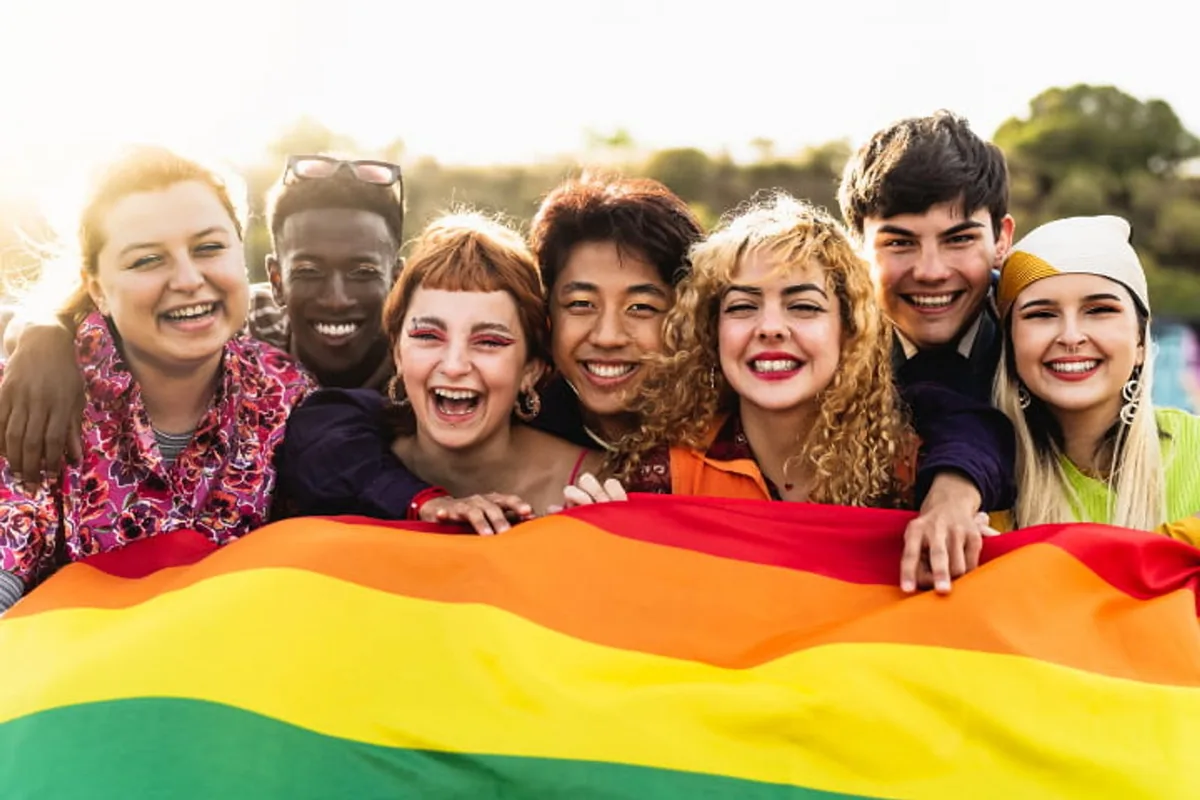
LGBTQ+ centres and pride organisations
Local LGBTQ+ centres are the most reliable starting point. CenterLink, a national association of these centres, describes a network of 350+ members and offers a tool to find a centre near you. Few centres run an ace-only group. Many will know whether one meets nearby, or will host one if a few people ask.
When you contact a centre or a pride organisation, a short, direct question works well. Ask whether they have an ace or aro group, a general queer social night, or a notice board where you could post. The 2021 survey found that most aces who joined LGBTQ communities rated the experience as positive or mostly positive. Mental Health America adds that heteroromantic aces sometimes doubt they belong in LGBTQ+ spaces, and says they do.
Spin-offs from online groups, and Ace Week
Some meetups grow out of online groups. AVEN members have long arranged local meetups alongside their forum activity. Search the AVEN forums, local subreddits and event sites for your city plus “ace” or “asexual”.
Ace Week is the easiest annual entry point. In 2026 it runs from October 25 to 31, and ace groups around the world host dozens of online events. The organisers publish an event list and accept events that anyone can attend. An online event can be a low-pressure way to meet people from your region before trying anything in person.
Campus groups
Students often have the most options. Many colleges have an LGBTQ+ centre or a queer student society, and some have ace or aro groups within them. The Consortium of Higher Education LGBT Resource Professionals offers a tool for finding a campus LGBTQ+ centre. If there is no ace group, a centre is often happy to help you start one.
Staying safe and well in online ace spaces: a checklist
Staying safe in ace spaces comes down to four habits: guard your identity, check what you read, resist comparing yourself, and leave when a space stops helping. Use this list as a quick check when you join somewhere new.
Protect your privacy
- Use a separate username. Pick one you do not use for work, school or family accounts, so a post cannot be traced back to you.
- Strip identifying details. Leave out your employer, school, small hometown and recognisable photos, especially in public subreddits that search engines index.
- Know the platform rules. Reddit’s own rules ban revealing someone’s personal or confidential information, and they ban harassment. If someone does it to you, report it to the moderators and to the platform.
- Lock down direct messages. On Discord and similar apps, limit who can message you until you know a server. Check the server’s rules channel to see who moderates it and how to report a problem.
- Meet a match in public first. If a chat moves offline, pick a busy public place, tell a friend where you will be and when, and get there and home on your own transport. Leave if anything feels off.
- Never send money. The Federal Trade Commission is blunt about this: never send money or gifts to someone you have not met in person. A reverse image search of a profile photo can expose a fake account.
Check what you read
- Treat posts as lived experience. A thread can tell you how something felt for one person. It cannot diagnose you or rule out a health issue.
- Cross-check health claims. If a post says a symptom, a medicine or a hormone level explains someone’s orientation, check it with a doctor or a health organisation.
- Watch for confident outsiders. People who are not ace sometimes post firm opinions about what asexuality “really” is. Weigh who is speaking and what they base it on.
Watch the comparison trap
- There is no single ace story. Mental Health America describes asexuality as a spectrum that includes gray-ace and demisexual people. You do not need to match the most-upvoted post to belong.
- Expect some doubt. MHA notes that imposter feelings are common, for example after a more sexual phase or when someone is heteroromantic. That doubt does not cancel your identity.
- Labels can change. Using a word for a while and then finding a better fit is part of how many people work this out.
When a space turns hostile
- Spot the signs. Watch for pile-ons, gatekeeping about who counts as ace, moderators who never act, or a feed that leaves you worse every time.
- Report, mute, then leave. You owe no space your presence. Tumblr’s ace tag has drawn a troll blog, harassment through ask boxes and hostile spam, and leaving a space like that is self-care, not failure.
- Keep one offline anchor. A friend, a centre or a counsellor outside the platform helps you keep perspective when one community goes sour.
When peer support is not enough
Peer support is not enough when you feel stuck, unsafe, or low for weeks, or when a relationship, family situation or health question needs more than advice from strangers. That is the moment to look for an ace-affirming therapist or, in a crisis, a helpline. Asking for this kind of help does not mean anything is wrong with being ace.
Finding an ace-affirming therapist
Start from the facts. Mental Health America says the scientific community treats asexuality as a variation in human sexuality, not a sexual or mental health disorder. A Psychology Today summary of a research review by Brotto and Yule explains the key line. The sexual desire disorders in the DSM require significant personal distress, and asexual people typically do not report distress about being asexual.
Not every therapist knows this. Sage Finch Counseling, an LGBTQ+ practice in Texas, warns that many therapists pathologize asexual people. It adds that even LGBTQ-affirming therapists are often misinformed about asexuality. MHA likewise notes that some providers blame asexuality on an underlying health condition, which can drive people away from care.
So screen before you commit. Questions worth asking in a first call include:
- What is your experience working with asexual or demisexual clients?
- Do you see asexuality as an orientation, or as something to treat?
- If I am in a mixed relationship, will you support both of us without pushing either one to change?
- How would you handle it if I wanted to explore my label, but not drop it?
A good answer to the second question is clear and immediate. A therapist who hesitates, or who suggests “fixing” low desire you are not bothered by, is probably not the right fit. Directories that let you filter for LGBTQ+ competence are a reasonable place to start, and local LGBTQ+ centres often keep referral lists.
Helplines if you are struggling now
If you are thinking about harming yourself, contact a crisis line now:
- United States, anyone: call, text or chat 988, the Suicide & Crisis Lifeline, which is free, confidential and open 24/7.
- United States, LGBTQ+ young people: The Trevor Project offers 24/7 support by text, chat or phone. Text START to 678-678 or call 1-866-488-7386.
- United Kingdom: Switchboard is the UK’s LGBTQIA+ support line, and its calls, messages and emails are answered by LGBTQIA+ volunteers.
Outside these countries, search for a national crisis line or an LGBTQ+ helpline in your area. In an emergency, call your local emergency number.
Frequently asked questions about ace dating and community
Is it hard to date as an asexual?
It can be harder, mainly because the pool of other aces is small and many non-ace people know little about asexuality. Feeld’s guide to ace dating names both problems: meeting other aces, and bridging different needs with a non-ace partner. Plenty of ace people still date and form lasting relationships. Clear early talk about what you want, and what you do not, saves a lot of guesswork.
Why do asexual people go on dating apps?
For the same reasons as anyone else: companionship, romance, partnership, or friendship. Asexuality describes sexual attraction, and many aces still feel romantic attraction toward one or more genders. Some look only for other aces. Others are open to non-ace partners and use orientation labels on mainstream apps to be upfront from the start.
Do asexuals fall in love?
Many do. Romantic attraction is separate from sexual attraction, so an ace person can be heteroromantic, biromantic, panromantic, aromantic or something else. In The Trevor Project’s survey, many ace youth also chose romantic labels such as panromantic and biromantic. Our explainer on what asexuality is covers the split between the two in more detail.
Is there a website for asexual dating?
Yes. A few sites describe themselves as dating or friendship sites for asexual people, and AceCupid is one example. Mainstream apps such as Tinder have also offered asexual and demisexual as orientation options. Before joining any of them, check who can see your profile, how reporting works, and what the paid features cost.
Do demisexual people belong in ace spaces?
Usually, yes. Most ace communities treat demisexuality as part of the ace spectrum, and Mental Health America describes it the same way. Demisexual people feel sexual attraction only after forming an emotional bond. Some spaces focus on people who feel no sexual attraction at all, so read a community’s description first. Our guide to what demisexuality is explains the term.
Finding your corner of the ace community
The asexual community is spread across many small spaces, not one big one, and the right fit depends on what you need this month. A forum suits slow, searchable questions. A Discord server or a local group suits friendship. If you want a partner, try a dating site or an app filter.
A practical first step is to pick one space, read it quietly for a week, and then say hello. Protect your privacy as you go, and step away from anywhere that leaves you feeling worse. If things get heavy, a therapist who understands asexuality, or a helpline, is there for what a community cannot carry. Being ace or demi is not a problem to solve, and finding others who get it can make everyday life feel a lot less lonely.
Related reading
- Asexual Relationships: Love, Dating and Talking About What You Want
- Asexual Pride: The Ace Flag, Symbols, History, and Coming Out
- What Is Demisexuality? Meaning, Signs and How It Differs
- Am I Asexual? Questions to Think Through Instead of a Quiz
Sources
- The Ace Community Survey - The Ace Community Survey Team (with Northwestern University)
- Asexual and Ace Spectrum Youth - The Trevor Project
- Asexuality and mental health - Mental Health America
- Reddit Rules - Reddit, Inc.
- About AVEN - The Asexual Visibility and Education Network
- Resources for Asexuals - Sage Finch Counseling
- Journal Club: Asexual counterpublics on Tumblr - The Asexual Agenda
- ACE Dating Site For Asexual & Platonic Relationships - AceCupid
- The Feeld Guide to Asexual Dating - Feeld
- Tinder now lets users choose their sexual orientation - MobileSyrup
- What To Know About Romance Scams - U.S. Federal Trade Commission
- CenterLink: The Community of LGBTQ Centers - CenterLink
- Ace Week 2026: October 25-31 - Asexual Outreach, Inc.
- The Consortium of Higher Education LGBT Resource Professionals - The Consortium
- Asexuality Is a Sexual Orientation, Not a Sexual Dysfunction - Psychology Today (Bella DePaulo)
- 988 Suicide & Crisis Lifeline - 988 Suicide & Crisis Lifeline
- Get Help - The Trevor Project
- Switchboard - Switchboard LGBT+