How to Choose Lube: Water, Silicone or Oil?
How to choose lube: compare water-based, silicone and oil-based lubricants for condoms, toys, sensitive skin, anal sex, menopause and trying to conceive.
General education, not medical advice. If something here worries you, talk with a clinician.
Table of Contents
If you are working out how to choose lube, start with water-based, because it works with every condom and every toy and washes off with plain water. Pick silicone-based when you want a lube that lasts longer or holds up in the shower, and save oil-based for times when no latex condom is involved.
That rule covers most people, and the rest of the choice comes down to three questions. What will the lube touch: condoms, silicone toys, or only skin? How sensitive is your body to additives? And is there a special goal, like anal sex, easing menopause dryness, or trying to get pregnant?
This guide walks through each lube type, the label details that matter, and which one fits your situation.
Water vs silicone vs oil lube at a glance
The three main types differ on four things: what they are safe with, how long they last, whether water rinses them away, and how hard they are to clean up. The table puts them side by side.
| Water-based | Silicone-based | Oil-based | |
|---|---|---|---|
| Latex condoms | Safe | Safe | Not safe: oil weakens latex |
| Silicone toys | Safe | Avoid: can damage the toy surface | Some guides advise against it |
| How long it lasts | Short; dries out and needs reapplying | Long; not absorbed by the skin | Long; outlasts water-based |
| In the shower | Washes away | Holds up in water | Holds up in water |
| Cleanup | Rinses off and rarely stains | Needs soap; may stain sheets | Hard to clean off sheets and skin |
| Best fit | First lube, condoms, all toys | Long sessions, anal sex, shower sex | Massage and solo play without latex |
Read the table from the top. The first two rows are the safety rows, and they rule options out. The rest are about comfort and convenience, so they help you choose between whatever is left.
Many people end up owning two bottles. A water-based lube covers silicone toys, and a silicone lube covers long or wet sessions. Physicians writing in the British Columbia Medical Journal give the same advice to people who use silicone toys.
Water-based lube: the safe default
For most people, yes: water-based lube is the one to buy if you only buy one. It is the most flexible type, and its weak points are easy to work around.
What water-based lube does well
Water-based lube works with latex condoms, so it fits safer sex without any extra thought. A retailer that sells all three types puts it plainly: water-based lube is safe with condoms and with silicone toys. That last point matters if you own toys, because silicone toys are common and silicone lube can harm them.
Cleanup is the other big win, because water-based lube rinses out of sheets and clothes and rarely leaves a stain. Clue, the period-tracking app, also calls it a good pick for people with sensitive skin or vaginal irritation.
Because it is so flexible, water-based lube suits penetrative sex, masturbation and toy play alike. If you are buying your first bottle, or buying for a partner whose needs you do not know yet, this is the safe bet.
Where water-based lube falls short
The main complaint is staying power. Water-based lube dries out faster than oil-based products. Some of it soaks into the skin, so it can turn tacky and sticky partway through. Plan on adding more during longer sessions, so keep the bottle within reach.
It also washes away in the shower or bath, which makes silicone the better tool for water play.
The last catch is hidden in the ingredient list. Some water-based lubes use a lot of glycerin or similar compounds to feel extra slippery or to warm up. High levels of these can dehydrate and damage vaginal and anal tissue. The label section below explains what to look for, but the short version is simple: a shorter ingredient list is usually a gentler one.
Silicone-based lube: long-lasting and waterproof
This type is worth it when you want glide that lasts, sex in water, or extra comfort during anal sex. Water-based lubes are cheaper and easier to find, but a little silicone goes a long way.
Why people pick silicone lube
Because vaginal tissue does not absorb it, silicone lube stays slippery much longer than water-based lube. You need less of it, and you reapply it less often, which is why one concentrated bottle can last a long time.
It is also the most waterproof type you can buy, which makes it the natural choice for the shower, bath or pool. And it is safe with latex condoms. In fact, many pre-lubricated condoms use silicone lube for exactly that reason.
Anal sex is where silicone lube earns its place. The rectum makes no lubrication of its own, and its lining is easily injured by friction. Silicone lube stays put instead of soaking in, and thicker versions are sold for anal use. Physicians writing in the British Columbia Medical Journal also note that many patients find silicone lube less irritating than water-based types.
The catch with silicone toys and cleanup
The trouble starts when silicone lube meets a silicone toy. Over time, the lube can break down a silicone toy and wear away its soft surface. Astroglide, which makes both lube types, warns that silicone lube will degrade that softness gradually. You cannot predict how fast it will happen, since toys use different grades of silicone.
There are two easy fixes: use water-based lube with silicone toys, or slip a condom over the toy first. Toys made of glass, steel or hard plastic are fine with silicone lube.
Cleanup takes more effort, too, since water alone will not lift silicone lube and it can stain sheets. It is also hard to wash out of fabric, and it can take a while to leave the vagina and anus, which may raise infection risk if bacteria get trapped. A towel under you saves the laundry.
Oil-based lube: when it works and when to skip it
You can use oil-based lube, but only when no latex is involved, and doctors do not agree on whether it belongs inside the vagina. That makes oil the most conditional of the three.
Oil breaks down latex condoms
Oil weakens latex. Vaseline, coconut oil or baby oil can make a latex condom break. The same goes for latex diaphragms and latex toys. A broken condom means a higher risk of pregnancy and sexually transmitted infections, so this rule is the one not to bend.
Not every condom is latex, though. WebMD says polyurethane and lambskin condoms work with any type of lube. Lambskin does not protect against STIs as well, so polyurethane is the practical choice if you want oil and a condom together. Guidance on polyisoprene condoms is mixed. Astroglide lists them as oil-safe, while Clue says they are sensitive to oil. Check the condom box before you mix them.
Oil and vaginal health
Here the experts split. A UCLA study of 141 women found bacterial vaginosis in 40 percent of those who used petroleum jelly in the vagina, against 18 percent of those who did not. Among women who used oils such as baby oil inside the vagina, 44 percent carried the yeast organism Candida, compared with 5 percent of non-users. The study could not prove the products caused these infections, and some women may have used petroleum jelly to soothe an infection they already had.
On the other side, Nebraska Medicine OB-GYN Katie Lessman says gynecologists often recommend coconut oil. She notes it lasts a long time and is less likely than most commercial lubes to irritate. The physicians in the British Columbia Medical Journal take a middle path. If you want oil and latex is not in play, they suggest unrefined coconut oil, scooped out with a clean spoon to keep the jar free of germs.
The BCMJ physicians are clear about what to skip, though. Their do-not-use list includes petroleum jelly, baby oil, mineral oil, ordinary cooking oils and body lotions, with unrefined coconut oil as their one oil exception. Oil is a fine pick for massage, external touch and solo play without latex. For anything else, keep it as a second choice.
What to check on the label
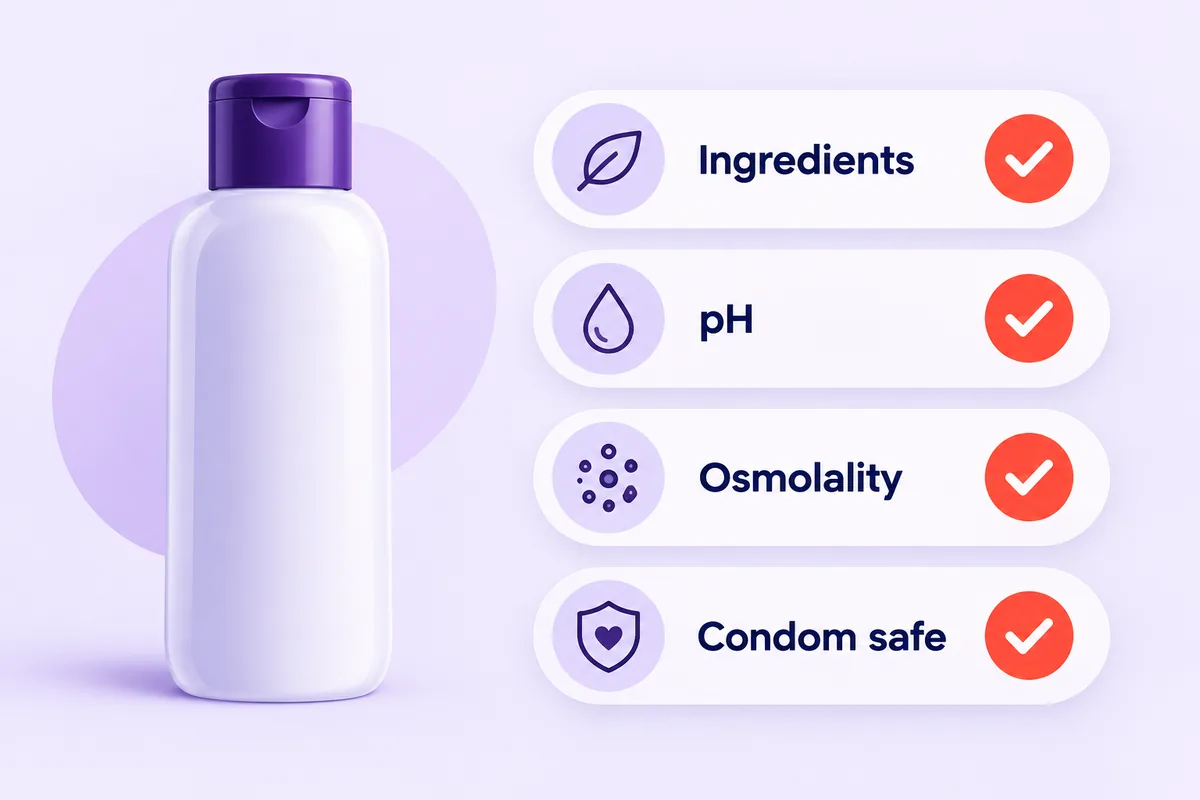
Skip glycerin, parabens, propylene glycol, fragrance, flavors and “pleasure-enhancing” extras if your skin is sensitive. Two numbers matter as well, osmolality and pH, though few brands print them.
Osmolality: the number most labels leave out
Osmolality measures how concentrated a lube is compared with your body’s own fluids. A very concentrated lube pulls water out of the cells it touches, which is how glycerin-heavy formulas can dry out and damage tissue.
The World Health Organization has set a target, as reported in the British Columbia Medical Journal. Ideally, a water-based lube should sit at or below 320 mOsm/kg, and up to 1200 mOsm/kg is acceptable. Most common water-based lubes on store shelves fall between 2000 and 6000 mOsm/kg. In other words, plenty of popular products sit well above even the relaxed limit.
Since most brands do not list the number, use a shortcut. Lubes labelled “iso-osmolar” or “fertility-friendly” are built to match the body’s own fluids. Note that the WHO target is written for water-based lubes.
pH for vaginal and anal use
A healthy vagina is acidic, with a pH of about 3.8 to 4.5. The rectum is close to neutral, near 7.0. So a lube made for vaginal sex should sit around 4.5, while one for anal sex fits better between 5.0 and 7.0.
How much does a short pH shift matter? One randomized study followed 174 women using a water-based lube for four weeks. Vaginal pH rose after each use but returned to normal within about a day, and the vaginal microbiome was not harmed. A pH-matched lube is still the better default, especially if you get bacterial vaginosis often.
Glycerin, warming and numbing additives
The evidence on glycerin is mixed. Some studies link it to more vaginal infections, while others find no effect on vaginal bacteria. If you get yeast infections often, a glycerin-free formula is the cautious pick.
Be more wary of active additives. Nonoxynol-9, a spermicide found in some lubes, irritates the lining of the vagina and rectum and can raise the risk of HIV transmission. Numbing agents such as benzocaine are not regulated as medicines in lubes and often irritate. Numbing also hides pain, and pain during sex is a signal worth hearing. Warming and tingling formulas can feel more intense than expected, so try them on a small area first.
How to choose lube for your situation
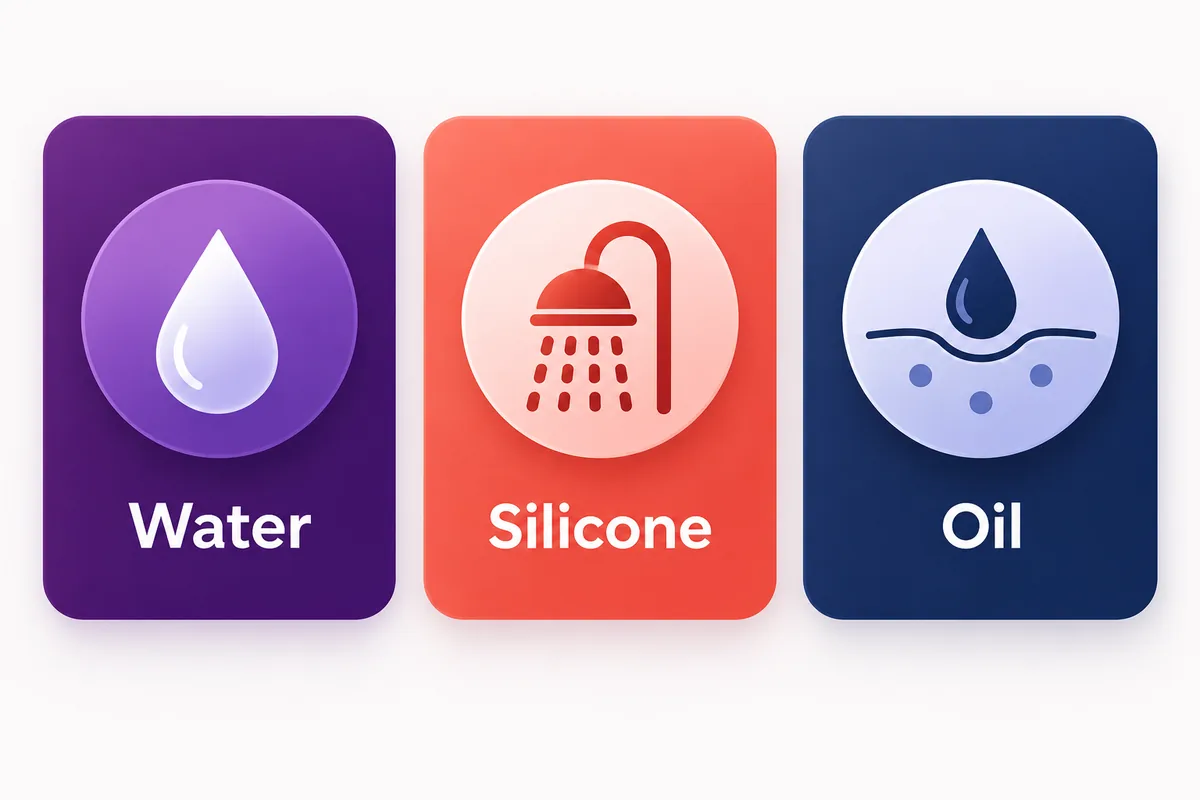
The best lube depends on what else is in the room. Start with whatever rules options out, like condoms and toys, then choose for comfort.
With condoms or silicone toys
Latex condoms rule out oil, which leaves water-based or silicone lube. The CDC gives the same advice, as Medical News Today reports. Silicone toys rule out silicone lube, which leaves water-based. If you use latex condoms and silicone toys together, water-based is the only type that is safe with both.
For anal sex
Use more lube than you think you need, and reapply often. The anal canal makes no fluid of its own, and its sphincter muscle resists more than the vagina does. Lube also makes condoms safer here. Water-based lube lowers the chance of a condom breaking during anal sex, while oil and saliva raise it.
For anal sex, silicone lube is a strong choice as long as no silicone toy is involved. A thick water-based lube is the alternative when toys are part of play, and numbing lubes are best avoided, since pain is how you know to slow down.
For vaginal dryness and menopause
Lubricants and vaginal moisturizers do different jobs. A lubricant eases friction during sex but does not change the tissue itself. A moisturizer is applied on a regular schedule, sex or no sex, to relieve dryness day to day.
Dryness after menopause is common. One UCI Health report puts it at up to 57% of postmenopausal women. Harvard Health describes a trial where vaginal estrogen and a vaginal moisturizer each eased symptoms by 50% to 70%, yet a slippery placebo gel did about as well. If lube alone does not fix the discomfort, a moisturizer or low-dose vaginal estrogen may help, so it is worth raising with a clinician. Pain that keeps coming back is also a reason to get checked, since infections and skin conditions can cause it.
When you are trying to conceive
Many common lubes slow sperm down. OB-GYN Lakeisha Richardson told Healthline that ingredients like glycerin, parabens, propylene glycol, petroleum and silicone can all affect how well sperm swim. A women’s health clinic in Washington, D.C., points to a study where some store-bought lubes slowed sperm while a lube designed for conception did not.
The evidence is not one-sided, though. Two studies found that using lube did not lower pregnancy rates in couples trying to conceive. Skipping sex in the fertile window because it hurts is likely a bigger problem than the lube. If you need lube while trying, pick one labelled “fertility-friendly” or “sperm-friendly”. And remember that a lube that slows sperm is not birth control.
How to try a new lube safely
A new lube is a new product on very sensitive skin, so treat the first use like a trial. Here’s how to do it:
- Read the label before you buy. Check the base, then scan for glycerin, parabens, fragrance, numbing agents and spermicides such as nonoxynol-9, since physicians advise avoiding them.
- Patch test first. Dab a little on your inner arm or the outer genital skin and wait a day; if there is no redness or itching, you can move on.
- Check compatibility. Match the lube to your condom material and your toys, using the table near the top of this guide.
- Start small and add more. Warm a small amount between your fingers, apply it to both partners or to the toy, and add more as it dries until the glide feels smooth.
- Clean up the right way. Rinse water-based lube with water, use mild soap for silicone and oil, and wash toys after every use.
- Watch for a reaction. Burning, itching or unusual discharge in the next few days is a sign to stop using that product, and symptoms that last are worth showing to a clinician.
Frequently asked questions
Which type of lubricant is best?
No single lube is best for everyone, and Nebraska Medicine’s OB-GYN makes the same point. For most people, water-based is the best first choice because it works with all condoms and toys. Silicone is better for long sessions, shower sex and anal sex without silicone toys. Oil-based suits massage and solo play when no latex is used.
Which lubricant is safe for females?
A plain water-based or silicone lube is the safest pick for vaginal use. The American College of Obstetricians and Gynecologists recommends these two types to avoid irritation, as DrWeil.com reports. Look for a short ingredient list without glycerin, parabens or fragrance. If you get yeast infections or bacterial vaginosis often, a pH-matched, glycerin-free formula is the cautious choice.
What lube doesn’t throw off pH balance?
Look for a water-based lube labelled pH-balanced, with a pH near 4.5 for vaginal sex. Healthy vaginal pH runs from about 3.8 to 4.5. Even so, one study found that a water-based lube raised vaginal pH only briefly, and it returned to normal within about a day.
Is baby oil anally safe?
Baby oil is not a good anal lube. Physicians writing in the British Columbia Medical Journal list it among products that should not be used as lubricants. It also breaks down latex condoms, which raises the risk of a condom tearing. For anal sex, silicone lube or a thick water-based lube is the better pick.
Can I mix different types of lube?
You can use different lubes on different occasions, but mixing them in one session gains little. Silicone does not react with water, so a water-based lube will not rinse silicone away. Oil added to any lube still weakens latex condoms. If you switch types, clean the skin or toy first and check compatibility again.
The bottom line
Knowing how to choose lube comes down to ruling things out first. Latex condoms rule out oil, and silicone toys rule out silicone lube. From whatever is left, choose for comfort: water-based for easy cleanup and flexibility, silicone for staying power and water play.
When you read the label, a short ingredient list, no numbing agents, and an “iso-osmolar” or pH-balanced claim are all good signs. Patch test anything new.
If sex still hurts after you find a lube you like, the lube is not the problem to solve. Persistent pain or dryness is worth a visit to a doctor, and there are treatments that help.
Related reading
- How to Prepare for Sex: Talking, Protection, Comfort and Hygiene
- Aftercare After Sex: What It Is and How to Do It Well
- What Is Sexual Arousal?
- What Is Sexual Pleasure?
Sources
- How To Pick A Lubricant - Clue (BioWink GmbH)
- Is olive oil safe to use as a sexual lubricant? - Medical News Today
- Why Would a Condom Break? Broken Condom Signs and Risks - WebMD
- What Lube Can You Use With Condoms? A Complete Guide - Condom Depot
- Lubricants and Moisturizers - Pelvic Health Solutions
- Sexual lubricants: Practice tips - British Columbia Medical Journal
- Condom Guide: Latex vs Non-Latex Condoms - ASTROGLIDE (Biofilm Inc.)
- Are Vaginal Lubricant Products Harmful? - DrWeil.com
- You asked, we answered: Which personal lubricant is best? - Nebraska Medicine
- Water-based lubricants are safe for vaginal use, a UCI study shows - UCI Health
- Don’t ignore vaginal dryness and pain - Harvard Health Publishing
- If You’re Trying to Conceive, Using the Right Lube Is Key - Healthline
- Avoid Lubricants If Trying to Conceive - Intimate Medicine (Dr. James Simon)