How to Prepare for Sex: Talking, Protection, Comfort and Hygiene
How to prepare for sex as an adult: what to discuss with a partner, choosing protection and contraception, STI testing, hygiene, comfort and a backup plan.

General education, not medical advice. If something here worries you, talk with a clinician.
Table of Contents
Learning how to prepare for sex comes down to three jobs: talking with your partner, choosing your protection, and handling a few comfort and hygiene basics. Most of that work happens days ahead rather than minutes before, which means fewer awkward pauses and less to worry about once things start.
This guide is written for adults. It works for a first time, a first time with someone new, or a long relationship where you want sex to feel safer and easier. You will find what to say, how well each birth control method works, when to get tested, which hygiene habits help, and what to do if a condom breaks.
Nothing here needs to feel clinical. A little planning simply clears the way, so you can pay attention to each other instead of to everything that might go wrong.
Talk with your partner before the moment arrives
The most useful preparation is a conversation, held somewhere calm and well before anyone is undressed. Cover three things: what each of you is up for, your sexual health, and what you both expect. The CDC advises talking with partners before sex so you can both make informed choices about your health.

Consent and limits
Consent means each person clearly and willingly agrees to the sexual activity, according to UC Riverside’s campus advocacy office. Silence or a lack of resistance does not count as a yes. Agreeing to one activity, like kissing, is not agreement to everything else, and a yes last week does not carry over to tonight.
Either of you can change your mind at any point, and once someone does, the activity stops. Saying your limits out loud ahead of time makes that easier. Try something like “I’d like to go slowly, and I’m not ready for oral sex yet.” If one of you is a virgin, say so. The Centre for Sexuality suggests talking through the kinds of sex each of you wants and not pressuring each other toward anything the other is not ready for.
Sexual health and testing
Ask when your partner was last tested for STIs, share your own answer, and consider getting tested together. Planned Parenthood says the best time to raise testing is before any sex, oral sex included. It also points out that most people with an STD have no symptoms, so a test is the only way to know.
Anyone who has an STI should tell their partner, even while on treatment. Being respectful and nonjudgmental keeps the conversation productive.
Expectations and how to start the talk
Talk about what you each want from sex, and who is handling birth control. Then decide what happens if you change your mind halfway.
Opening lines can be simple. Planned Parenthood suggests framing the testing question as care for both of you rather than suspicion. For example: “I got tested last month and I’m clear. Would you be up for getting tested before we sleep together?” A partner who brushes off every question about safety is giving you useful information too.
Choose your protection and contraception ahead of time
Decide on protection before the date, because a late-night pharmacy run rarely happens once things get going. If pregnancy is possible, you need contraception, and if either of you could have an STI, you need a barrier as well. The CDC notes that most birth control methods do not protect against sexually transmitted infections, including HIV.
How well common methods work
The CDC publishes typical-use failure rates, which reflect how people actually use each method in everyday life, slips included. A lower number means fewer unplanned pregnancies.
| Method | Typical-use failure rate | Protects against STIs? |
|---|---|---|
| Implant | 0.1% | No |
| Hormonal IUD | 0.1-0.4% | No |
| Copper IUD | 0.8% | No |
| Shot (every three months) | 4% | No |
| Pill, patch or ring | 7% | No |
| External (male) condom | 13% | Yes, latex condoms help |
| Internal (female) condom | 21% | Might help |
Long-acting methods sit at the top of the table because there is nothing to remember on the day itself. Condoms rank lower mainly because they only work when they are used every time and used correctly.
Condoms: the one method that does both jobs
Condoms are the common method that lowers the risk of both pregnancy and sexually transmitted diseases. The CDC is clear that they reduce these risks without removing them entirely. They work best against infections carried in genital fluids, such as gonorrhea and chlamydia. The CDC says they do not protect against infections spread by skin-to-skin contact, such as genital herpes or syphilis. Those infections can pass from skin that a condom does not cover.
Good condom habits start well before sex. Check the expiry date, and keep a small supply at home instead of relying on a single condom that has lived in a wallet for months. Use a new condom for the whole of every act of vaginal, anal or oral sex. To put one on, the CDC says to pinch the tip to leave a half-inch gap, then unroll the condom all the way to the base. If one breaks, stop straight away and put on a new one. For oral sex on a vulva or anus, a dental dam provides a similar barrier.
Doubling up
Many couples combine a condom with a hormonal method or an IUD. The CDC notes that using condoms alongside another contraceptive method helps protect against HIV and other infections. That combination gives you a highly effective method against pregnancy plus a physical barrier against infection. If the condom slips or breaks, the other method still guards against pregnancy. Nothing is left guarding against infection, though, so the condom needs care every time.
Get tested and check your vaccines
Yes, testing before sex with a new partner is a sensible step. STIs often cause no symptoms, so feeling fine tells you little. A test result gives you both something firmer to go on.
Who should get tested and how often
The CDC’s general guidance sets a baseline. Everyone aged 13 to 64 should have at least one HIV test. Sexually active women under 25 should be tested for gonorrhea and chlamydia every year. Some women 25 and older need yearly testing too, for example when they have a new partner.
Gay and bisexual men are advised to test for syphilis, chlamydia, gonorrhea and HIV at least yearly. With multiple or anonymous partners, that rises to every 3 to 6 months. If you have oral or anal sex, ask your provider about throat and rectal testing.
You do not always need a clinic visit. The CDC lists FDA-approved self-tests and mail-in kits for several infections, and many clinics offer free or low-cost confidential testing.
Vaccines and PrEP
The HPV vaccine is worth checking before you become sexually active with someone new. The CDC recommends the HPV vaccine through age 26 for anyone who missed it earlier. Adults aged 27 to 45 can decide with a clinician whether it still makes sense for them.
PrEP is a daily pill for people at higher risk of HIV, such as those with an HIV-positive partner. Stony Brook Medicine reports that, taken consistently, it can lower the risk of getting HIV by more than 90%. It does not prevent other STIs, so condoms still matter.
Hygiene: what helps and what to skip
A shower with warm water is all the cleaning most bodies need before sex. The bigger risk is overdoing it with products that irritate sensitive skin or disturb the natural balance of the genitals.
A simple wash is enough
Rinse the outside of the genitals with warm water, and add a mild soap if your skin tolerates it. The vagina cleans itself naturally with its own mucus, so it needs no help on the inside. That is why the U.S. Office on Women’s Health says doctors recommend against douching, which means rinsing out the inside of the vagina.
Douching can disturb the normal balance of bacteria and acidity in the vagina. That disruption can lead to yeast infections or bacterial vaginosis (BV), a common vaginal infection. According to the Office on Women’s Health, women who douche once a week are five times more likely to develop BV than women who do not. Scented washes and sprays are best skipped for the same reason, since they add nothing a plain rinse does not.
A mild smell is normal, even right after a shower, and it changes naturally through the day. A strong odor together with itching or unusual discharge is different, and it is a good reason to see a nurse or doctor before having sex.
Hands, nails, mouth and grooming
Wash your hands, and trim or file your nails if fingers will be involved, since a jagged edge can scratch delicate skin. Brushing your teeth or chewing gum beforehand is a small courtesy that most partners notice.
Pubic hair is a personal choice. An ob-gyn writing for the American College of Obstetricians and Gynecologists (ACOG) says there is no medical reason to remove it. The hair even protects skin from friction during sex. If you want to groom, trimming is the safest option because it does not cut close to the skin. Shaving can cause rashes, ingrown hairs and infection, so use a new, clean razor every time. Hair removal creams can irritate genital skin and are best avoided. Waxing carries its own risks, including burns and small cuts.
Set yourself up for comfort
Comfort mostly comes from three things: the right lubricant, enough time to get aroused, and a clear head. Each of them also helps your protection work the way it should.
Pick a lubricant that works with your condoms
Lubricant reduces friction, and a little extra on the outside of a condom helps prevent it from breaking. With latex condoms, choose a water-based or silicone lubricant, both of which the Centre for Sexuality describes as safe for condoms. Avoid oil-based products such as petroleum jelly or body lotion, which the CDC warns can weaken latex and break the condom.
Not everyone can use latex. People with a latex allergy usually switch to condoms made from polyurethane or polyisoprene. Avoid “natural” or lambskin condoms if infection is a concern, because the CDC notes they may not protect against STIs, including HIV.
Lubricants also differ in how they feel on the skin. An ob-gyn writing for Prevention notes that silicone lubricants stay slippery longer and tend not to irritate. Some water-based products contain glycerin or propylene glycol, which can dry out vaginal tissue with regular use. If a product stings or leaves you sore, switch to a different one.
Give arousal time
Bodies need time to warm up. The Centre for Sexuality recommends taking plenty of time to build excitement and relax the body before and during sex. Kissing, touching, massage and oral sex can all be part of that build-up, and a relaxed body is less likely to feel sore afterwards.
Pain is a signal to stop, slow down or change position, not something to push through. If you feel tense, say so out loud. Nerves can tighten the vaginal muscles, which makes small tears more likely, so slowing down and adding lubricant both help.
Go easy on alcohol and drugs
A drink can ease nerves, but heavy drinking works against almost every other step in this guide. A study in Archives of Sexual Behavior sums up earlier research, mostly in heterosexual young adults. That research has linked alcohol to seeing less risk in sex and to weaker skills at negotiating condom use. Make your protection plan while you are sober.
Alcohol and drugs affect consent too, because consent cannot come from someone who is incapacitated. If either of you is too drunk to talk clearly about what you want, save it for another night.
Set up the space
Keep condoms, lubricant and a towel within reach, silence your phone, and make sure the door locks. Small practical steps like these mean neither of you has to stop halfway to hunt for something.
Have a backup plan if something goes wrong
Even careful people have a condom slip or forget a pill. Knowing your options in advance turns a panic into a short to-do list.
Emergency contraception
Emergency contraception can be used up to 5 days after unprotected sex, according to Kaiser Permanente. Sooner is better. There are three main routes:
- Levonorgestrel pill (Plan B and similar): sold without a prescription and works best within 3 days. It may work less well for people over 165 pounds or with a BMI of 30 or higher.
- Ulipristal pill (ella): needs a prescription and can be taken up to 5 days after sex.
- An IUD: a copper IUD inserted within 5 days is nearly 100% effective, and a hormonal IUD can work the same way. It then keeps preventing pregnancy for years.
If you have used the pill, patch or ring in the last 5 days, mention it, because it affects which pill suits you best. After an emergency pill, start or restart your regular birth control right away. The pill only delays ovulation, so you could still get pregnant a few days later. Emergency contraception does nothing against STIs. Knowing where your nearest pharmacy sits, or keeping a pill at home, saves time if you need it.
PEP after a possible HIV exposure
If a condom breaks with a partner whose HIV status is unknown or positive, ask about PEP, short for post-exposure prophylaxis. It is a course of HIV medicines that must start within 72 hours of the exposure. Stony Brook Medicine advises starting ideally within hours, then taking it for 28 days. Emergency rooms, urgent care and sexual health clinics can prescribe it.
Afterwards, get tested rather than guessing. Many STIs show no symptoms at first. A clinic can tell you when testing will be accurate. If you and your partner talked about testing beforehand, that follow-up conversation will feel much less awkward.
A quick checklist before sex
Run through this list a day or two ahead, then once more on the night itself, so nothing important gets left to chance.
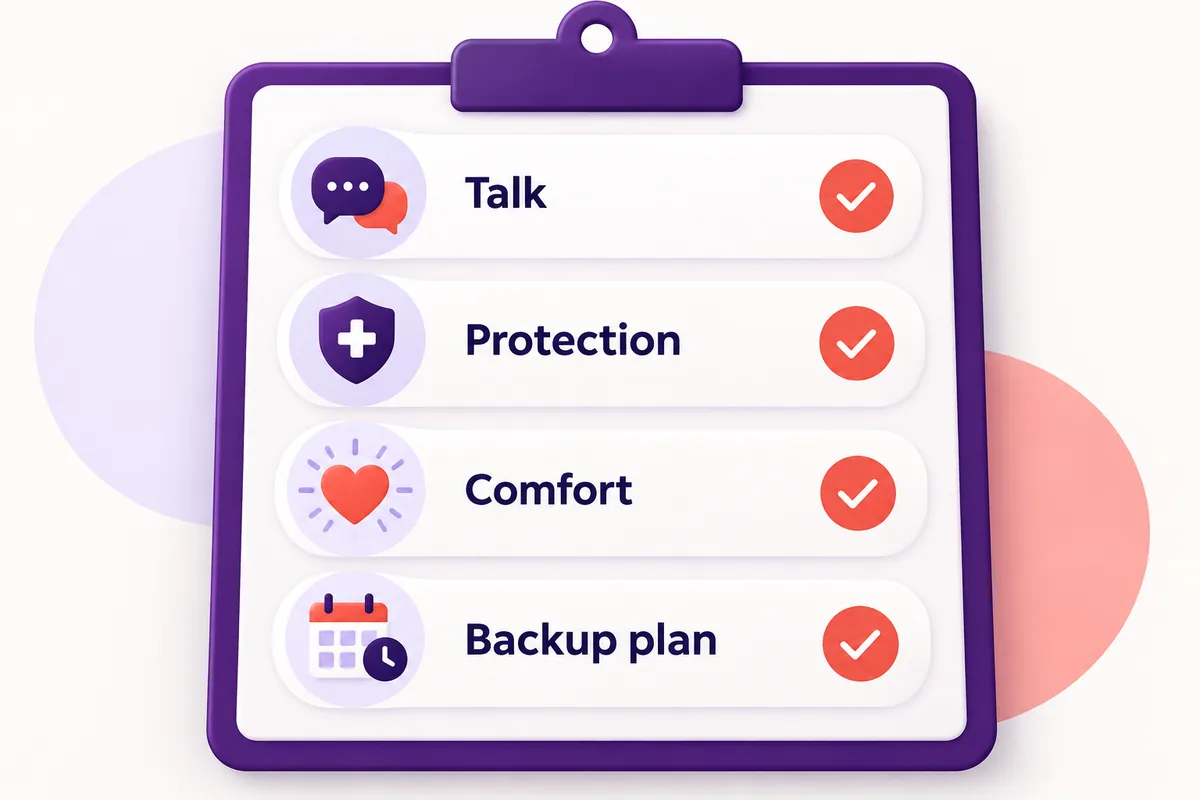
- Have the talk: you both know what you are comfortable with, what is off the table, and when each of you was last tested.
- Sort out contraception: whoever is using a method has started it properly, or you have both agreed to rely on condoms.
- Stock up on supplies: your condoms are within their expiry date, and a water-based or silicone lubricant is within easy reach.
- Book any tests or vaccines: your results are back, or you know exactly when they will arrive and what you will do meanwhile.
- Keep the shower simple: use warm water and a mild soap on the outside only, with no douching and no scented sprays.
- Check your hands and nails: your nails are short and smooth, and your hands are freshly washed.
- Keep the drinking light: you can both still talk clearly about what you want and notice how the other person is feeling.
- Know your backup plan: you already know where to get emergency contraception or PEP if a condom slips or breaks.
Should any step feel like too much right now, treat that as useful information, because it may mean you would rather wait, and waiting is always an option.
Frequently asked questions
What not to do before having sex?
Skip douching, which can upset the vagina’s natural balance of bacteria, and leave scented washes on the shelf. Avoid oil-based lotions or petroleum jelly with latex condoms, because they weaken latex. Do not get very drunk, because alcohol makes risky choices more likely. Finally, do not skip the conversation. Talking about testing and limits beforehand makes every other step easier.
How to smell fresh down there before sex?
Wash the outside with warm water and, if you like, a mild soap. That is enough. Every healthy vagina has a mild scent that changes through the day. Douching only masks odor for a short time and can make other problems worse. If you notice a strong smell with itching or unusual discharge, see a nurse or doctor first.
What is the least risky type of sex?
No partnered sex is completely free of risk. Massage and touching that avoids genital contact are the lowest-risk options, but kissing and genital touching can still pass on skin-contact infections such as herpes. For oral, vaginal and anal sex, a condom or dental dam lowers the risk of STIs considerably. The CDC says condoms do not protect against infections spread by skin-to-skin contact, such as herpes. Getting tested together before you start tells you both where you stand.
Does having sex for the first time hurt?
It does not have to. Pain usually means the body needs more time, more lube, or a different position. Spend time on foreplay and go slowly. Stop whenever something hurts, and add more lube or try another position before carrying on. Some people notice light bleeding, often from a small tear when muscles are tense. Pain that keeps happening is worth a checkup with a doctor or nurse.
The bottom line
Preparing for sex is mostly about doing the thinking early. Talk with your partner about limits and testing. Choose contraception and keep condoms and a compatible lube at hand. Keep hygiene simple, keep drinking light, and know where emergency contraception and PEP are if something slips.
None of these steps takes long, and together they let you relax and focus on each other. If you have questions about birth control, testing or vaccines, a sexual health clinic or your doctor can answer them in a single visit. Booking that appointment is a good first step.
Related reading
- How to Choose Lube: Water, Silicone or Oil?
- Aftercare After Sex: What It Is and How to Do It Well
- What Is a Sex-Positive Relationship?
- Arousal and consent
Sources
- Conversation Tips - U.S. Centers for Disease Control and Prevention (CDC)
- What is Consent? - UC Riverside CARE (Campus Advocacy, Resources & Education)
- The First Time - Centre for Sexuality
- How Do I Talk With My Partner About STD Testing? - Planned Parenthood
- Contraception - U.S. Centers for Disease Control and Prevention (CDC)
- Condom Use: An Overview - U.S. Centers for Disease Control and Prevention (CDC)
- Getting Tested for STIs - U.S. Centers for Disease Control and Prevention (CDC)
- HPV Vaccination Considerations - U.S. Centers for Disease Control and Prevention (CDC)
- PrEP and PEP for HIV Prevention - Stony Brook Medicine
- Douching - U.S. Office on Women’s Health (womenshealth.gov)
- To Shave or Not to Shave: An Ob-Gyn’s Guide to Pubic Hair Care - American College of Obstetricians and Gynecologists (ACOG)
- Water vs. Silicone Lube: Which Is Better? An Ob/Gyn Explains - Prevention
- The Effects of Alcohol and Sexual Arousal on Determinants of Sexual Risk in Men Who Have Sex with Men - Archives of Sexual Behavior (via PubMed Central, NIH)
- Emergency contraception - Kaiser Permanente