Low-Effort Lying-Down Sex Positions: Prone Bone, Speed Bump, and Dragon
The prone bone, speed bump, and dragon explained: low-effort lying-down sex positions for fatigue, chronic pain, sore joints, and pregnancy comfort.

General education, not medical advice. If something here worries you, talk with a clinician.
Table of Contents
Some sex positions ask for athleticism. These three ask for a pillow. The prone bone, the speed bump, and the dragon are all low-effort lying-down sex positions. In each one the receiving partner settles face down, and nobody has to hold a plank, balance anywhere, or fold into a shape.
That makes them useful well beyond a lazy morning. Fatigue, arthritis, hypermobility, chronic pain, and a growing belly all shrink the menu of what a body can comfortably do on any given day. Each name below gets decoded, each position gets a plain description, and a comparison table matches them to the body and the energy you actually have tonight.
What makes a sex position low-effort
An effortless position is not luck. It is three mechanical choices, and once you can see them you can judge any position, not only the three named here. The stakes are real: research cited by SELF finds up to 78 percent of people with chronic pain report difficulties with sex. Positions that work with a tired or sore body all follow the same principles.

Weight the body does not have to hold
All-fours positions load the wrists and knees for as long as they last. Lying face down hands that job to the mattress. Arthritis educators specifically recommend the face-down arrangement for receiving partners with hip, hand, or knee trouble, because those joints stop bearing weight. A pillow under the hips does the rest, tilting the pelvis into a workable angle that core strength would otherwise have to hold.
Small movements, not big ones
Rocking and grinding cost less energy than long thrusting, which is the entire logic of the dragon’s slow circles. Range of motion matters just as much as pace. Rehabilitation specialists who work with hypermobile joints state the rule bluntly. Keep joints in their stable mid range, support them with pillows, and never load soft tissue at end range. Spine researchers frame the same idea for backs: generate movement from the hips and knees rather than the spine.
Who moves is a choice
Effort can sit almost entirely with one partner, and it can move between them mid-session. In the prone bone the receiving partner can stay completely still while the other does the moving. In the speed bump the upright partner handles nearly all of it by design. One exhaustion-focused guide builds its whole list on that idea, and spooning tops it precisely because both partners can stop holding themselves up. Deciding together who has the energy tonight is a legitimate part of choosing a position, and switching roles halfway through is allowed.
The prone bone: doggy style lying flat
The prone bone is doggy style lying flat, and it is about as easy as it sounds. Prone simply means lying face down. The receiving partner settles flat on their stomach, usually with legs together. The giving partner lies along their back or hovers over it, entering from behind. In this shape, the mattress does the holding.
What the name means
Prone is the standard anatomical word for face down, and the slang pairs it with sex itself. Guides define the position as lying flat with the front of the body down. The receiving partner stays in a neutral shape, with no real bending or stretching. Sex columnist Zachary Zane compresses it to a single line: doggy style, except you lie flat on your face. Entry takes a small trick at first, because the flat angle hides what doggy style leaves open. Many couples start in doggy and lower down together, or the receiver lifts the hips an inch; lubricant helps.
Who it suits
The receiving partner holds nothing up and can stay completely still. Arthritis educators single out this exact arrangement for partners whose hips, hands, or knees make all-fours painful. One positioning guide adds that it puts less strain on the back and knees than traditional positions. The even weight distribution lets couples stay in it longer, too. That combination suits fatigue, sore joints, a long day, or any evening when acrobatics are off the table.
What to watch
The angle runs deeper than doggy style. Squeezing the legs together can intensify orgasm for many women. The partner on top should carry their own weight on their forearms instead of collapsing flat. Clitoral reach is awkward in this shape, so a small vibrator against the mattress is the usual workaround. Two cautions finish the list. Skip it if your neck is the problem, since lying face down turns the head sideways. And a growing belly eventually ends face-down lying, as a comfort matter rather than a safety one.
The speed bump: the pillow does the work
The speed bump is the prone bone with a pillow doing the real work. To set it up, the receiving partner lies face down with a pillow or wedge under the lower abdomen and hips. The giving partner kneels upright behind rather than lying down. That pillow is the speed bump: it lifts the hips into an accessible angle so the position holds itself.
What the name means
The name is literal. Lie flat, slide a pillow under the hips, and the raised shape underneath is the bump. The giving partner kneels behind it and bends forward, hands planted on either side of the partner’s chest. The position traveled under that label through TikTok, where it became a favorite of the low-energy crowd.
Who it suits
Certified sex educators call it low impact for the receiving partner, who does not need to support, hold, or contort themselves in any way. Lie down, let the pillow set the angle, and stay there. Face-down lying also suits sore backs and joints that dislike all-fours. The kneeling partner sets the pace, which fits a night when one of you has energy and the other does not. Height differences stop being a problem too, because stacking pillows raises the receiver to match a taller partner.
What to watch
Pillow height changes everything, so treat it as adjustable rather than fixed. Experts suggest stacking as many pillows as needed to handle comfort and height differences. The kneeling partner may want a knee pad underneath on a hard floor. The raised angle allows deep penetration, and that depth can overwhelm some receiving partners, so agree on a signal to slow down before it matters. One honest con: the top does essentially all the work, and experts warn it can become too much of a workout. A slow, steady pace solves the endurance problem.
The dragon: the slow, close cousin
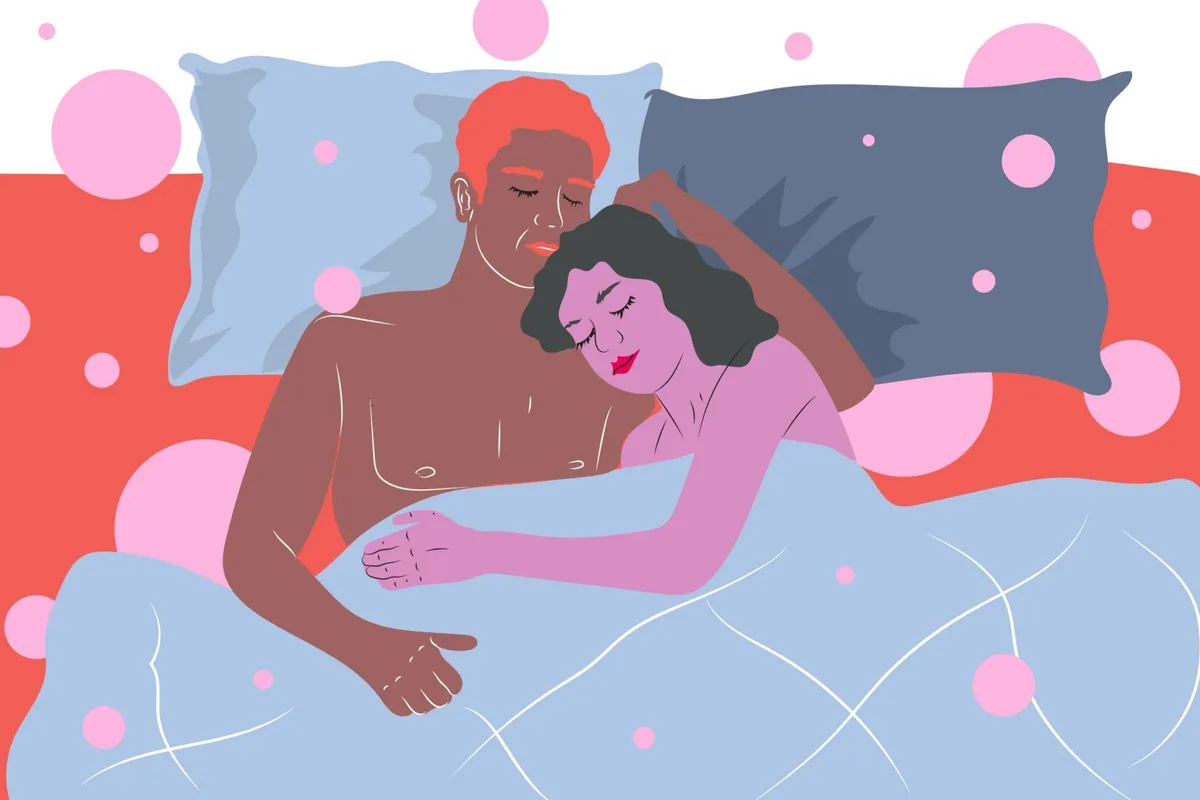
The dragon is the slow, close cousin among these three. It uses the same face-down shape, but it is built for grinding rather than thrusting. The receiving partner lies face down with arms stretched above the head and a pillow under the pubic bone. The giving partner lies full length along the back and moves in slow circles.
What the name means
Guides describe the setup as the flatiron position plus a pillow. The person being penetrated lies face down with a pillow under the pubic area to lift the hips slightly. Both partners usually rest their arms stretched above their heads. The partner on top lies face down too, aligned along the other’s back, and moves in small circular motions instead of fast thrusts. Cosmopolitan India frames it as the position for slow evenings, the kind where touching matters more than pace.
Who it suits
This is the least movement of the three, which makes it the flare-day pick when strong fatigue or chronic pain sets the agenda. The circles ask for almost no range of motion and no holding. Joints stay mid-range and supported. Full-length contact puts neck kisses and back kisses within easy reach, and the rear-entry angle still allows that closeness. The circling also changes the sensation: Women’s Health notes the circular motion stimulates the entire vagina. Lying flat suits anyone who gets lightheaded when upright, too, since dysautonomia advice keeps people horizontal on purpose.
What to watch
The top partner must not drop their full weight onto the person below; forearms take the load. Both partners’ arms rest overhead, so agree on depth with words before the circles start. Two bodies lying flat trap heat, and a lighter cover helps more than a position change. Slow only works if both people enjoy slow. The circles deliberately delay climax for the penetrating partner, which some couples count as the feature and others as the frustration. It is also the easiest of the three to pause: the movement can simply stop and become a cuddle.
Matching the position to your body and your day
All three positions are low-effort, but they share out the work differently. The table below is the short version, and the two situations after it cover the bodies most readers arrive with.
A side-by-side comparison
| Position | Who bears the weight | How much movement | Best for | Main watch-out |
|---|---|---|---|---|
| Prone bone | The mattress holds the receiver; the top braces on forearms | The receiver can stay still; the top sets the pace | Fatigue, sore wrists or knees, wanting stillness | Deeper than doggy; clitoral reach is awkward |
| Speed bump | A pillow under the hips; the top kneels behind | The top does nearly all the moving | Zero-effort receiving, sore backs, height differences | Depth can overwhelm; agree on a slow-down signal |
| Dragon | Both lie flat; the top rides on forearms | Slow circles only, the least of the three | Flare days, closeness, feeling lightheaded upright | The top must not collapse; two bodies trap heat |
If pain, fatigue, or hypermobility sets the pace
Arthritis educators recommend face-down positions for receiving partners with hip, hand, or knee problems. A wedge or pillow under the hips helps when lying fully flat is hard. When thrusting itself is the painful part, side-lying scissoring earns a specific mention from the same educators for its low impact. For hypermobile joints, the rule from rehabilitation specialists is to stay in the stable mid range, support joints with pillows, and never hang at end range under load. Even the comfortable shapes get a time limit. Rehabilitation specialists report that sustained positions cause problems at otherwise tolerable angles, and the chronic-pain communities they draw on switch every few minutes. On flare days the dragon asks the least of the three: circles, no thrusting, nothing to hold.
Chronic-pain clinicians add the principle behind all of it. Choose positions that put less pressure on the area that hurts, and use pillows to support that area. If being upright drops your blood pressure, flat and side-lying shapes are the deliberate choice in dysautonomia guidance.
If you are pregnant
ACOG’s answer is plain: most sexual activity, including intercourse and penetration with fingers or toys, is safe in a healthy pregnancy. The amniotic sac and the strong muscles of the uterus cushion the fetus. What changes is comfort. As the belly grows, ACOG suggests trying different positions to find what feels best. Belly-down shapes stop being practical well before they become a safety question. The usual swap is side-lying spooning, where both partners lie on their sides facing the same way and effort falls to almost nothing. Desire moves with the trimesters as well: often low early on, back in the middle, and down again near the end. Complications, or questions about your own pregnancy, belong with your ob-gyn rather than with a position list.
Pillows, wedges, and small adjustments
A pillow is the entire equipment list for these three positions, and where it goes decides what it does. Nearly every guide mentions pillows in passing; few explain the placement, so here it is.
Where the pillow goes
Under the hips or pelvis, a pillow tilts the angle and changes how deep entry feels, with no effort from either partner. Under the chest or head, it protects the neck during long stretches face down. Firmness matters more than most people expect. Soft bedroom pillows flatten under body weight, while firm pillows and purpose-made wedges hold the angle. HealthCentral describes the purpose-built version: high-density foam that keeps its shape, takes pressure off the neck and back, and comes with a washable cover. Leave the chest room to breathe, too. Guides warn that face-down support can compress breathing, and the fix is pillow height rather than endurance.
Beyond the pillow
Knee protection saves the kneeling partner in the speed bump; chronic-pain communities go as far as gardening knee pads. Expensive wedges are optional. Rehabilitation specialists note that cheap post-surgery wedges do the same job as the purpose-made sex versions. Bracing counts as a prop as well. Some people keep soft knee supports or kinesiology tape on the joints that slide, trading looks for stability. Hands-free toys fill the gap when arms and hips are finished for the day. A small bullet vibrator between the receiving partner and the pillow adds clitoral stimulation that face-down angles make awkward to reach by hand. For couples with arthritis-stiff hands, educators make the same point more broadly: vibrators do the work fingers cannot.
If it hurts: adjust, then ask
Some discomfort has a fix and some has a doctor, and telling the two apart matters more than any position choice.
Adjust, don’t endure
A sharp pain during sex is a stop signal. Rehabilitation specialists are blunt about it: stop, come slowly back to neutral, and assess. Pushing through a position that hurts can turn a brief pause into a week-long flare. Almost everything else is adjustable. Shift the angle, add or move a pillow, or swap positions halfway through. ACOG lists choosing comfortable activities and using lubricant among the standard self-help measures. Often a pillow under the sore area is the whole fix. Soreness from holding one shape is different from sharp pain, and it usually eases as soon as you move.
When to ask a professional
Pain with sex is common enough that you will not be the first person to raise it. ACOG puts it at nearly 3 out of 4 women experiencing pain during intercourse at some point in their lives. Pain that recurs every time, or that persists with a partner you know well, deserves a check rather than another pillow. An ob-gyn can rule out conditions such as endometriosis or vaginismus. A physical therapist may join the evaluation and treatment. Clinicians who treat chronic pain are told to refer on to a sexual therapist when positions and strategies stop helping. For them the conversation is routine. Pain that follows you across positions is a symptom, and symptoms get named to a clinician.
Frequently asked questions
What position is a speed bump?
A face-down position with a pillow under the hips. The receiving partner lies flat on the stomach with a pillow or wedge beneath the lower abdomen and hips, and the giving partner kneels behind. TikTok made it famous as a favorite low-energy position. It suits anyone whose wrists, knees, or core would rather not work tonight.
What does prone mean in sex?
Prone means lying face down. The prone bone is doggy style in that flat shape. The receiving partner lies on the stomach while the giving partner enters from behind, lying along or hovering over their back.
Why does the speed bump position feel so good?
The pillow tilts the pelvis into an angle that allows G-spot stimulation and very deep penetration. Just as important, the position asks so little of the receiver that staying relaxed is easy. Adding clitoral stimulation by hand or toy helps, since penetration alone rarely produces orgasm.
Does having sex help with chronic pain?
For some people, partly. Research cited by clinicians shows orgasm raises the pain threshold. In a German study of people with migraine or cluster headaches, about 60 percent said sexual activity considerably or completely improved their symptoms. Endorphins are the suspected mechanism. It is relief on loan, not a treatment plan, and flare days still call for gentle positions.
Are lying-down positions safe during pregnancy?
In an uncomplicated pregnancy, yes. ACOG says most sexual activity is safe, including intercourse and penetration with fingers or toys. Once the bump makes lying face down uncomfortable, swap belly-down shapes for side-lying spooning, where both partners rest on their sides.
Match the position to the day
The right position is whichever one tonight’s body allows. Tired but able to move: the prone bone, flat and quiet. A pillow and a partner with energy: the speed bump. Flare day, or needing closeness: the dragon.
None of the three asks for strength, flexibility, or a diagram, and each one bends to a folded towel or an extra cushion. If a position hurts, adjust it or drop it. If all three are off the table tonight, side-lying spooning is the fallback that outlasts everything. Sex that asks little of the body is still sex, and naming what needs to change out loud does more work than any position on this list.
Related reading
- What Is Spooning Sex? The Side-Lying Position Explained
- What Is Doggy Style Sex? The Position, Its Variations, and How to Keep It Comfortable
- Advanced Sex Positions and Their Injury Risks
- How to Choose Lube: Water, Silicone or Oil?
Sources
- How to Have Great Sex If You Deal With Chronic Pain - SELF
- 6 Sex Positions Worth Trying When You Have Arthritis - CreakyJoints (arthritis patient education community)
- Speed Bump Sex Position: How to Do It, According to Experts - Men’s Health
- Exactly How to Try the Dragon Sex Position - Women’s Health UK
- Sex with Hypermobility and Chronic Pain: Positions That Actually Work - The Fibro Guy (hypermobility and chronic pain rehabilitation clinic)
- Improving the Sex Lives of Patients With Chronic Pain - MedCentral (Practical Pain Management, clinician-facing)
- 7 sex positions for when you’re exhausted but still DTF - Bedsider (Power to Decide sexual health education project)
- The prone bone sex position is doggy with a (lazy girl) twist - Yahoo New Zealand (Cosmopolitan UK sex columnist Zachary Zane)
- Prone Bone Position: A Beginner’s Guide to Getting It Right - WeLovePlugs (sex toy retailer blog)
- Is it safe to have sex during pregnancy? - American College of Obstetricians and Gynecologists (ACOG)
- The “Speed Bump” Is TikTok’s Favorite Lazy-Girl Sex Position - LittleThings (lifestyle site)
- Everything you need to know about the dragon sex position - Cosmopolitan India
- The Manual for Better Sex With a Chronic Condition - HealthCentral (medically reviewed)
- When Sex Is Painful - American College of Obstetricians and Gynecologists (ACOG)