Sex Positions Where You Get Pinned Down: What to Know Before You Try One
There is no official name for being pinned down during sex. Here is what to call it, how to ask for it, agree on a safe word, and protect necks and joints.
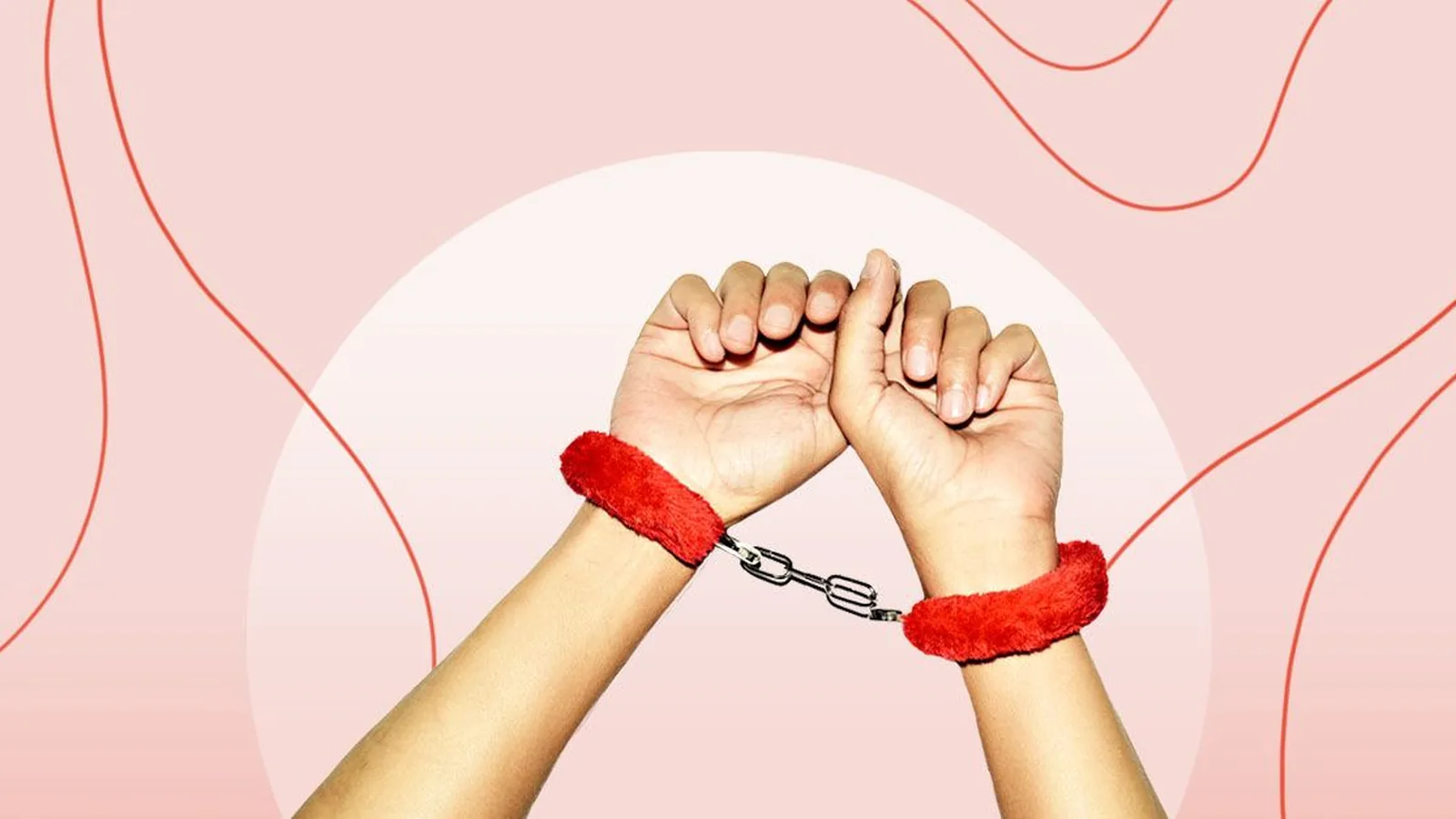
General education, not medical advice. If something here worries you, talk with a clinician.
Table of Contents
There is no single official name for the sex positions where you get pinned down. The phrase describes a family of moves built around one element: a partner’s hands, grip, or body weight holding you still. Guides file the named versions under different labels, from missionary with wrists held to standing variants braced against a wall.
Wanting this is common. It sits inside what kink educators call power play, the exchange of control, and it can be anything from a passing preference to a whole identity. The positions themselves are the easy part.
What deserves your attention is everything around them: how you ask, what you agree on in advance, and how you keep necks, joints, and breathing out of trouble. This guide covers the names, the psychology, the conversation, the stop signals, and the physical safety that most position guides skip.
What positions where you get pinned down are actually called
There is no single official name
Search that phrase and you will land on two kinds of pages: general position listicles and kink guides. Neither hands you a dictionary entry, because pinning is not a position. It is an element, a grip or a body weight that keeps one partner still, added to moves you already know.
Kink guides file that element under power play and power exchange, the same territory as bondage with cuffs or rope. A hand on the wrists is the version that needs no equipment. Mainstream guides treat these moves as ordinary variations. wikiHow’s 25-position guide lists “stand and deliver” among its comfort picks, and beginner bondage guides lead with missionary and wrists tied to the bed posts, calling it simple.
Named positions that involve being held down
The versions below are the ones you are most likely to meet in guides. Each one is a base position plus something that holds you in place.
| Version | How the holding happens | What to agree on first |
|---|---|---|
| Missionary, wrists held or tied | You lie on your back; your partner’s weight pins you while your wrists are held beside you or above your head, or tied to the bed posts | How the wrists are held and how firm, and where your arms rest |
| Spread eagle | You lie back with arms and legs held wide, by hands or by restraints | How wide, and how long you stay there |
| Standing, braced | Both of you standing, your back against a wall or against your partner’s chest | Balance, and what happens when arms tire |
| From behind, hands held | Entry from behind with your wrists held still in front of you or behind your back | How far your shoulders can go, and where the wrists sit |
Standing versions deserve their own caution. Going vertical takes strength, balance, coordination, and above all communication between partners, as Men’s Health puts it in its standing-positions guide. A wall helps; so does agreeing who lets go if someone wobbles.
The grip does the work, not the position
What makes a position feel pinned is where the hands go and how much weight sits on you, more than the geometry of the base move. Missionary becomes pinning the moment your wrists are held. Entry from behind can be neutral or pinning depending on the same two choices.
That is good news for a beginner. You do not have to learn a new acrobatic position; you agree on a grip and add it to what you already do. It also means the negotiation matters more than the name. “Hold my wrists above my head” tells your partner exactly what you want. “Pin me down” leaves them guessing about force, duration, and the exit.
Why being held down feels the way it does

The power exchange in a pinned position
Being held still hands control to one partner and takes it from the other. That trade is the engine, and it is a large one. Relationship therapists who write about kink describe power play, where one partner submits to another who is dominant, as the most common feature in the long list of kinks.
The appeal is usually stillness rather than force. Someone being pinned gives up the running commentary of performance, the choosing, the pacing. The partner doing the holding gets visible proof of being trusted with all of it. Surrender only feels good with someone you believe will stop when asked, which is why the negotiation in the next section matters as much as anything physical.
You do not need a Dom or sub identity
Kink-aware guides are careful on this point. Submission shows up as single moments inside otherwise ordinary sex, as a planned scene with a start and a finish, or as an ongoing relationship. Couples decide for themselves whether any of it counts as BDSM. Healthline’s beginner guide to submission notes that thousands of small moments within traditional sex already carry elements of dominance and submission.
People report different reasons for liking it. Decision fatigue is one; a person who spends all day choosing sometimes wants the choosing done for them. Others are after intensity, closeness, or the plain relief of not being in charge for a while. Wanting to be held down is a preference, not a diagnosis. If anything sets this territory apart, the talking comes first: power exchange works because the exchange was agreed in advance.
Talking about it before you do it
Pick a moment with your clothes on
Bring this up outside the moment: over coffee, on a walk, in the car. Consent given under pressure, manipulation, or the influence of alcohol or drugs does not count as freely given. A calm conversation gives a no room to land and gives a yes room to mean something. Rape Crisis England & Wales frames good consent talk as ongoing small questions, from “is this okay?” to “do you want to stop?”.
Keep the opener plain. “I keep thinking about you holding my wrists down. Would you want to try that?” is harder to say than a hint and much harder to misread. Naming the specific thing also lets your partner say no to the grip while saying yes to you, which a vague request never allows.
Be specific about what holding down means
Vague agreements produce bad first attempts. Agree on the mechanics: where hands go, how much pressure, roughly how long, and what the exit looks like. A Yes/No/Maybe list makes the conversation concrete. Kink guides suggest writing it in three columns. Yes is what you want, maybe is what needs the right conditions, and no is what is off the table.
Risk-aware kink adds a layer beyond yes and no. RACK (Risk Aware Consensual Kink) and PRICK (Personal Responsibility Informed Consensual Kink) are the two standard frameworks. Both ask partners to name the risks of an activity beforehand instead of pretending there are none. For pinning, that conversation is short: joints, breathing, and what to do about numbness.
Plan for the answer being no, too. A partner can want you and still decline this, and the refusal is information rather than rejection. Rape Crisis England & Wales is direct about the response: respect the choice, and never try to change their mind or apply pressure. Taking a no well is also how a second conversation becomes possible, months or years from now, if their answer ever changes.
Consent that stays alive during the act
Planned Parenthood’s consent standard spells out as FRIES: freely given, reversible, informed, enthusiastic, and specific. Two of those matter most once someone is physically held. Reversible means anyone can change their mind at any time, even mid-act, even about something they agreed to earlier. Specific means a yes to missionary is a yes to missionary; the grip is its own question.
Rape Crisis England & Wales makes the same point from the other side. Consent is never a permit you are issued once; wanting something last night says nothing about tonight, and being in a relationship changes none of it.
Safe words and signals that work when your hands are held
Why ‘stop’ is not always enough
In most sex, “stop” works fine. In a scene where resistance is part of the script, it stops working. Kink communities call this consensual non-consent: everything is agreed in advance, but acting out reluctance makes “no” and “stop” part of the performance. A safe word exists to carry one meaning only. Bad Girls Bible’s bondage guide defines it as a word or phrase that tells your partner you need things to stop, temporarily or completely.
Pick a word neither of you would say by accident. Healthline’s educators suggest unrelated words, because “stop” only stays reliable when nobody is playing at resisting. The word itself matters less than the agreement that it always works, instantly, without discussion.
The traffic-light system
The usual scheme borrows three words from the road. Red means everything stops now. Yellow means ease off, adjust something, or check in. Green means what is happening works. Healthline describes yellow and red as the standard words in kink, with yellow asking for the action to slow down and red calling a pause.
Yellow is the useful one. It lets the pinned partner say “slower” or “my shoulder” without scrapping the scene. The holding partner gets an early signal instead of an emergency. Guides from therapy centers describe the same three-level scheme and suggest pairing it with a non-verbal signal.
Signals for when you cannot speak or your hands are held
Pinning takes your hands out of service, and some positions take speech with them. Non-verbal stop signals exist for exactly this situation. One option is holding something you can drop: a ball or a bell works, and a dropped object means stop. A tap code is another; a Gender & Sexuality Therapy Center guide suggests three taps for green, two taps for yellow, and one tap, the fastest to give, for red.
Whoever is doing the holding owns the check-in rhythm. A partner whose wrists are pinned cannot gesture freely, so the holder asks and the held partner answers on the agreed code. If the answer is slow, muddled, or stops coming, that itself is a stop signal. Rehearse the signal once before the first try, in daylight, with clothes on. A signal neither of you has practiced is easy to forget under pressure, and tap codes in particular need one dry run to feel natural.
Physical safety: neck, joints, and breathing
Keep all pressure off the neck
Start with the non-negotiable rule. Nothing in pinned play belongs on the front or sides of the neck. Brown University’s health service states it flatly: there is no risk-free way to engage in sexual choking, whatever the intensity or duration. A peer-reviewed review reaches the same conclusion: pressure on the neck can make someone unconscious in as little as 10 seconds, and death can occur within 2 minutes.
The timing surprises people, because blocking blood flow to the brain takes less pressure than opening a soda can. Brown’s page puts the short-term sequence at unconsciousness within 10 seconds, a seizure within 17 seconds, and death within 150 seconds. Delayed harm is the part nobody plans for. Clinical signs of strangulation can take 24 to 36 hours to appear, and neck swelling that blocks the airway may develop only 36 hours later. In one review of 300 strangulation cases, 150 victims, half of them, had no visible injury at all.
This is common behavior now, which is why it belongs in a beginner article. Almost 60 percent of surveyed adults under 35 in Australia reported being choked during sex at least once. Ever having been choked was nearly twice as common among American adults under 40 as among older adults, with an average first age of 19. A sexual medicine society reports that 26.5 percent of women in a recent study were choked during their most recent sexual encounter. Many young people believe it is safe; the medical literature says otherwise.
Wrists, shoulders, and elbows
The second risk is quieter. The nerves that work your hands sit close to the surface at the wrist. Tight handcuffs cause a pattern doctors call handcuff neuropathy there, sometimes catching several nerves at once. Sustained pressure on the forearm causes the same class of injury: a study of 25 patients with wrist drop traced it to external compression of the radial nerve.
The rules follow from the anatomy. Hold the forearm, above the wrist joint, rather than squeezing the joint itself. Arms held overhead for long stretches ask a lot of shoulders. Pins and needles or numbness means release immediately and shake the arms out. Higher injuries show up as wrist drop and weak grip; sensory ones as tingling across the back of the hand. At any cramp or discomfort, disengage and change position, which is WebMD’s standing advice for any tiring position.
One more piece belongs here, in case prevention arrived too late. If any pressure touched a neck, watch the hours afterwards. Reviews list the warning signs: bruising, difficulty swallowing, headaches, dizziness, blurred vision, and neck pain. Brown University adds the more severe ones, including neck swelling, trouble breathing, and loss of consciousness. Strangulation injuries can announce themselves a day or more later. Treat any new neck symptom as a reason to get medical help quickly, and say what happened; the mechanism matters for treatment.
Breathing under body weight
A partner’s full weight on your chest makes breathing harder before it becomes obvious to either of you. Agree in advance how the pinned partner shifts position to breathe freely, and check that the answer works before anyone is worked up. Faces close enough to read counts for more than any grip variation.
Keep an exit. Whatever the position, the held partner should always be able to get out of it, alone, within a few seconds. Hands can let go instantly; complicated setups cannot. That asymmetry is the whole reason equipment-free pinning is the recommended starting point for beginners.
Face-down positions need one extra check: the head turned freely to one side, and nothing soft against the nose and mouth. A firm pillow under the chest makes breathing easier than a flat surface does. If the held partner goes quiet, still, or slack, that is a stop signal, and the holder should treat silence as one until told otherwise.
Bringing it into the moment
Start lighter than feels necessary
Recap the agreement before anything starts. Hands where, how firm, which stop signal. You know it landed when your partner can say the signal back to you.
Take the first grip gently. A closed hand on the wrists, weight supported, faces close enough to read. The first try is a question you are asking with your hands, and the answer should be visible before it is audible. The pinned partner sets the intensity; the holding partner only offers it.
The asymmetry is the point of starting light. Turning the intensity up next time costs one sentence at the debrief. Repairing a first grip that landed too hard costs more, because the grip itself is what your partner now associates with the idea. Calibrate on the gentle side first and let the ask for more come from whoever is being held.
Watch and check in
Watch the body you are holding. Even breathing, loose shoulders, and responsive hips mean continue. Breath holding, stiffening, or going quiet means check in with the agreed phrase.
Use yellow early. Easing off at the first niggle, a shoulder, a wrist, a cramp, is the system doing its job. Any discomfort is grounds to disengage and change position.
Stop completely at red. When the safe word or signal fires, everything stops. A safe word invoked means play stops, either entirely or for a break. The stop is not a verdict on the sex; treating it as one teaches your partner never to use the word again.
Finish with aftercare
Stay close afterwards. Water, a blanket, and a few minutes of ordinary closeness. Kink guides treat aftercare as part of the scene rather than an extra, because scenes carry real emotional intensity and a comedown afterwards. The wind-down is not only for the partner who was held. Guides describe both partners coming out of intense, absorbed states, so the tending runs in both directions.
Debrief the next day. What to keep, what to drop, what to try next. Two questions cover it: what worked, and what would you change. A first attempt that ends with a conversation tends to earn a second one. The debrief is where the preference you both discovered becomes something you can actually ask for again.
When holding someone down is not okay
Red flags
Some signals are obvious once named. Being held down without it ever being discussed is a consent violation, whatever the relationship. A partner who argues with your stop signal has told you how they will treat every future refusal. Beginner bondage guides put the same line in blunt terms: do not play with anyone who refuses to use a safe word.
Escalation without agreement belongs on the list too. A grip that tightens beyond what you negotiated, a new position sprung on you mid-scene, or intensity that only ever ratchets up are all the same pattern in different clothes. So is refusing any conversation about limits, and so is treating an apology afterwards as the negotiation.
The line between power play and assault
The line is consent, and it is not subtle. Without consent, any kind of sexual activity is sexual violence. Agreed roughness with a working stop signal sits on one side. The same act after a withdrawn yes sits on the other, and consent given under fear or pressure was never consent at all.
Trust the grey feelings. A partner who frames your safe word as an insult to their skill, or who sulks when you use it, is showing you the pattern early. Rape Crisis England & Wales stresses that consent is specific: agreeing to one act never agrees to another. If something happened that you did not agree to, that is what sexual-violence support services are for, and using them does not require you to name the event first.
Frequently asked questions
What is it called when someone holds you down during sex?
There is no single official name. Guides describe the same idea as missionary with wrists held, spread eagle, or standing positions where one partner braces the other in place. Kink guides file the whole territory under power play, alongside bondage with cuffs and rope. Pinning describes what is happening rather than naming one pose: a grip or a body weight added to a position you already know.
Is wanting to be pinned down normal?
Yes. Power play, where one partner submits and another takes control, is described as the most common feature among kinks. Therapists who write about kink note that over two-thirds of Americans have fantasized about BDSM at some point. Submission also runs from single moments inside ordinary sex to planned scenes, and plenty of people who enjoy being held down claim no kink identity at all.
Do you need a safe word if you are not doing BDSM?
If “no” and “stop” might be part of the script, you need a word that cannot be misread, because consensual non-consent makes ordinary refusals ambiguous. The traffic-light system takes seconds to agree: red stops everything and yellow eases off, and green means go.
Can being held down cause injury?
It can, and the serious risks are specific. Pressure on the neck is the one to rule out entirely: unconsciousness is possible within 10 seconds, and reviews find no risk-free way to do it. At the wrists and shoulders, sustained compression can injure nerves, so tingling or numbness means release immediately.
What if you change your mind in the middle?
Say the word or give the signal, and everything stops. Consent is reversible: anyone can change their mind at any time, even mid-activity, even about something they agreed to earlier. A partner who treats that as an inconvenience has told you something important about the next time.
The short version
Pinning has no official name because it is an element rather than a position. A grip or a weight gets added to missionary, to standing, or to anything else you already do, and kink guides file the result under power play. The feeling it produces comes from trading control, which is common enough to be unremarkable.
Preparation is what separates a good first try from a bad one. A calm conversation about where hands go and how firm. A stop signal that cannot be misread, spoken or tapped. All weight off the neck, the grip on the forearm, and an exit you can use alone. Ask lightly, start lighter than feels necessary, and count the conversation afterwards as part of the whole thing.
Related reading
- Arousal and consent
- Aftercare After Sex: What It Is and How to Do It Well
- What Is Vanilla Sex? The Term, the Preference, and Why It Is Fine
- Advanced Sex Positions and Their Injury Risks
Sources
- The Art of Control: What is a Power Play Kink? - Babeland
- 25 Best Sex Positions to Try, From Basic to Athletic - wikiHow
- 17 Pleasurable Bondage Sex Positions For Your Next BDSM Scene - Bad Girls Bible
- Standing Sex Positions: What They Are and How to Try Them Safely - WebMD (medically reviewed)
- The 12 Best Standing Sex Positions to Try With Your Partner - Men’s Health
- So You Want to Play with Power - Part I - Center for Modern Relationships
- Sexual Submission Isn’t Just Extreme Kink Play: 23 Tips for Beginners - Healthline
- Sexual Consent - Planned Parenthood
- What is sexual consent? - Rape Crisis England & Wales
- Safe Words: What You Need to Know - Gender & Sexuality Therapy Center (written by Jesse Kahn)
- Sexual Strangulation - Brown University BWell Health Promotion
- Choking/Strangulation During Sex: Understanding and Addressing a Common and Under-Recognized Public Health Issue - PMC / peer-reviewed review (Conte et al., 2025)
- Risk of serious injury as strangling during sex becomes normalised among young Australians - The Guardian
- What Are the Health Risks of Choking During Sex? - Sexual Medicine Society of North America
- Radial Nerve Mononeuropathy - American Academy of Physical Medicine and Rehabilitation (KnowledgeNow)
- Clinical Features of Wrist Drop Caused by Compressive Radial Neuropathy - PMC / peer-reviewed study (Han et al., 2014)
- Dominance and submission: a guide to Dom/sub dynamics - Mashable