Types of Orgasms: Terms, Anatomy and Common Myths
How many types of orgasms are there? A glossary of clitoral, blended, G-spot, full body and mental orgasms, sorted by how much research backs each one.

General education, not medical advice. If something here worries you, talk with a clinician.
Table of Contents
Lists of types of orgasms promise anywhere from six to fourteen kinds, from clitoral and G-spot to “energy” and “full body.” The short answer is simpler. In the body, there is one orgasm response: a peak of arousal, a release of tension and a burst of rhythmic pelvic muscle contractions. Most named types describe how that response was reached, or how strong and widespread it felt.
The names are still useful. Some point to real differences in which nerves and tissues were stimulated, and a few have been studied in labs. Others rest mostly on personal accounts or spiritual traditions. This glossary sorts the different types of orgasms by the strength of the evidence behind each one, explains the anatomy in plain words, and flags the myths along the way.
One body response, many names
What every orgasm has in common
Whatever it is called, an orgasm follows the same basic pattern. Sexual tension builds and then releases, and the muscles of the genitals and anus contract rhythmically about once per second for several seconds. Brown University’s health service puts the interval at 0.8 seconds and says it is the same for people of all genders. People with vulvas average six to ten contractions, while people with penises average four to six.
Masters and Johnson reached a similar conclusion in their 1966 lab work. They judged male and female orgasms to be homologous, meaning alike in duration, intensity and underlying mechanism. Where the contractions happen and how the orgasm feels are separate questions, though. The same person’s orgasms can feel different from one time to the next, and that variation is normal.
Why the lists keep growing
Most named types label the route rather than the response. “Clitoral,” “vaginal,” “nipple” and “anal” say where stimulation happened. “Full body” and “mind-blowing” say how it felt. Cleveland Clinic, for instance, lists anal, clitoral, vaginal, combined and erogenous-zone orgasms as separate types. Lifestyle sites and sex-toy retailers stretch the list further, often counting each body area or sensation as its own kind.
At least one anatomist objects to the labels entirely. Vincenzo Puppo, writing in a 2011 anatomy paper, argued that terms such as clitoral, vaginal or uterine orgasm should not be used at all. Most writers keep the names because readers search for them. So the useful question becomes which ones describe something research can actually see. For the body-level detail, see what happens during an orgasm.
The evidence map: named types sorted into three bands
The table below sorts the named kinds of orgasms into three bands. Band one holds types that researchers have studied directly. Band two holds types that many people describe but where studies are few or disagree. The third covers labels that are contested or come from spiritual practice.
| Named type | How it is usually described | Band | Strength of evidence |
|---|---|---|---|
| Clitoral | Orgasm from touch on or around the clitoris | Recognised in research | Strong: most women say clitoral touch is needed or helps |
| Vaginal or penetrative | Orgasm during penetration without added clitoral touch | Recognised in research | Moderate: reported by a minority of women |
| Blended | Clitoral and vaginal stimulation together | Recognised in research | Moderate: added clitoral touch raises orgasm rates in surveys |
| Sleep or nocturnal | Orgasm during sleep, with no touch | Recognised in research | Long documented in people of all sexes |
| Exercise-induced | Orgasm during core or other exercise, usually without sexual thoughts | Recognised in research | Moderate: one dedicated survey of 124 self-selected women |
| Multiple | More than one orgasm in one session | Recognised in research | Moderate: nearly half of women in a representative survey |
| G-spot | Orgasm from pressure on the front vaginal wall | Described mainly by individuals | Disputed: no agreed structure has been found |
| Cervical, uterine or deep | A deep, internal orgasm linked to pressure near the cervix | Described mainly by individuals | Limited: one small fMRI study gives the cervix its own brain map |
| Nipple | Orgasm from nipple or breast stimulation | Described mainly by individuals | Limited: the same small fMRI study found nipple touch activates the genital sensory area, which is not proof of orgasm |
| Anal | Orgasm from stimulation of the anus | Described mainly by individuals | Limited: listed as a type by clinics, but we found few dedicated studies |
| Prostate | Orgasm from prostate stimulation, often called wavelike | Described mainly by individuals | Limited: mostly descriptive accounts |
| Full body or whole body | Sensation that spreads through the whole body | Contested label | Sensation can spread through the body, but it has not been studied as a separate type |
| Mental, mind or thought | Orgasm from imagery alone | Contested label | One 1992 lab study and one case report |
| Energy or tantric | Orgasm described as moving energy | Contested or spiritual label | One case report, framed by a belief system |
| Emotional | Tears, laughter or a rush of feeling with orgasm | Contested label | Mood after sex is studied, but not as a separate orgasm |
A note on reading the bands: “described mainly by individuals” does not mean people are imagining things. It means research has not yet explained what they feel, or studies disagree. Each entry below gives a plain definition, the anatomy involved and what the sources say.
Band 1: types recognised in research
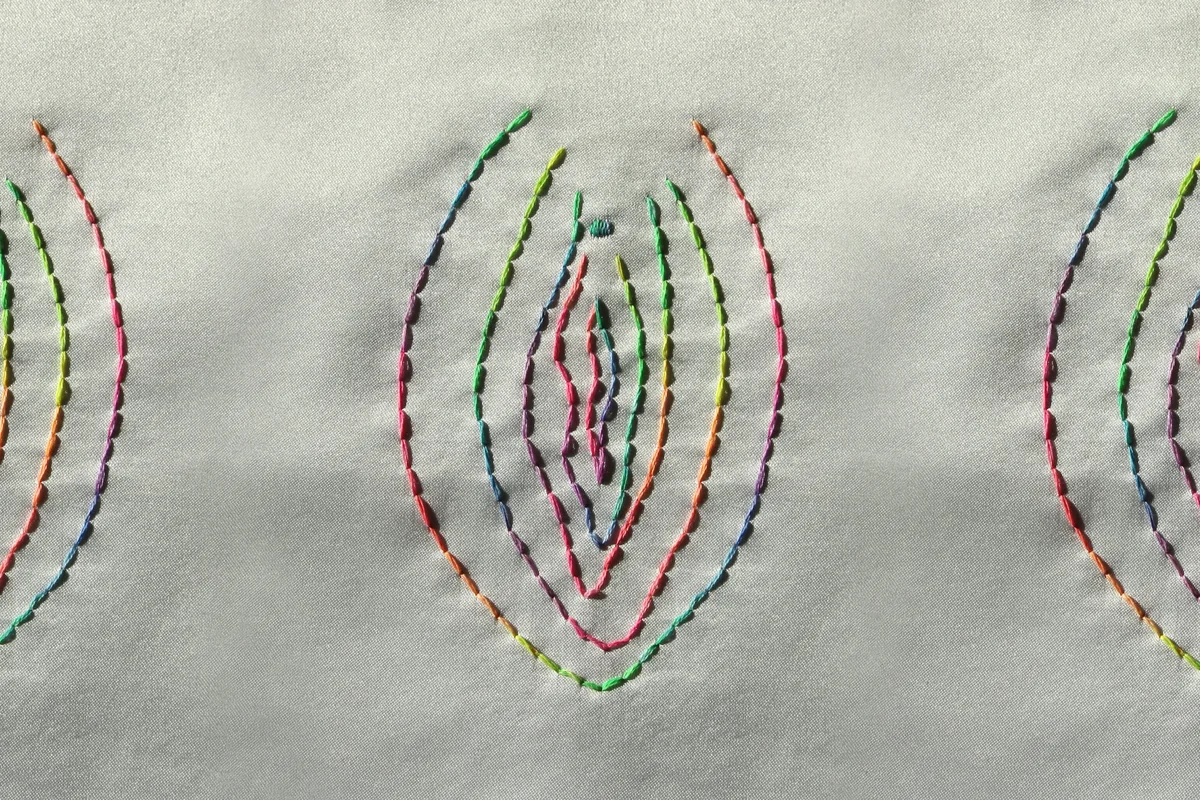
Clitoral orgasm
The clitoris is much larger than the small glans visible at the top of the vulva. Urologist Helen O’Connell, building on her own earlier dissections, described in 2005 how it extends back into the pelvis in a wishbone shape around the vagina. Its parts include the glans, the body and two roots called crura. Whether the nearby erectile bulbs count as part of the clitoris is still argued over by anatomists.
Clitoral touch is the most common route to orgasm for women. In a representative survey of 1,055 American women led by Debby Herbenick, almost 75 percent said clitoral stimulation was necessary for orgasm or made orgasms better. Brown University’s guidance likewise says most people with vulvas reach orgasm through clitoral rather than vaginal stimulation.
Vaginal or penetrative orgasm
In that same survey, almost 20 percent of women found vaginal penetration alone sufficient for orgasm. Older estimates put orgasm from intercourse without extra clitoral touch at about 25 to 30 percent of heterosexual women. Either way, it is a minority experience and a normal one. One proposed explanation is that penetration presses on swollen erectile tissue lying next to the front vaginal wall. The full comparison lives on our page about clitoral vs vaginal orgasm.
Blended orgasm
A blended orgasm means clitoral and vaginal stimulation at the same time. Cleveland Clinic notes that combining the two can make an orgasm more intense. Survey data point the same way. Adding clitoral touch during penetration raised both how often women reached orgasm and how good it felt.
Sleep or nocturnal orgasm
Orgasms during sleep happen to people of all sexes, and researchers have known about them for decades. No touch is involved. The authors of a 2022 case report note that the orgasm reflex can be switched on from the brain downward, by dreams, fantasy or imagery. Many people only realise afterwards what happened, which is one reason these orgasms are hard to count.
Exercise-induced orgasm
Some people reach orgasm while working out, usually without sexual thoughts at the time. The media nickname is “coregasm.” A 2011 Indiana University survey gathered accounts from 124 women with exercise-induced orgasm and 246 with exercise-induced sexual pleasure. Abdominal exercises were the most common trigger, named by 51.4 percent of the orgasm group, followed by weight lifting, yoga and cycling. Most were not fantasising sexually when it happened. The study was a self-selected online survey and did not measure how common the experience is, and the mechanism is still unclear.
Multiple orgasms
Multiple orgasms means more than one orgasm in a single session, without a long recovery pause. Nearly half of the women in Herbenick’s representative sample reported having them. That sample was drawn to reflect the population rather than made up of volunteers, which is why this type sits with the better-studied ones. Some people can become aroused again within minutes, while others need more time, and both patterns are normal. Timing differences are covered in how long an orgasm lasts.
Band 2: types described mainly by individuals
These terms are common in personal accounts and media lists, yet the research behind them is thin or disputed. Someone who reports one of them may be describing a real sensation that science has not pinned down.

G-spot orgasm
The G-spot is said to be a sensitive area on the front wall of the vagina. A 2021 systematic review of 31 studies found that 62.9% of surveyed women said they had one. Imaging studies, however, contradicted each other. Researchers who accepted the G-spot could not agree on its location, size or nature. The review concluded that its existence remains unproved.
Instead, some researchers use the idea of a clitourethrovaginal complex, where the urethra, front vaginal wall and internal clitoris respond together. In practice, a zone may feel sensitive for some people without being a separate organ. A 2012 claim to have found the G-spot rested on the autopsy of a single woman, which experts said could not represent women in general.
Cervical, uterine or deep orgasm
Deep, pelvic and uterine orgasm are names people give to orgasms they link with pressure near the cervix. The cervix does have its own nerve supply, carried by visceral sensory fibres that differ from the nerves serving the clitoris. In brain imaging, cervical stimulation produced its own spot of activity in the genital sensory area. Contractions of the uterus are also part of orgasm for people with vulvas, which may be why some feel orgasm as deep. Beyond that, evidence comes from small lab studies and personal reports.
Nipple orgasm
Only a small number of people reach orgasm from nipple or breast touch alone. Brain imaging offers indirect support. In an fMRI study of 11 women, nipple stimulation activated the same sensory-cortex region that responds to genital touch. That is the same small study behind the cervix’s brain map, and it measured touch, not orgasm. Cleveland Clinic lists nipples and breasts among the erogenous zones that more rarely lead to orgasm on their own.
Anal and prostate orgasm
An anal orgasm is an orgasm reached through stimulation of the anus, and Cleveland Clinic lists it among commonly named types. For people with a prostate, stimulating that gland, either internally or through the perineum, can lead to orgasm. The prostate is packed with nerve endings. People often describe prostate orgasm as wavelike and slower to build, sometimes felt through the whole body. WebMD notes that these descriptions vary from person to person.
Band 3: contested and spiritual labels

Full body or whole body orgasm
A full body orgasm describes sensation that spreads well beyond the genitals, into the limbs, chest or skin. For some people the contractions and warmth of orgasm do reach far through the body. Prostate orgasm, too, is often described as a whole-body climax. Still, no study has shown a separate mechanism, or a test that tells a whole body orgasm apart from an intense ordinary one. The term is best read as a description of intensity and spread.
Mental, mind and energy orgasm
Mental orgasm or mind orgasm usually means orgasm from thought or imagery, without touch. There is a little science here. A 1992 lab study by Whipple, Ogden and Komisaruk reported that some women could reach orgasm through imagery alone. A 2022 case report described one woman who, after years of yoga and tantric training, could enter an orgasmic state without genital touch. Her prolactin, a hormone that also rises after genital orgasm, went up by 25% and 48% after two sessions.
One case cannot show how many people can do this. “Energy orgasm” adds a spiritual idea of moving energy that research has not tested. Our guide to tantric sex covers that tradition on its own terms.
Emotional orgasm
Some people cry, laugh or feel a rush of emotion during or after orgasm, and online lists call this an emotional orgasm. The body releases dopamine and oxytocin during orgasm, and both affect mood. Tearfulness or sadness after sex also has a clinical name, postcoital dysphoria. In a survey of 230 female university students, 46 percent had felt it at least once. These feelings describe mood around orgasm rather than a distinct kind of orgasm. If they are frequent or distressing, they are worth raising with a clinician.
Where the vaginal vs clitoral split came from
The idea that there are two kinds of female orgasm, and that one is better, has a specific history. Sigmund Freud argued in 1905 that women mature by moving their centre of sexual feeling from the clitoris to the vagina. As his ideas spread, a lack of orgasm during penetration came to be diagnosed as frigidity. The Female Orgasm Research Institute is a commercial sex-education site. It says clinical papers from the 1970s and 1980s still diagnosed “secondary orgasmic dysfunction” in women who reached orgasm only through clitoral touch. Those women were then referred for therapy.
Masters and Johnson pushed back with lab data. Their 1966 book, Human Sexual Response, argued for the clitoris’s central role in female orgasm. Anatomy filled in the rest. Helen O’Connell mapped the full size of the clitoris in the late 1990s, and in 2009 two French doctors published the first complete 3-D ultrasound of the stimulated clitoris.
The clitoral network explains why the line between “clitoral” and “vaginal” is blurry today. Our page on clitoral vs vaginal orgasm covers the debate in more depth.
When a list of orgasm types starts to feel like a checklist

“I should be having the other kind”
A ranked list of orgasm types can turn pleasure into a checklist. If a magazine calls the G-spot or blended orgasm the “advanced” version, someone with satisfying clitoral orgasms may start to feel they are missing out. Health researcher Petra Boynton has criticised coverage that implies there are superior forms of orgasm tied to specific body parts. None of the sources behind this article show one type to be healthier or better than another.
Pressure of this kind can backfire. A 2025 review in Sexual Medicine describes how close self-monitoring during sex, known as spectatoring, pulls attention away from erotic cues. After one disappointing attempt, worry about the next can rise and get in the way further. People end up chasing orgasm instead of letting it arrive.
What a sex therapist would say
A sex therapist would usually move the focus from the target to the experience. Brown University’s guidance suggests taking attention off orgasm and putting it on arousal and physical sensation. Therapists may use sensate focus, a set of touch exercises meant to build relaxation, along with couples work that removes blame.
The survey data back this up. Herbenick’s study linked better orgasms to more time building arousal, a partner who knows what you like, and emotional closeness. If trouble reaching orgasm bothers you, Cleveland Clinic advises talking with a healthcare provider. Our guides on how to have an orgasm and orgasm with a partner cover the practical side.
Types of orgasms FAQ: short answers on terms and evidence
How many types of orgasms are there?
In the body, one. Every orgasm involves a release of tension and rhythmic pelvic contractions about once per second. Lists of six to fourteen kinds count routes and sensations separately: clitoral, vaginal, nipple, sleep, exercise and so on. Some of those routes are well studied and others are not, as the evidence map above shows.
Which kind of touch gives a woman the most pleasure?
It varies from person to person, but clitoral touch is the most common route. In a representative American survey, almost 75 percent of women said clitoral stimulation was necessary for orgasm or made it better. Preferences for pressure, rhythm and location differed widely in the same study. Asking and listening will tell you more than any general rule.
Is there a scientific classification of female orgasms?
No agreed scheme exists. Researchers usually describe orgasm by where stimulation happened, such as clitoral, vaginal or cervical, and by how intense it felt. At least one anatomist, Vincenzo Puppo, rejects even those labels as unscientific. The three bands used in this article are a reading aid based on how strong the evidence is for each term.
Is one type of orgasm better or healthier than another?
There is no good evidence that any type is superior. In Herbenick’s survey, about three-fourths of women felt that some orgasms were better than others. What made them better was mostly context, such as time to build arousal, a partner who knows them and emotional intimacy. The route mattered less than the conditions around it.
Can you have an orgasm without genital touch?
Yes, some people can. Orgasms during sleep and during exercise are both documented. In one small brain-imaging study, nipple touch activated the genital area of the sensory cortex. A small number of people also report orgasm from imagery alone. These are less common routes, and never having an orgasm this way is entirely normal.
One response, many names, no scorecard
The many types of orgasms on internet lists mostly describe one body response reached by different routes. Clitoral, vaginal, blended, sleep and multiple orgasms have research behind them, and exercise orgasm has one dedicated survey. G-spot, deep, nipple, anal and prostate orgasms have only thin or disputed evidence so far. Full body and energy orgasms are best read as descriptions or beliefs, while mind orgasm has a little small-sample evidence.
None of them is a level to unlock. What you enjoy, with whatever route works for you, counts. To understand the body side, read what happens during an orgasm. If you are curious about sensations, see what an orgasm feels like.
Related reading
- Vaginal Orgasm vs Clitoral Orgasm: What Anatomy and Research Show
- What Does an Orgasm Feel Like? Common Signs and Why It Varies
- What Happens During an Orgasm? Your Body and Brain, Explained
- How Long Does an Orgasm Last? Duration, Timing and Normal Variation
Sources
- What is an Orgasm? Types & Health Benefits - Cleveland Clinic
- Orgasm - Brown University BWell Health Promotion
- The female orgasm and the homology concept in evolutionary biology - Journal of Morphology (via PubMed Central)
- Anatomy of the Clitoris: Revision and Clarifications about the Anatomical Terms for the Clitoris Proposed (without Scientific Bases) by Helen O’Connell, Emmanuele Jannini, and Odile Buisson - ISRN Obstetrics and Gynecology (via PubMed Central)
- Women’s Sexual Pleasure, Orgasm, and Touching - Psychology Today (Grant Hilary Brenner MD)
- In Pursuit of Pleasure: A Biopsychosocial Perspective on Sexual Pleasure and Gender - International Journal of Sexual Health (via PubMed Central)
- A Case of Female Orgasm Without Genital Stimulation - Sexual Medicine (via PubMed Central)
- Exercise can lead to female orgasm, sexual pleasure - ScienceDaily (Indiana University release)
- G-spot: Fact or Fiction?: A Systematic Review - Sexual Medicine (via PubMed Central)
- The cortical sensory representation of genitalia in women and men: a systematic review - Socioaffective Neuroscience & Psychology (via PubMed Central)
- Prostate Orgasm: Prostate Massage and the Male G-Spot - WebMD
- Postcoital Dysphoria: Prevalence and Psychological Correlates - Sexual Medicine (via PubMed Central)
- expert reaction to new anatomical study of the G-Spot - Science Media Centre
- Freud was Wrong: The Clitoris IS What Creates Women’s Orgasm - Female Orgasm Research Institute
- Different faces of anxiety in sexual dysfunction: key features, effective interventions, and critical gaps - Sexual Medicine (via PubMed Central)