What Does Intercourse Feel Like for a Guy?
What men typically feel during intercourse: the body's phases, emotions, what changes sensation, common difficulties and when to see a doctor.

General education, not medical advice. If something here worries you, talk with a clinician.
Table of Contents
Medical sources describe intercourse as a sequence of physical and emotional changes: sensation and emotion build, peak at orgasm and then ease. No single description fits everyone, because the order, timing and intensity differ from person to person, and some people skip a phase.
Two things shape what a man feels. One is what the body is doing: blood flow, muscle tension, nerve signals. The other is what is going on in the mind, from closeness with a partner to worry about performance. This guide walks through each phase of the body’s response, the range of sensations men report, and what can raise or lower sensitivity. It also covers the first time, common difficulties, and when a doctor can help.
What happens in the body, phase by phase
Four phases make up the body’s response to sexual stimulation: desire, arousal, orgasm and resolution. The order and timing can vary, and some people skip a phase. The table below, drawn from one Cleveland Clinic guide, sets out what happens in each.
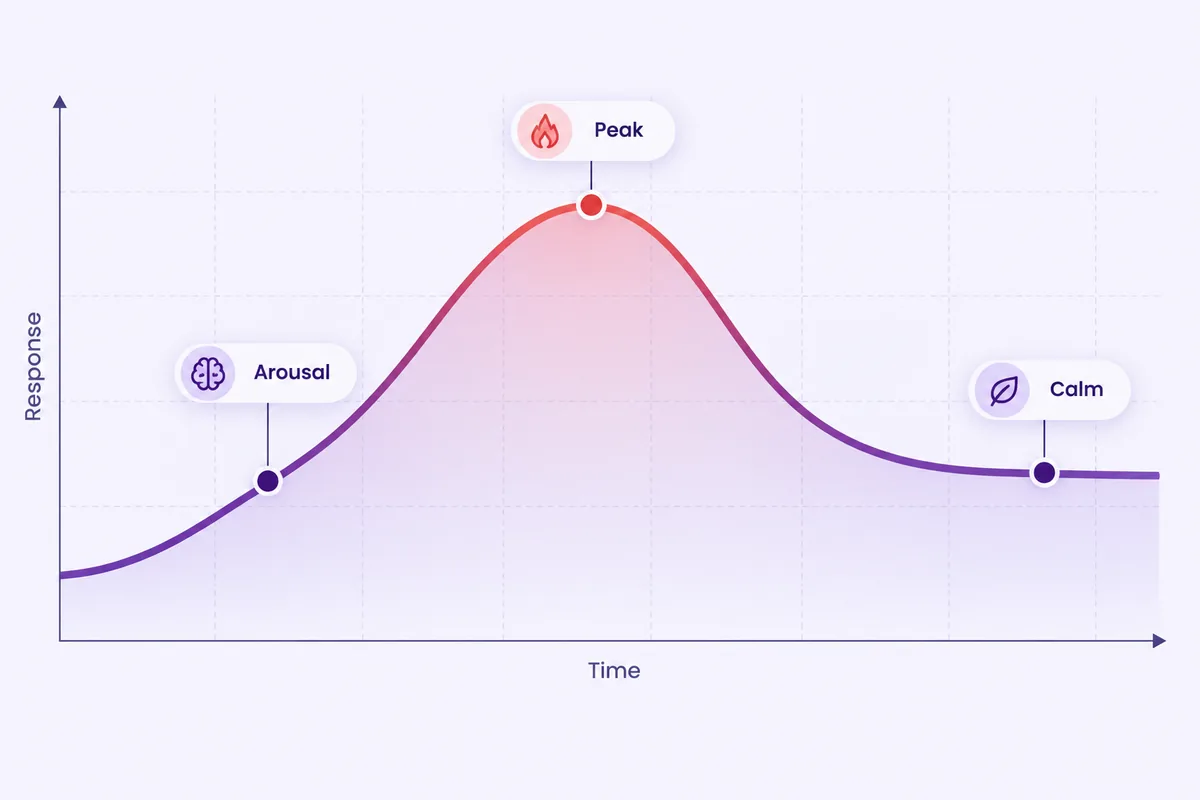
| Phase | What the body does | What a person may notice |
|---|---|---|
| Desire | Heart rate quickens and breathing gets faster; blood flow to the genitals increases, which causes an erection | Skin may flush, the scrotum may tighten, and a lubricating liquid may appear at the tip of the penis |
| Arousal | Breathing, heart rate, blood pressure and muscle tension keep rising; the testicles withdraw up into the scrotum | Muscle spasms may begin in the feet, face and hands as the body nears the brink of orgasm |
| Orgasm | Involuntary muscle contractions; heart rate, blood pressure and breathing reach their highest levels; ejaculation occurs | A sudden, forceful release of sexual tension that generally lasts only a few seconds |
| Resolution | The body slowly returns to its normal level of functioning, and erect body parts return to their previous size | A sense of satisfaction and, often, fatigue |
Desire and arousal: the build-up
The desire phase can last from a few minutes to several hours. The early changes then build into the arousal phase, which lasts until just before orgasm. Desire does not always come first, because sometimes the wish for sex follows arousal.
Orgasm and ejaculation
Orgasm is the shortest phase of the cycle. Ejaculation itself has two stages. In emission, muscles move seminal fluid into the urethra, and in expulsion, rhythmic contractions of the perineal muscles push it outward. A review of ejaculation physiology describes the process as a spinal reflex fed mainly by sensory signals from stimulation of the glans, the head of the penis. The brain can speed the reflex up or hold it back.
Resolution and the refractory period
After orgasm, males typically need recovery time before they can reach orgasm again. This is called the refractory period. Its length varies from person to person and changes with age.
The range of sensations men describe
Men describe a wide range of sensations, and the sources agree that no standard version exists. Everyone’s sexual experience is different.
On the physical side, sensitivity is not even across the penis. One clinic page, from the UCLA Health Men’s Clinic, names the area around the frenulum as the most sensitive part. The frenulum is the small fold of skin on the underside, just below the opening of the urethra. A fine-touch study agrees that thresholds differed significantly by location on the penis, although in circumcised men the most sensitive spot it found was the circumcision scar. Where the frenulum has been altered, that ranking may not hold. Warmth, muscle tension and a faster pulse and breathing are also common, according to a medically reviewed guide on Healthline that quotes sex therapists.
Emotions vary just as much. That same guide lists feelings such as vulnerable, underwhelmed, excited, good, soft and open. It adds that the experience can change from day to day for one person, depending on things like food, alcohol and fitness. Because that guide is a general-audience source, treat the list as examples rather than a measurement.
One point is worth separating out. The same Healthline guide says sex should not be painful unless a person is actively seeking that sensation. It adds that pain sometimes points to a condition needing medical or psychological treatment. Because that is a single general-audience source, take it as a prompt to ask a doctor, not as a clinical rule.
A last detail concerns control. UCLA Health says ejaculation is mostly an event of the autonomic nervous system, so a man does not have much control over it once the signal to ejaculate arrives.
The emotional and mental side
Sexual satisfaction is both an emotional and a physical response, according to a Cleveland Clinic guide. A sex therapist quoted there says sexual connection is one way people feel attachment, and that the wish for connection can add pressure and, with it, disappointment. So closeness with a partner can raise the experience, while pressure can flatten it.
The mind also affects the body directly. Feeling relaxed, confident and aroused is essential for getting and keeping an erection. When a man is busy wondering whether he will please a partner or sustain an erection, sex becomes harder to enjoy. That worry can then carry into the next encounter.
This pattern is called sexual performance anxiety. It is estimated to affect up to 25% of men. It is not a diagnosis in itself, though it can relate to anxiety disorders. Common triggers include new encounters, past sexual disappointments, body image concerns, worries about the relationship, and other stresses.
What changes how it feels
The same man can feel different things on different nights. Several factors have evidence behind them, and a few are still debated.
Condoms and lubricant
A laboratory study of 141 young heterosexual men measured how well the penis detected vibration with and without a condom. Condoms raised the sensitivity threshold, meaning a stronger stimulus was needed before the vibration was felt. Thresholds were also higher with an erect penis than with a flaccid one. The authors add that loss of sensation and problems with fit and feel are among the most commonly reported condom-related complaints in men.
Materials matter for comfort too. Planned Parenthood says only water-based or silicone lube should go with latex condoms, because oil can damage latex. People with latex allergies or sensitivities can use plastic condoms instead. Used on purpose, the dulling effect has a role: the NHS suggests a thick condom to help decrease sensation for men who ejaculate sooner than they would like.
Circumcision status
Here the evidence points in different directions. One fine-touch study found that the glans of circumcised men had a higher threshold, with a mean difference of 0.161 g. A later systematic review covered 36 studies and 40,473 men. Its highest-quality studies found no overall adverse effect on penile sensitivity, sexual sensation or satisfaction. The two overlap but differ in method: one measured skin thresholds with a touch test, and the other pooled reports on sensitivity, function and satisfaction. The review’s “highest-quality” grading is the authors’ own, and impairment was reported in 10 of the 13 studies it rated lower quality. The fine-touch authors concluded that circumcision removes the most sensitive parts of the penis. The review calls the question controversial.
Age
Erection problems become more common with age, but MedlinePlus says they are not a natural part of aging. The NHS calls erectile dysfunction very common, particularly in men over 40. The refractory period also changes with age. Cleveland Clinic adds that older men may need more time and stimulation to ejaculate.
Medication, alcohol, stress and fatigue
Most men occasionally fail to get or keep an erection, and the NHS says this is usually caused by stress, tiredness or drinking too much alcohol. Medicines can play a part as well. NIDDK lists antihistamines, blood pressure medicines, diuretics and sedatives among the common ones that can cause erection problems. Antidepressants called SSRIs are known to delay ejaculation.
The first time
Sources say little about the first time directly, but they do describe the pieces that matter. New encounters are a recognised trigger for performance anxiety, which can make a first experience feel tense. The NHS lists anxiety about sexual performance, particularly at the start of a new relationship, as a psychological cause of ejaculating sooner than wished.
Expectations help here. Partners rarely reach orgasm at exactly the same time, and the timing of each phase varies from person to person. Occasional episodes of ejaculating sooner than wanted are common and not a cause for concern.
Comfort counts as well. The Healthline guide says sex should not be painful the first time or any time after, and that sometimes too little lubrication is the cause. The guide adds that pain can sometimes point to a condition needing medical or psychological treatment, so pain that keeps coming back is worth raising with a doctor.
When it does not go as expected
Many men meet at least one of these difficulties at some point. Each has several possible causes, and a clinician is the right person to sort out which applies.
Erection difficulties
NIDDK lists three patterns of erectile dysfunction. A man may get an erection only sometimes, get one that does not last long enough for sex, or be unable to get one at all. It is the most common sex-related condition males report to healthcare providers. Providers and researchers estimate it affects over 50% of males between 40 and 70, and the true number may be higher because many do not seek help. It can also be the first symptom of another problem, including heart disease.
Ejaculating sooner or later than wanted
The NHS defines premature ejaculation as ejaculating sooner than the man or his partner wishes. UCLA Health says it affects up to 30 percent of men and that timing definitions range from within one minute of penetration to before the partner reaches orgasm. Its Men’s Clinic adds that if one or both partners are unhappy with the timing, it is a problem. A review of ejaculation physiology says its causes are multifactorial, with psychological and biological factors interacting.
Delayed ejaculation is the opposite pattern. A 2023 study estimates it affects at least 5% to 10% of males. The same page says there is no normal time limit for how long orgasm should take, and it is normal to have a slow occasion now and then. As an illustration, it says that where most men ejaculate after minutes of stimulation, a man with delayed ejaculation may take 30 minutes or longer. The NHS says a man may have the condition if he cannot ejaculate more than half the times he has sex.
Pain, curvature and low desire
Peyronie’s disease causes the penis to curve when erect and can be painful. The NHS says it mainly affects men over 40, though younger men can get it. A slight natural curve is normal, since penises vary a lot in size and shape.
Low sex drive can accompany erection problems, according to the NHS. Getting older can bring testosterone changes, reduced penile sensitivity and lower libido, according to Cleveland Clinic.
Talking with a partner
A partner cannot read minds, and speaking up about worries or unmet needs is a first step. It can also keep a partner from assuming the problem is somehow their fault.
The NHS recommends involving a partner as much as possible when seeking help for sex-life problems, and says that communicating concerns can often go a long way. Understanding differences in how each person responds may help partners understand one another’s bodies. When anxiety or past experiences are involved, talk therapy or a sex therapist can help explore them.
When to see a doctor
An occasional off night is common. A visit makes sense when a pattern forms or when something causes pain or distress. These are the signs the sources name:
- Erection problems that keep happening. The NHS says to see a GP or sexual health clinic, since it might be a sign of a treatable health condition.
- Erection trouble at any age. MedlinePlus says it can signal clogged blood vessels or nerve damage from diabetes, so tell your doctor.
- A hard lump, a marked curve or painful erections. The NHS advises seeing a GP.
- Pain during sex that keeps coming back. A general-audience guide says pain can point to a condition needing medical or psychological treatment.
- A persistent ejaculation problem. The NHS advises visiting your GP.
- Ejaculation timing that is long-lasting and stressful. A provider can help.
Frequently asked questions
Does sex feel the same every time for a guy?
No. The intensity of the response and the time spent in each phase vary from person to person. A general guide notes that it can change from day to day with things like food, alcohol and fitness. Anxiety can make sex harder to enjoy. Stress, tiredness or too much alcohol are the usual causes of an occasional erection problem, which is common and nothing to worry about.
How long does an orgasm last?
Orgasm is the shortest phase of the sexual response cycle and generally lasts only a few seconds. The build-up before it takes longer, and the desire phase can last from a few minutes to several hours.
Do condoms make sex feel less intense for men?
They can for some men. In a laboratory study of 141 young heterosexual men, condoms raised the vibration-sensitivity threshold, so a stronger stimulus was needed to feel vibration. That test did not measure how intense sex felt. The authors do note that loss of sensation and problems with fit and feel are among the most commonly reported condom complaints in men. Plastic condoms are an option for people with latex sensitivities.
Is it normal to be nervous the first time?
Yes. New encounters are a recognised trigger for sexual performance anxiety, which is estimated to affect up to 25% of men. Talking with a partner is a first step, and therapy can help if the worry persists.
How does a man feel after intercourse?
People may feel a sense of satisfaction and, often, fatigue. Males also typically need recovery time, called the refractory period, before they can reach orgasm again.
Does circumcision change how sex feels?
Studies disagree. One fine-touch study found the glans of circumcised men less sensitive. A systematic review found no overall adverse effect on sensitivity or satisfaction in its highest-quality studies.
The short version
Intercourse for a man is a sequence of physical changes shaped heavily by mood, health and circumstances. Arousal builds, orgasm is brief, and the body then needs time to recover. Condoms, age, medicines, alcohol, stress and nerves can each shift sensation, and they do so differently for each person.
If something about the experience worries you, or a problem keeps repeating, a doctor or sex therapist is a sensible place to start.
This article is general educational information, not medical advice.
Related reading
Sources
- Sexual Response Cycle: Order, Phases & What To Know - Cleveland Clinic
- An update on ejaculation physiology and premature ejaculation definition, prevalence data, and etiology - Semergen (via PubMed)
- Premature Ejaculation - Men’s Clinic - UCLA Health
- Fine-touch pressure thresholds in the adult penis - BJU International (via PubMed)
- If You’re Wondering What Sex Can or Should Feel Like, Start Here - Healthline (medically reviewed)
- How To Overcome Sexual Performance Anxiety - Cleveland Clinic
- Erectile Dysfunction (ED): Causes, Diagnosis & Treatment - Cleveland Clinic
- The effect of condoms on penile vibrotactile sensitivity thresholds in young, heterosexual men - Journal of Sexual Medicine (via PubMed Central)
- Condoms - Planned Parenthood
- Ejaculation problems - NHS
- Does male circumcision affect sexual function, sensitivity, or satisfaction? A systematic review - Journal of Sexual Medicine (via PubMed)
- Erectile Dysfunction - MedlinePlus (National Library of Medicine)
- Erectile dysfunction (impotence) - NHS
- Delayed Ejaculation: Causes, Diagnosis & Treatment - Cleveland Clinic
- Symptoms & Causes of Erectile Dysfunction - NIDDK, National Institutes of Health
- Peyronie’s disease - NHS