What Is a Dental Dam for Oral Sex?
A dental dam is a thin latex or polyurethane sheet for safer oral sex. Learn what it protects against, how to use one, and how to cut one from a condom or glove.
General education, not medical advice. If something here worries you, talk with a clinician.
Table of Contents
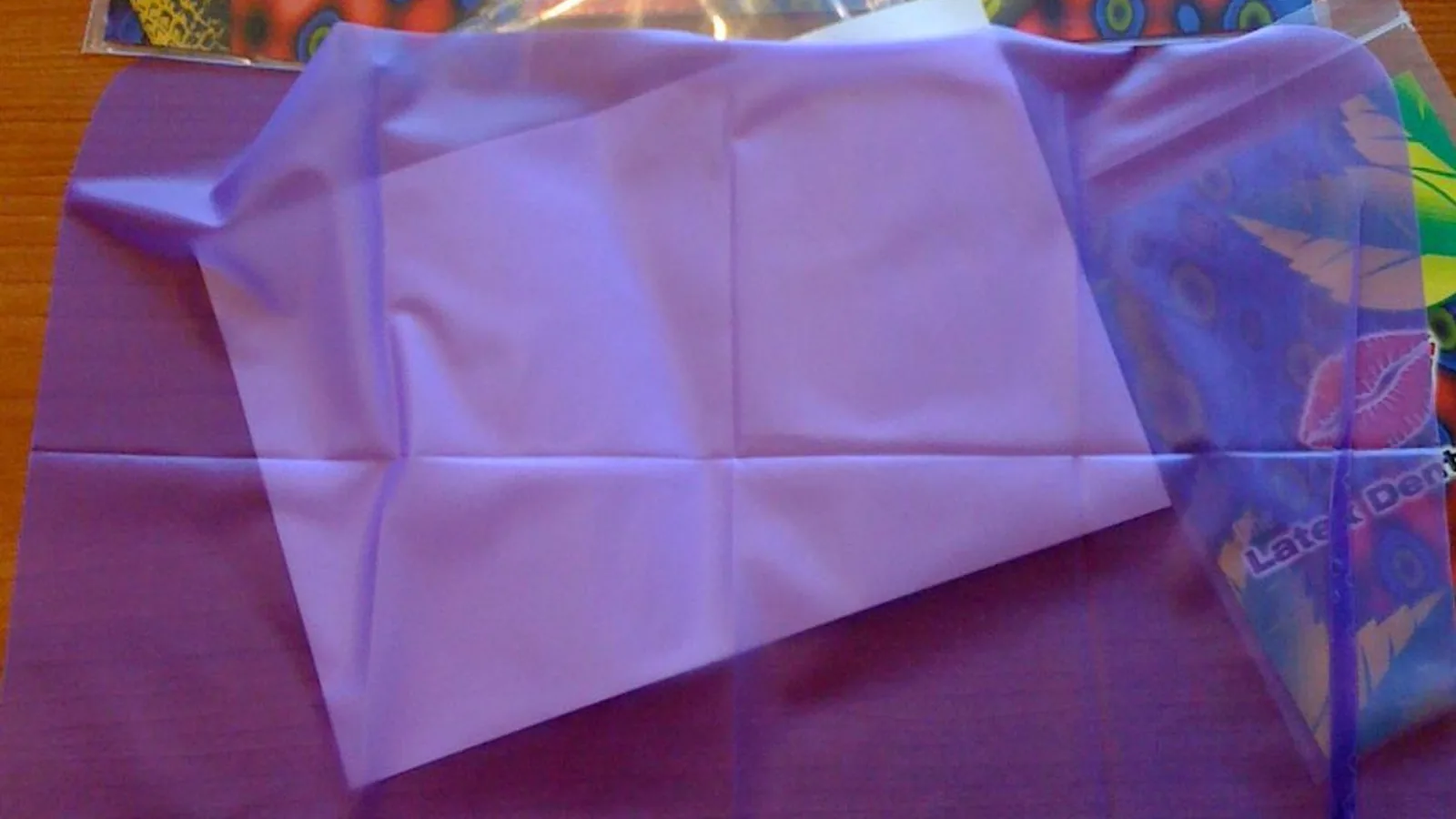
A dental dam is a thin, square sheet of latex or polyurethane that you lay over a vulva or anus during oral sex. The mouth stays on one side, fluids stay on the other, and several infections have a much harder time crossing between you. There is nothing else to it. No hormones, no sizing, no prescription.
This guide covers what a dam protects against, how to use one without fumbling it, and what to reach for when there is none to buy. A condom or a glove in a drawer becomes a workable dam in under a minute.
What a dental dam is
A thin square of latex or polyurethane
A dental dam is a thin, flexible sheet, usually square, made to be held over the vulva or anus while a partner’s mouth works the other side. Most are latex, though polyurethane dams exist for latex allergies and some sources also list nitrile as a dam material. They come in different sizes, colors, and flavors, and you can use them with or without lubricant.
One thing a dam is not: contraception. It blocks contact and fluids during oral sex; it prevents nothing in the way of pregnancy.
The division of labor with condoms is simple: a condom covers a penis during oral sex, and a dam covers a vulva or anus. Same idea, different geography.
From the dental chair to the bedroom
The name is literal. Dentists have isolated teeth with thin rubber sheets for more than 150 years, ever since the dentist Sanford Barnum first described the technique. In the chair, the sheet isolates the tooth being worked on and keeps saliva and debris out of the field. Sexual health later borrowed both the object and the barrier logic.
The sexual-health version got its own footing in 1998, when the FDA approved a latex dam for oral sex, now sold as Sheer Glyde Dams. A condoms-aisle staple it is not, which is partly why the do-it-yourself versions later in this guide matter.
What a dental dam protects against - and what it doesn’t
Infections it can lower the risk of
Oral sex is real sex as far as infections are concerned. The CDC is direct about it: many STIs spread through oral sex, and a barrier used every time reduces the risk of giving or getting one. The infections that can pass mouth to genitals or back include chlamydia, gonorrhea, syphilis, herpes types 1 and 2, HPV, and HIV. Some of them travel on: syphilis, gonorrhea, and intestinal infections picked up orally can spread through the body.
A dam helps in two ways: it keeps your mouth off fluids, and it keeps your mouth off the covered skin. For oral-anal contact it also blocks contact with fecal matter, which can carry hepatitis A and B, E. coli, Shigella, and parasites like Giardia.
HIV deserves its own sentence: the CDC puts the risk from oral sex at little to none, far below anal or vaginal sex, though not at zero.
Where its protection stops
A dam covers what it covers, and nothing else. HPV, herpes, and pubic lice pass through skin-to-skin contact, so any skin outside the square is still exposed. A herpes sore the dam does not sit over can still transmit. That is why Cleveland Clinic lists those three among the infections a dam does not reliably block.
So the honest phrasing is that a dam lowers risk. The Centers for Disease Control and Prevention says a barrier every time “can reduce the risk” of giving or getting an STI. A dam shrinks the exposed surface to the area under the latex; it does not sterilize the room.
How strong the evidence is
Here is the part most articles skip: there is little direct research on dental dams themselves. A peer-reviewed review in dermatology put the gap plainly, finding it unclear whether dams cut STI transmission in a measurable way. The studies run small, and sparse use is part of why: only 10% to 15% of women who have oral-vaginal sex have ever used one.
The recommendation stands anyway, on two legs. Condoms, built from the same barrier logic, have repeatedly been shown to reduce STI risk, and researchers expect dams to follow when condom data is extrapolated. And the CDC, weighing all of it, still tells people to use a barrier every single time. Consistency is the variable that matters - a dam used twice a year protects almost nobody.
How to use a dental dam, step by step
Using one is easier than using a condom: the whole job is opening it, laying it flat, and not moving it around. Follow this sequence.
Before your mouth goes anywhere
- Check the expiration date on the package, then open the wrapper carefully with your fingers. Scissors can nick what is inside; Planned Parenthood gives the same warning for condom wrappers.
- Look the dam over for holes or tears, and rinse off any powder clinging to it.
- Put a drop of water-based lubricant on the side that will rest against the body. It helps the dam stay put and makes oral sex feel better for the person receiving.
Placing it and keeping it in place
- Lay the dam flat over the entire vulva or anus before any oral contact starts, and keep it there until you are finished.
- The partner giving oral sex holds the edges with their hands.
- Use one side only. Flipping it mid-act presses the contaminated side against the very skin you are protecting.
- If the dam slips or tears, stop and put on a new one before continuing.
Mistakes that defeat the point
- Reusing a dam, or moving it from the anus to the vulva (or back). Germs travel between body areas on the sheet.
- Stretching it to cover more ground. Stretched latex tears.
- Oil-based products: baby oil, lotion, petroleum jelly, cooking oil. Oil breaks down latex and causes the dam to fail. Water-based or silicone-based lube only.
- Spermicide with nonoxynol-9, which irritates the mouth and throat for no benefit here.
- Biting the dam, or letting long fingernails near it. Both are puncture risks for a sheet this thin, and damaged dams belong in the trash, not on a body.
How to make one from a condom or a glove
Dams are the barrier nobody stocks. Condoms, though, are everywhere, and health authorities publish the conversion themselves. Two routes work.
From a condom, with clean scissors
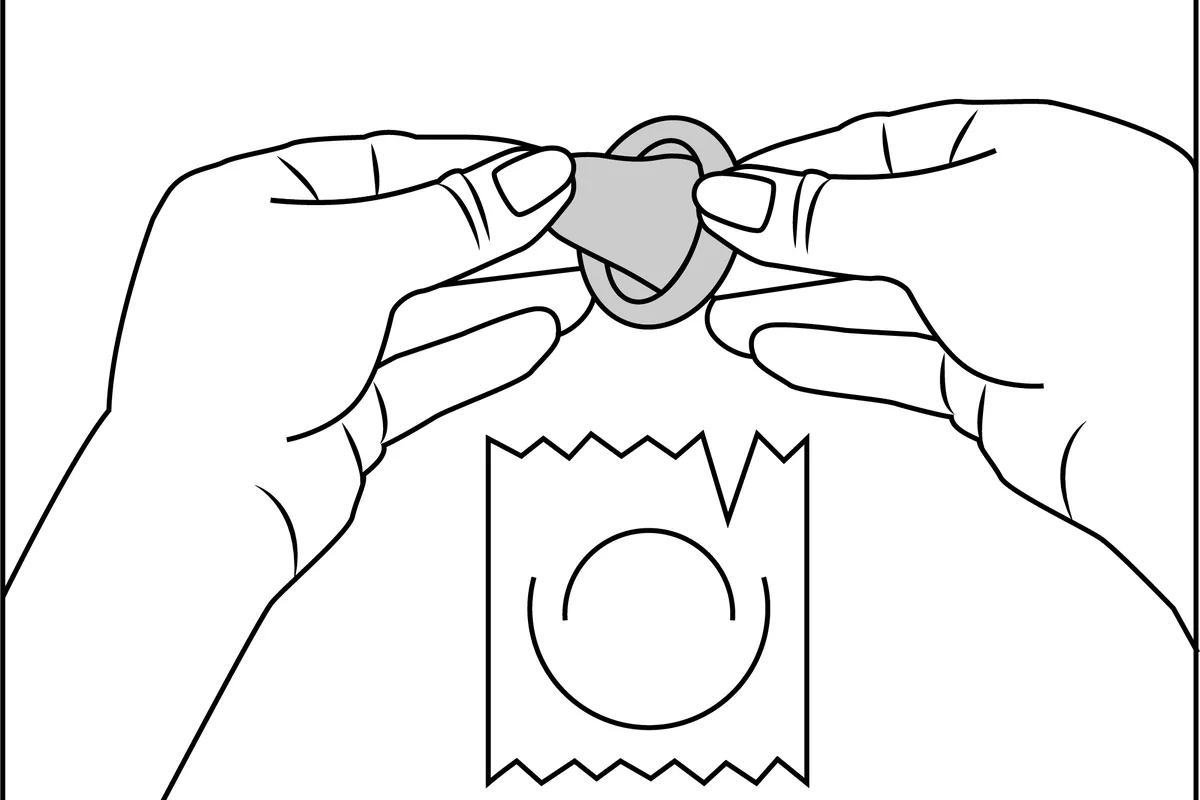
- Start with a condom inside its expiration date, ideally non-lubricated or flavored so the sheet is not slippery to cut. Check the air bubble in the wrapper as well; a missing bubble means a pinhole somewhere.
- Open the wrapper by tearing it with your fingers. Scissors can nick the condom inside.
- Unroll the condom completely.
- Snip off the tip.
- Cut off the rolled rim at the base.
- Cut straight down one side, then unfold the tube into a flat rectangle.
- Lay it over the vulva or anus exactly as you would a bought dam, and treat it the same: one side, one use, then the trash.
The CDC’s one condition is material: the condom must be latex or polyurethane, so skip anything labelled lambskin.
From a latex glove
Brown University’s health promotion office lists a third route. Cut the fingers off a latex glove, then cut up one side, and the palm opens into a barrier sheet. The glove’s thumb hole ends up wherever your cuts leave it; position it somewhere you do not need covered, or trim around it. Same rules after that - one side, one use. If either partner has a latex allergy, this route closes unless you can find a non-latex glove worth trusting.
What not to use instead
Plastic wrap is where the honest answer splits. Medical News Today calls it an option in a pinch but flags that it is not designed for the purpose, is delicate, and rips easily. Brown lists saran wrap as an improvised option too. But no clinical evidence shows DIY barriers match dams cleared by the FDA; Bedsider’s bottom line is that a real dam is the more reliable option. Between the two improvisations, the cut condom has the CDC publishing the conversion, while plastic wrap appears nowhere in the CDC’s methods.
Whatever you cut, cut it fresh, and keep oil away from latex - the same rule as a bought dam. The reason is identical: oil causes the material to break.
Your barrier options, side by side
Here is how the four routes stack up when the moment arrives and you need to pick one.
| Option | Made from | How it protects | Getting one | Watch out for |
|---|---|---|---|---|
| Store-bought dam | Latex or polyurethane, regulated for oral sex | Blocks fluids and covered-skin contact exactly as designed | Online easily; some drugstores and clinics | Roughly $1 to $2 each; latex allergy needs polyurethane |
| Condom cut into a dam | Latex or polyurethane condom, per the CDC | Same barrier material, opened into a sheet | Any condom, anywhere condoms are sold | Needs clean scissors and a careful hand; use once |
| Glove cut into a dam | Latex glove | Campus health lists it as an improvised barrier | First-aid kits, pharmacies | Small sheet; latex allergy rules it out |
| Plastic wrap | Kitchen film, not made for this | Untested as a barrier; some health pages allow it, others do not | Any kitchen | Rips easily; no clinical evidence it matches a real dam |
If a store-bought dam is available, it is the reliable pick. If it is not, the condom route is the improvisation health authorities actually publish. Plastic wrap is the option of last resort, and it earns that place in the ranking.
Getting them - and making them feel better
Where to find them and what they cost
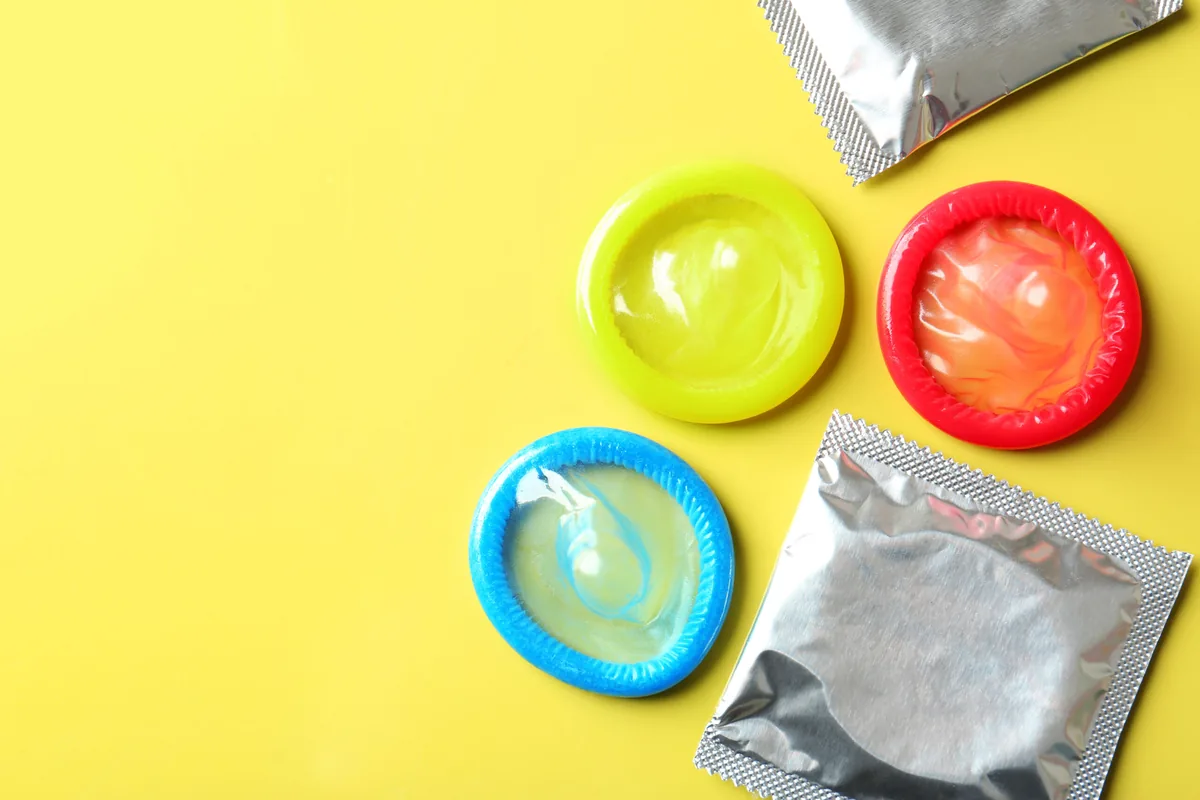
Dams are not shelved like condoms. Cleveland Clinic puts it plainly: some drugstores and clinics carry them, but buying online is easier, at about $1 to $2 per dam. The Center for Young Women’s Health adds that family planning and sexual health clinics sometimes hand them out free. Campus health services are another free source - Brown, for example, leaves them at stations around campus and mails them to students who order. If a store is your only option, Bedsider suggests sex toy shops, since plenty of ordinary stores do not stock dams at all.
Keep them somewhere cool and dry: heat degrades the material, and a glovebox dam is not a dam anymore.
If it feels like a mood killer
The objection is fair, so answer it directly. Some people say oral with a dam does not feel the same. Others call the feeling different in a good way. UNC’s wellness team makes the physical case: a dam is thin enough to let a lot of sensation through while it blocks what it needs to block.
Three things reliably improve the experience. Water-based lube on the skin side of the dam, enough of it to feel slippery, carries warmth and movement through the latex. Flavored dams and flavored lube cover the taste of latex, which is nobody’s favorite. Handling can become part of the scene rather than an interruption; holding the dam in place is only awkward if you decide it is.
For anyone who wants the barrier without the hands, latex underwear designed for oral sex exists as a wearable dam option. The single-use panties cost more than other options.
Frequently asked questions
Can you make a dental dam out of a condom?
Yes. The CDC publishes the method: unroll the condom, cut off the tip and the rim, slice down one side, and unfold it into a sheet. Any latex or polyurethane condom works, and the result is a one-use dam exactly like the sections above describe.
Is a dental dam pleasurable?
Different, at least: a dam is thin enough to pass plenty of sensation, and skin-side lube makes the biggest difference. Some people find the changed texture genuinely good rather than a compromise.
What are the downsides of using a dental dam?
Availability first - many stores do not stock them, and buying online costs about $1 to $2 per dam. Then the practicalities: interrupting to place it, the taste of latex, and reduced sensation compared with no barrier. And it only protects the skin it covers, so infections passed skin-to-skin outside the square remain possible.
Are dental dams like condoms?
Same principle, different shape: a condom fits a penis, while a dam lies flat over a vulva or anus. Both are single-use latex or polyurethane barriers, both break with oil-based products, and both work only when you use one every time.
Should I use a dental dam with my wife?
That is a question about exposure, not trust. STIs often cause no symptoms, and a throat infection can show up as nothing worse than a sore throat. If you have both been tested since your last other partners, the calculus is yours to make together. If either of you has any partner outside the marriage, or has not tested since, a dam keeps oral sex from becoming the route an infection takes.
The short version
A dental dam is a thin square of latex or polyurethane laid over a vulva or anus during oral sex. It lowers the risk of the infections oral sex can pass: chlamydia, gonorrhea, syphilis, herpes, HPV, HIV, and the gut bugs of oral-anal contact. It protects only the skin it covers, and nobody has run the large trials, but the CDC says use one every time and the logic holds.
Open it with your fingers, lube the body side, one side only, one use only. And if there is no dam in the drawer, a condom and clean scissors get you there in three cuts.
Related reading
- What Is Unprotected Sex? Risks and What to Do Next
- What Is Withdrawal in Sex? The Pull-Out Method, Its Effectiveness and Its Limits
- How to Choose Lube: Water, Silicone or Oil?
- How to Prepare for Sex: Talking, Protection, Comfort and Hygiene
Sources
- How to Use a Dental Dam | Condom Use | CDC - U.S. Centers for Disease Control and Prevention
- About STI Risk and Oral Sex | CDC - U.S. Centers for Disease Control and Prevention
- Dental Dams - Center for Young Women’s Health - Center for Young Women’s Health, Boston Children’s Hospital
- What Is a Dental Dam & How to Use It - Cleveland Clinic
- Dental dams in dermatology: An underutilized barrier method of protection - National Library of Medicine / PMC (peer-reviewed journal article)
- Rubber Dam Isolation - When and Why to Use it? Part 1 - BDJ In Practice (British Dental Association), via PMC
- Dental dam: Effectiveness and how to use one - Medical News Today
- Give dental dams the respect they deserve - Bedsider (Power to Decide), expert-reviewed sexual health resource
- How do you turn a condom into a dental dam for oral sex? - Planned Parenthood Federation of America
- Dental Dams | BWell Health Promotion | Brown University - Brown University BWell Health Promotion
- Making Dental Dams out of Condoms - Student Wellness - UNC Chapel Hill Student Wellness and Campus Health