What Is a Healthy Sex Life? Communication, Satisfaction, Safety and Choice
What makes a healthy sex life? Learn how communication, satisfaction, consent, STI safety and personal choice matter more than how often you have sex.

General education, not medical advice. If something here worries you, talk with a clinician.
Table of Contents
A healthy sex life is one that feels good, safe and wanted by everyone involved. It rests on honest talk, real satisfaction, protection from harm, and your own free choice about what sex looks like for you. There is no magic number of times per week, and no single right way to do it.
This idea can feel freeing if you have been comparing yourself with friends, films or surveys. It also gives you something practical to work with. Instead of asking whether you are normal, you can ask whether your sex life is consensual, safe and satisfying, and whether you chose it.
This guide walks through those four areas with what research and health bodies say about each. It ends with the warning signs that mean it is time to get help.
What a healthy sex life actually means

The definition health experts use
The World Health Organization describes sexual health as physical, emotional, mental and social well-being in relation to sexuality. It adds that sexual health is more than the absence of disease, dysfunction or infirmity. In other words, a sex life can be free of infections and still feel unhealthy if it brings fear, shame or pressure.
The WHO definition also asks for a positive and respectful approach to sexuality and relationships. It names the possibility of pleasurable and safe sexual experiences, free of coercion, discrimination and violence. Pleasure and safety sit side by side in that sentence, as things a healthy sex life should leave room for.
WHO calls sexual health fundamental to the well-being of individuals, couples and families. So looking after it is part of looking after your health in general. It is a normal topic to raise with a doctor or nurse.
Four pillars you can check yourself against
The definition is broad, so it helps to turn it into questions you can answer about your own life:
- Communication: Can you say what you want, what you do not want, and what worries you?
- Satisfaction: Does sex, or the lack of it, leave you feeling content most of the time?
- Safety: Is everything consensual, and are you protecting yourself from infections and unplanned pregnancy?
- Personal choice: Are you having the kind of sex life you want, rather than the one you think you should have?
A yes to all four is a good sign, whatever the details look like. A no to any of them is worth a closer look. The sections below take each pillar in turn.
How often is normal? What the numbers show
There is no healthy number. Among married US adults aged 18 to 44, most report sex weekly or more. Still, the range is wide, and what matters more is whether both partners are content with how often it happens.
What the averages say
A large US study in JAMA Network Open used General Social Survey data on adults aged 18 to 44. In 2016-2018, about 6 in 10 married adults said they had sex weekly or more. That share had fallen since 2000-2002, from 71.1% to 57.7% for married men and from 69.1% to 60.9% for married women. The same study found that about 1 in 3 men aged 18 to 24 reported no sexual activity in the past year.
Those figures describe groups, not you. Healthline makes the same point plainly: a normal frequency is not an exact number per week, month or year. Health conditions, medications such as some antidepressants, hormonal changes with age and simple differences in sex drive all shift the pattern.
Why more is not always better
Research on couples reported by Maine Public found that more sex went with more happiness, but only up to about once a week. Beyond that point, the link with well-being leveled off. In one data set, sexual frequency explained just 7 percent of the association between relationship satisfaction and happiness.
These are associations in large groups, so they cannot prove that sex causes happiness. Still, they point in a useful direction: chasing a higher count is unlikely, on its own, to fix a relationship that already feels distant or tense.
A better question is whether the frequency suits both of you. Picture two couples. One has sex once a month and both partners are happy with that. The other has sex three times a week, but one partner feels pressured. The first couple is in better shape.
Communication: the skill under everything else
Talking about sex is one of the habits most closely tied to enjoying it. Couples who can discuss what they like, what they do not, and what has changed tend to report happier relationships and better sex.

What research links sexual communication to
A meta-analysis in the Journal of Family Psychology pooled 93 studies covering 38,499 people in relationships. It found that sexual communication was positively linked with both relationship satisfaction and sexual satisfaction. The quality of those conversations mattered more than how often they happened. Talking often helped too, but honest, respectful conversations showed the stronger link.
These talks rarely happen on their own. The same paper notes that sex is one of the hardest topics for couples to raise. It also cites research suggesting long-term partners know only 62% of what their partner finds pleasing and 26% of what they dislike. That leaves a lot of room for guessing.
How to start the conversation
Pick a relaxed moment outside the bedroom, such as a walk or a quiet evening. Raising a concern right after sex, or in the middle of it, can feel like criticism.
Start with something positive, then speak from your own side. Openers like I love it when we or I would like to try invite a reply. Openers like you never invite a defense. Ask open questions too, such as whether there is anything your partner would like more of.
Expect the first talk to feel awkward. That is normal, and it usually gets easier with practice.
When your sex drives do not match
Sometimes one partner wants sex more often than the other. Researchers call this desire discrepancy, and it is among the main reasons couples seek therapy.
A study of 229 people in long-term relationships looked at how they handled it. Strategies done together, such as talking or other shared activities, were linked with higher satisfaction than strategies done alone. Masturbation was the most common single strategy people reported.
Practical options include agreeing on a rough rhythm, planning time for intimacy, and widening what counts as sex. Neither partner’s level of desire is wrong. The aim is a pattern you both feel good about, reached without pressure.
What makes sex satisfying
Satisfying sex depends less on how often it happens and more on whether it meets both people’s needs. Pleasure, feeling connected, and the freedom to adapt when life changes all play a part.
Pleasure is broader than intercourse
Many couples treat intercourse as the main event and everything else as a warm-up. That narrow script can leave one partner short. The Council on Contemporary Families reported data from the Sex in Canada survey. In it, 86% of men had an orgasm in their most recent heterosexual encounter, compared with 62% of women. Researchers call this the orgasm gap.
The same work found that women whose encounter included clitoral stimulation through oral sex were more likely to orgasm. Many people in the study still saw that kind of touch as extra, while intercourse counted as regular sex. That finding is about orgasm, not overall satisfaction, but it suggests that treating oral sex and other clitoral touch as real sex, not a warm-up, may help close the gap.
Orgasm is not the only measure, of course, because closeness, playfulness and the simple feeling of being wanted all shape how good sex feels afterward. Still, if one partner rarely finishes satisfied, that is worth a conversation.
When health, age or stress changes things
Sexual problems are far more common than most people assume. Cleveland Clinic reports that up to 43% of women and 31% of men have some degree of sexual dysfunction. It says between 30% and 40% of people are affected at some point in their lives.
The causes are often ordinary. Relationship worries, anxiety, past experiences, medications, alcohol and drug use can all play a role. Desire also shifts with stress, new babies, illness and aging.
A change like this is a reason to adapt, not a verdict on your relationship. Many problems respond to treatment once the cause is found. You might try new kinds of touch, more time for arousal, a lubricant, or a check-up with a doctor.
Safety and consent
Safe sex means two things: every act is consensual, and you take sensible steps against infections and unplanned pregnancy. Both are part of a healthy sex life at any age and in any kind of relationship.
Consent is ongoing
Planned Parenthood sums up consent with the acronym FRIES. Consent should be freely given, reversible, informed, enthusiastic and specific.
Each letter does real work. Freely given means no pressure, and everyone feels free to say no without consequences. Reversible means anyone can change their mind at any point, even partway through. Specific means agreeing to one thing is not agreeing to everything, so each new activity needs its own yes.
Consent applies in long-term relationships and marriages too. Years together do not create a standing yes. A partner who goes quiet, freezes or seems unsure is not giving enthusiastic consent, so pause and check in.
STI testing and protection
Regular testing is how you know your own status and protect your partners. The CDC says everyone aged 13 to 64 should be tested for HIV at least once. It recommends yearly gonorrhea and chlamydia tests for all sexually active women under 25. Sexually active gay and bisexual men should be tested for syphilis, chlamydia, gonorrhea and HIV at least once a year.
Condoms are the main everyday protection. The NHS says using a condom every time you have sex is the best way to protect against HIV and other STIs. Getting tested together before stopping condoms with a new partner is a simple, caring step.
Planning around pregnancy
When pregnancy is possible and not wanted, contraception belongs in the conversation before sex, not after. According to the NHS, condoms are up to 98% effective at preventing pregnancy when used correctly every time. With typical, imperfect use, that falls to about 82%.
Pairing condoms with a second method is one way to close that gap. A doctor, nurse or sexual health clinic can help you compare options that fit your health and plans.
Your choice, including less sex or none
A healthy sex life does not require a partner, a set frequency, or any sex at all. What makes it healthy is that you chose it freely and it fits who you are.
Most articles on this topic assume a couple who wants more sex. Plenty of adults live differently, and their sex lives can be just as healthy.
Solo sex counts
Masturbation is a normal part of many people’s sex lives, whether they are single or partnered. Western Australia’s health department states plainly that it is not unhealthy or bad for you. It describes masturbation as a way to explore sexual feelings and learn about your own body. Whether you do it is your choice.
Knowing your own body feeds back into partnered sex, since it is far easier to tell a partner what you like once you have worked it out for yourself.
Low desire and asexuality
Some people feel little or no sexual attraction to others. The Sexual Medicine Society of North America describes asexuality as a sexual orientation with a lack of sexual attraction to others. The society notes that it is not a medical condition or a disorder.
Low desire in general is only a problem if it bothers you or causes strain you want to fix. Someone who is content with little or no sex has nothing to cure. Someone whose desire has dropped and who misses it has a reason to talk to a doctor.
The same goes for choosing not to have sex for a while, for faith, healing or any other reason. A choice made freely respects the personal choice pillar. Sex you feel pushed into does not.
Signs something needs attention
Some signs suggest a sex life has drifted away from healthy. None of them means something is broken for good, but each one deserves attention:
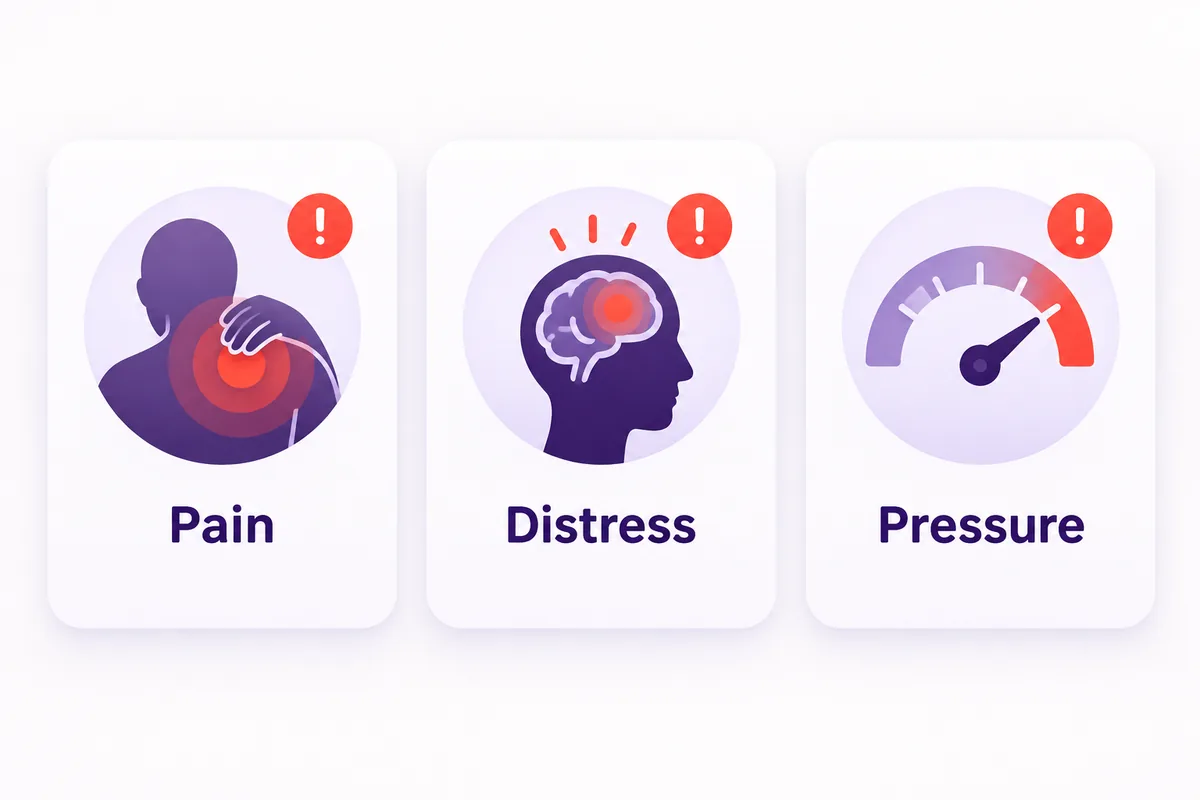
- Pressure or guilt: You have sex to avoid an argument, or you feel you cannot say no.
- Pain: Sex hurts often, or you dread it because it might.
- Lasting distress: Worry about sex, desire or performance stays with you for weeks.
- Strain on the relationship: Sex has become a regular source of conflict or silence.
- Risk you would rather not take: You skip protection or testing because raising it feels too hard.
- Loss of control: Sexual behavior feels hard to stop, even when it causes harm.
Cleveland Clinic advises seeing a healthcare provider if a sexual problem lasts three months or longer. It also advises getting help sooner if the problem interferes with your relationships or causes you or a partner distress.
Help comes in several forms. A doctor can look for physical causes, such as a medical condition or a medicine side effect. Sex therapists treat sexual problems that a primary care provider cannot address. Talk therapy can help with past trauma, anxiety, guilt or poor body image.
Anyone who feels unsafe with a partner, or has been forced into sex, should contact local emergency services or a sexual assault support line.
Frequently asked questions
How often does your body need sex?
There is no set amount your body needs. Healthline notes that a normal frequency is not an exact number per week, month or year. Among married US adults aged 18 to 44, about 6 in 10 report sex weekly or more. Research on couples suggests well-being stops rising beyond about once a week. The right amount is whatever leaves you and any partner content.
What are signs of unhealthy sex?
Warning signs include feeling pressured, frequent pain, lasting distress, and sex that has become a source of conflict. Skipping protection because you feel unable to raise it is another. Cleveland Clinic suggests seeing a provider if a sexual problem lasts three months or more, or sooner if it causes distress.
How do I improve my sex health?
Start by talking honestly with your partner about what you each enjoy, since research links the quality of those talks to higher sexual satisfaction. Get tested for STIs on the schedule the CDC recommends for you. Use condoms when there is a risk of infection. And if something feels wrong, such as pain, fading desire or a pattern you cannot shift together, see a doctor or sex therapist.
Is it healthy to go without sex?
Yes, if it is your choice. WHO frames sexual health as well-being, which includes freedom from coercion. That leaves room for any amount of sex, including none. Asexuality is a recognized orientation, not a disorder. If going without leaves you unhappy or frustrated, that is worth exploring with a partner or professional.
The bottom line
A healthy sex life is less about a number and more about how sex fits your life. It is consensual. It is protected against infections and unplanned pregnancy where those are risks, and it leaves you and any partner mostly content. And it reflects what you want, whether that means frequent partnered sex, solo sex or very little at all.
If one of those pillars feels shaky, start with the easiest fix. That might be a quiet conversation with your partner, a booked STI test, or a visit to a doctor about pain or low desire. Small steps tend to help the other pillars too. The goal is a sex life you would choose again, on your own terms.
Related reading
- What Is a Sex-Positive Relationship?
- What Is Solo Sex? A Guide to Self-Knowledge and Personal Choice
- What Does a Sex Therapist Do? Who They Are, What Sessions Look Like, and How to Find One
- Arousal vs. desire
Sources
- Sexual health - World Health Organization
- Trends in Frequency of Sexual Activity and Number of Sexual Partners Among Adults Aged 18 to 44 Years in the US, 2000-2018 - JAMA Network Open (via PubMed Central)
- How Often Do “Normal” Couples Have Sex? - Healthline
- Is Sex Once A Week Enough For A Happy Relationship? - Maine Public (NPR)
- Dimensions of Couples’ Sexual Communication, Relationship Satisfaction, and Sexual Satisfaction: A Meta-Analysis - Journal of Family Psychology (via PubMed Central)
- Strategies for Mitigating Sexual Desire Discrepancy in Relationships - Archives of Sexual Behavior (via PubMed Central)
- Maintaining the Gender Gap in Orgasms Takes Work - Council on Contemporary Families
- Sexual Dysfunction: Disorders, Causes, Types and Treatment - Cleveland Clinic
- Would You Like FRIES With That? The 5 Pillars of Consent Everyone Should Know - Planned Parenthood of Greater Ohio
- Getting Tested for STIs - Centers for Disease Control and Prevention
- Condoms - NHS
- Is it unhealthy to masturbate? - Government of Western Australia Department of Health (Get The Facts)
- Understanding Asexuality: What It Is and What It Isn’t - Sexual Medicine Society of North America