What Is a Sex-Positive Relationship?
A sex-positive relationship treats sex as normal and speakable, with consent as the baseline. Here's what it looks like and how to build it with a partner.

General education, not medical advice. If something here worries you, talk with a clinician.
Table of Contents
What is a sex-positive relationship? It is one where two people treat sex as a normal part of life rather than a taboo. Both partners can talk about desire, boundaries, and worries without shame, and consent sits underneath everything they do together. The label describes an attitude. It is no scorecard. It says nothing about how often you have sex, what you are into, or whether your relationship is open. This guide covers the meaning, the day-to-day signs, the misconceptions, and how to build the attitude with a partner.
What sex-positive actually means
Sex-positive describes an attitude. The International Society for Sexual Medicine says the term can be read in more than one way. For most people, it adds, it involves positive attitudes about sex. It also means feeling comfortable with your own sexual identity and with the sexual behaviors of others. A sex-positive person treats sex as a healthy part of life, something you can discuss without shame or awkwardness. They also accept that other people practise consensual sex differently, without moral judgment. A social work factsheet from Utah State University puts it in practical terms. Being sex positive means thinking and talking about sexual interest, pleasure, and decisions without judgment and with confidence.
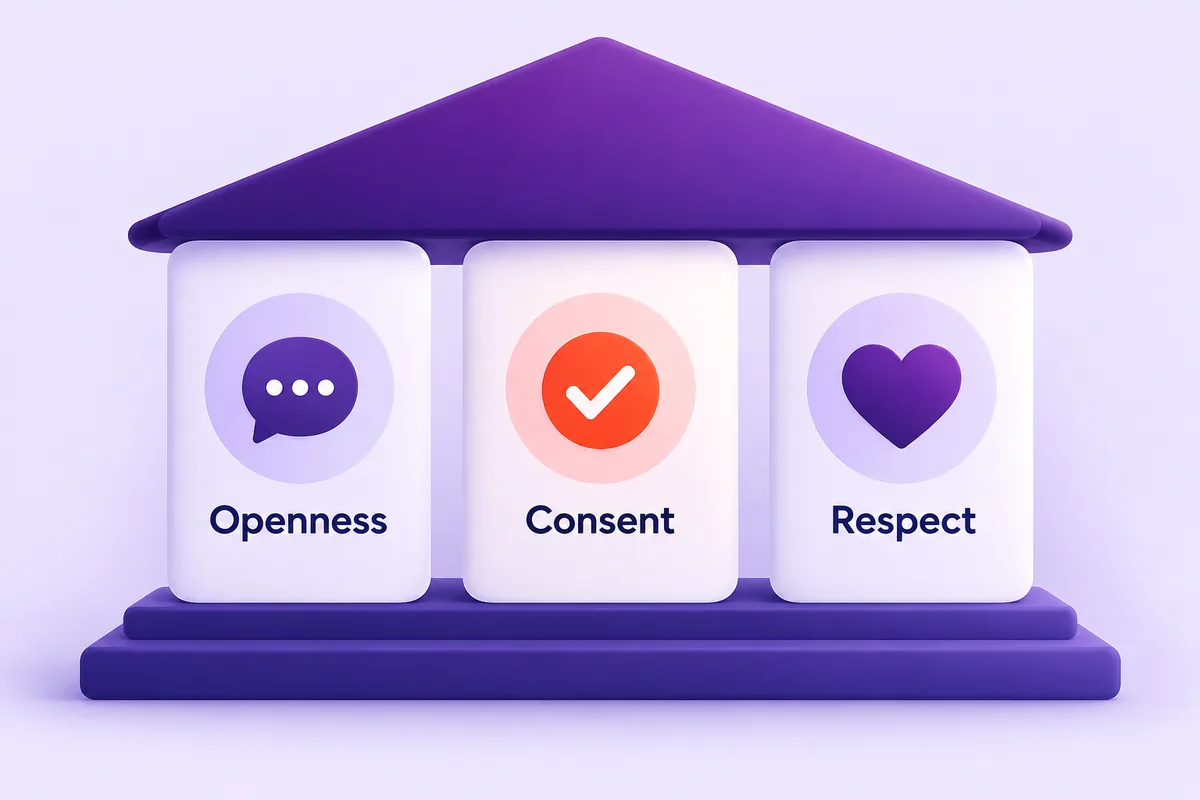
The word comes from the sex-positivity movement. A guide from the adult retailer Romantic Depot describes it as a social and philosophical movement that aims to transform cultural norms around sex. Applied to a couple, the idea shrinks to something practical. In a sex-positive relationship, both people bring that attitude home. Sex is speakable, preferences are respected, and neither partner treats the other’s desires as an embarrassment.
Notice what is absent from that definition. Frequency, kink, openness - none of it is required. The attitude is the whole of it, which is why two very different sex lives can both be sex-positive.
What it looks like in a relationship
You would recognize it within a week of watching the couple. Sex stays speakable, consent is explicit, and neither partner uses the other’s desires as material for a joke. Here is what that looks like up close.
Everyday signs of a sex-positive couple
The clearest sign is that sex is speakable. Desires, contraception, worries, and what felt good last night can all enter a conversation without either partner flinching. The National Coalition for Sexual Health names seven ingredients of a healthy sexual relationship. They are mutual respect, feeling safe, a close bond, honesty, equal power so one person is not calling all the shots, fair arguments, and joy. Openness runs through all of them, and respect shows up in small places: a request considered instead of mocked, a preference revealed instead of hidden.
Sexual health is part of the conversation too. The International Society for Sexual Medicine lists valuing safe sex among the typical traits of a sex-positive person. That covers condoms, STI testing, and talking about sexual histories, along with emotional safety. A sex-positive couple can raise testing or protection without either partner hearing it as an accusation.
Respect also means each person stays in charge of their own body. The sex education nonprofit Scarleteen calls this agency. A partner asks what you want rather than telling you, and makes decisions about shared sex with you, not for you. When you say what your body needs, they take you at your word instead of second-guessing it.
Consent is the baseline
Consent in a sex-positive relationship is asked for, specific, and revisitable. A yes to one thing is not a yes to everything, and last year’s yes does not cover this week. Anything new or boundary-pushing gets named out loud first, and either person can change their mind partway through. Rape Crisis England & Wales stresses the same points: you can agree to one sexual act but not another, and withdraw at any time. It adds that being married or together makes no difference, since consent is needed every time.
Pressure has no place here. Public-health guidance lists pressuring a partner into sexual activity among the warning signs of an abusive relationship. That puts pressure at the far edge of everything sex positivity stands for.
Checking in is normal. Rape Crisis suggests simple check-in questions, like asking whether this is okay. After something new, a quick “was that good for you?” keeps the attitude alive.
What sex positivity is not
Start with the biggest one: sex-positive does not prescribe more sex. It puts no number on anything. The attitude puts no floor under frequency, either. The International Society for Sexual Medicine lists one trait that settles it. Sometimes you won’t want sex, and sometimes your partner won’t want it with you. Romantic Depot’s education blog goes further, including asexual and celibate people within the definition.

Kink sits on a separate axis. Kinky describes preferences; sex-positive describes how you treat preferences, your own and everyone else’s. A vanilla couple can be thoroughly sex-positive, and an adventurous couple can be terrible at it.
The third misuse is pressure: “but we’re sex-positive” deployed as an argument for anything. Consent comes before the label, always, so the sentence cancels itself.
Relationship structure is separate too. Monogamous, open, waiting until marriage - the attitude applies to all of these and mandates none.
How to build it in your own relationship
Building the attitude is a practice rather than a switch. The work splits in two: the part you do alone, and the conversation you bring to the relationship.

Start with yourself
Ask where your defaults came from. Upbringing, religion, and media all leave messages about what sex means and who is allowed to want it. A Utah State University factsheet traces sex attitudes to what we live through growing up and the sex education we got. Media plays a part too, often showing narrow, unrealistic pictures of sex. Unexamined, those messages harden into reflexes.
Before any conversation with a partner, get clear on your own needs. Writing for Therapy for Black Girls, licensed marriage and family therapist Jordan A. Madison calls this a prerequisite. Naming what you need sexually requires internal insight and self-awareness, plus letting go of shame about wanting at all. So reflect. Ask what you enjoy, what you avoid, and what you are afraid to say out loud. That turns a vague want into a sentence you can share.
This kind of reflection is not equally easy for everyone. The International Society for Sexual Medicine notes that past sexual trauma can complicate sex positivity, as can cultural or religious values. If looking back brings up painful memories, a trauma-informed therapist or a sexual assault support service can help you work through them at your own pace.
Bring the conversation into the relationship
Open gently. Therapy for Black Girls advises opening “as gently as possible,” starting with what you currently enjoy about the sex you share. That keeps the conversation an appreciation rather than a complaint. From there, invitations beat demands. “I’d like more of this” lands better than “you never do that.” Ask your partner the same open question - are your needs met? - and receive the answer as information. Guidance from the National Coalition for Sexual Health runs parallel: never pressure each other, and talk about desires and fantasies beyond boundaries alone.
Make it routine rather than an event. A check-in after trying something new, or a monthly five-minute “how are we doing,” keeps sex speakable. Therapy for Black Girls notes that these talks get less awkward once they become part of a couple’s routine.
One caveat before you open any of these conversations. The National Coalition for Sexual Health warns that open, direct talk about your needs can be dangerous in an abusive relationship. The same goes whenever you fear a violent reaction. Seek help before raising the topic.
When desire does not match
Wanting different amounts of sex is common, and it is no defect. The National Coalition for Sexual Health notes that couples sometimes have mismatched sex drives and that appetite rises and falls across a lifetime. A partner wanting less sex does not by itself signal lost interest.
A sex-positive frame changes what the difference means. It stops being a verdict - “they’re not into me anymore” - and becomes a topic two people negotiate without leverage. No sulking as punishment, no keeping score, no trading chores for sex. Those moves trade on obligation, and obligation is the thing sex positivity rules out.
What remains is honesty plus creativity. Name the difference plainly, and ask what would help. Expand what counts as intimacy - touch, closeness, unhurried time together - so affection does not hinge on one act. And when one partner declines, the other lets it be about today.
Frequently asked questions
Is being sex-positive the same as being kinky?
Kink and sex positivity answer different questions. Kink names preferences; sex-positive names an attitude toward preferences. A couple can be curious about nothing beyond the classics and still be thoroughly sex-positive. What the attitude asks is that consensual choices, yours or anyone else’s, get respect rather than judgment.
Does a sex-positive relationship mean having more sex?
Sex positivity sets no quota. It includes people who want little sex or none. It also never obligates anyone to say yes: acknowledging that either partner might not want sex is part of the attitude itself.
Can a sex-positive couple wait, pause, or stop having sex?
Yes. Waiting, pausing, or stopping is a consensual decision like any other, and writers on sex positivity include asexual and celibate people within the attitude. Frequency belongs to the two people involved, not to a standard they have to meet.
Is sex positivity the same as an open relationship?
Open is a structure; sex-positive is an attitude. The attitude fits monogamy just as well as non-monogamy, respecting consensual structures of every kind and mandating none of them.
How do I bring this up with my partner?
Start small and gently. Name something you already enjoy, then invite rather than demand. Therapy for Black Girls recommends making intimacy check-ins part of your routine, the way couples check in about the rest of the relationship. Beginning with what works keeps the conversation feeling like appreciation rather than complaint.
The short version
A sex-positive relationship comes down to three things. Sex is treated as a normal part of life and stays speakable. Consent runs underneath everything, specific and revisitable. And shame is shown the door in both directions - no judgment on wanting more, none on wanting less.
Where to start? One honest sentence this week: something you enjoy, something you are curious about, or a question you have never asked out loud. Small conversations, repeated, are how the attitude takes root.
Related reading
- What Is a Healthy Sex Life? Communication, Satisfaction, Safety and Choice
- What Is Vanilla Sex? The Term, the Preference, and Why It Is Fine
- Arousal and consent
- What Does a Sex Therapist Do? Who They Are, What Sessions Look Like, and How to Find One
Sources
- What does “sex positive” mean? - International Society for Sexual Medicine
- Sex Positivity and You (Sexual Positivity Factsheet) - Utah State University, Department of Social Work
- Beyond the Buzzword: What Sex Positivity Really Is - Romantic Depot
- Build Positive Relationships - Five Action Steps to Good Sexual Health - National Coalition for Sexual Health
- How can I help my boyfriend be more sex-positive? - Scarleteen
- What is sexual consent? - Rape Crisis England & Wales
- How to Talk to Your Partner About Your Sexual Needs - Therapy for Black Girls