What Is Bareback Sex? Meaning, Risks and How People Lower Them
What bareback or raw sex means, where the term came from, its HIV, STI and pregnancy risks, and how PrEP, doxyPEP, testing and agreements lower them.

General education, not medical advice. If something here worries you, talk with a clinician.
Table of Contents
Bareback sex is slang for sex without a condom. Raw sex means the same thing. Both words are most often used for anal sex between men, but people now use them for any condom-free sex.
The word only describes what is missing. It says nothing about whether someone is on PrEP, uses birth control, or has just tested negative. That gap is where most of the real decisions sit.
This guide explains where the terms came from and what the health risks look like in numbers. It then covers the tools people use to lower those risks today: PrEP for HIV, doxyPEP for some bacterial infections, vaccines, regular testing, and clear agreements between partners.
What does bareback sex mean?
Bareback, raw and condomless: the same act
In plain terms, bareback sex means sex without a condom. Researchers who interviewed 120 mostly gay men in New York City found broad agreement on that basic meaning: anal sex with no condom. Healthline notes that the term is often shortened to “BB” on dating apps and in personal ads.
Raw is the newer, more casual word for the same thing. “Going raw” or “raw sex” shows up in everyday speech and on dating profiles. In clinics and research papers, the neutral term is condomless sex.
Each word carries a slightly different tone. Bareback has a long history in gay culture, so some people hear it as an identity or a scene. Raw sounds more casual. Condomless is the word a doctor will use, and it carries no judgment at all.
Can anyone have bareback sex?
Yes. The word grew out of gay male culture, but it now describes condom-free sex between people of any gender. Couples trying to conceive have bareback sex on purpose. So do many long-term partners who use other ways to stay safe.
What the word does not tell you matters just as much. Healthline points out that skipping barriers raises the risk of STIs, pregnancy, or both, depending on the type of sex. Whether that risk is high or low depends on what else is in place. Two people on PrEP who test regularly are in a very different position from two strangers with no recent tests.
Where the term came from
From horse riding to HIV-era slang
The image is simple. Riding bareback means riding a horse without a saddle, and the sexual meaning plays on that idea of nothing in between.
The sexual use took hold in the gay press in the mid-1990s. At first it had a narrow meaning: deliberate condomless anal sex, mainly among gay men who were already living with HIV. That timing matters. Condoms were the main defense against HIV at the time, and there were no prevention pills yet. Choosing to skip them was a loaded decision, and the word carried that weight.
Stigma and the PrEP shift
Early debates inside the gay community focused on the HIV risk the practice carried. Researchers then struggled to pin the word down. Some defined it as deliberate condomless anal sex in settings with HIV risk. Others limited it to sex with someone other than a main partner.
Those details were not just academic. A label that lumps every condom-free act together can hide the difference between a reckless choice and a careful plan. The New York researchers made exactly that point. They argued that condomless sex between partners who had planned for it, through steps like negotiated safety, should not be counted the same way.
The meaning then widened. By 2003, a new edition of The Joy of Gay Sex defined bareback simply as condomless gay sex. The idea of a deliberate choice inside a risky setting had faded from everyday use.
Stigma did not fade as quickly. In the New York study, about a quarter of the men would not call themselves barebackers. Some said the stigma attached to it was the reason, and HIV-negative men felt this most.
Then PrEP and the science of undetectable viral loads changed the conversation again. Many people now talk about condomless sex as something to plan for, with medicine and testing, rather than a line that should never be crossed. The sections below look at those tools in turn.
Health risks of bareback sex
The main health risks of bareback sex are HIV, bacterial STIs such as gonorrhea and syphilis, and pregnancy when one partner can get pregnant. How big each risk is depends on the type of sex and on what other protection is in place.
HIV risk depends on the kind of sex
Receptive anal sex carries the highest risk of any sexual act. A CDC-authored review put it at about 138 infections per 10,000 exposures when one partner has HIV and no protection is used. The same review estimated 11 per 10,000 for insertive anal sex and 8 for receptive vaginal sex. Oral sex was rated low.
Those numbers can look small for a single act. They add up over many acts, though, and they rise when another STI is present. Consistent condom use cut HIV incidence by about 80% in the studies the review drew on. Condoms combined with HIV treatment for the partner with HIV lowered risk by 99.2%.
Gonorrhea, chlamydia and syphilis
These bacterial infections pass easily during condomless sex, including through the mouth and rectum. They are also common. CDC counted more than 2.2 million cases of chlamydia, gonorrhea and syphilis in the United States in 2024. Cases fell 9% from 2023, yet overall cases remain 13% higher than a decade earlier.
Many of these infections cause no symptoms, especially in the throat and rectum. A person can feel fine and still pass one on. That is why testing, covered below, carries so much of the load for people who skip condoms.
Pregnancy, if one partner can get pregnant
Condom-free vaginal sex without birth control can lead to pregnancy. This sounds obvious, yet it is easy to forget when the focus is on HIV. PrEP does nothing to prevent pregnancy. Partners who skip condoms and do not want a pregnancy still need a separate birth control method.
Why some people choose it
People choose bareback sex mostly for pleasure and closeness. A study based on in-depth interviews with men who bareback found that sexual pleasure and intimacy played a central role in their choices. For many of them, the wish for satisfaction, adventure, intimacy and love outweighed health worries and condom advice.

The same research team found two main groups of reasons in survey data. One was pleasure and emotional connection. The other was coping with social vulnerabilities, such as loneliness or stress.
Trust often plays a part as well. For some couples, stopping condoms marks a step in the relationship, much like moving in together. For others, it is about sensation or simply not wanting to interrupt the moment.
None of these reasons is unusual, and none of them is shameful. They are also not a plan. The tools in the next sections let people keep what they value about condom-free sex while lowering the health risks that come with it.
PrEP: planned protection against HIV
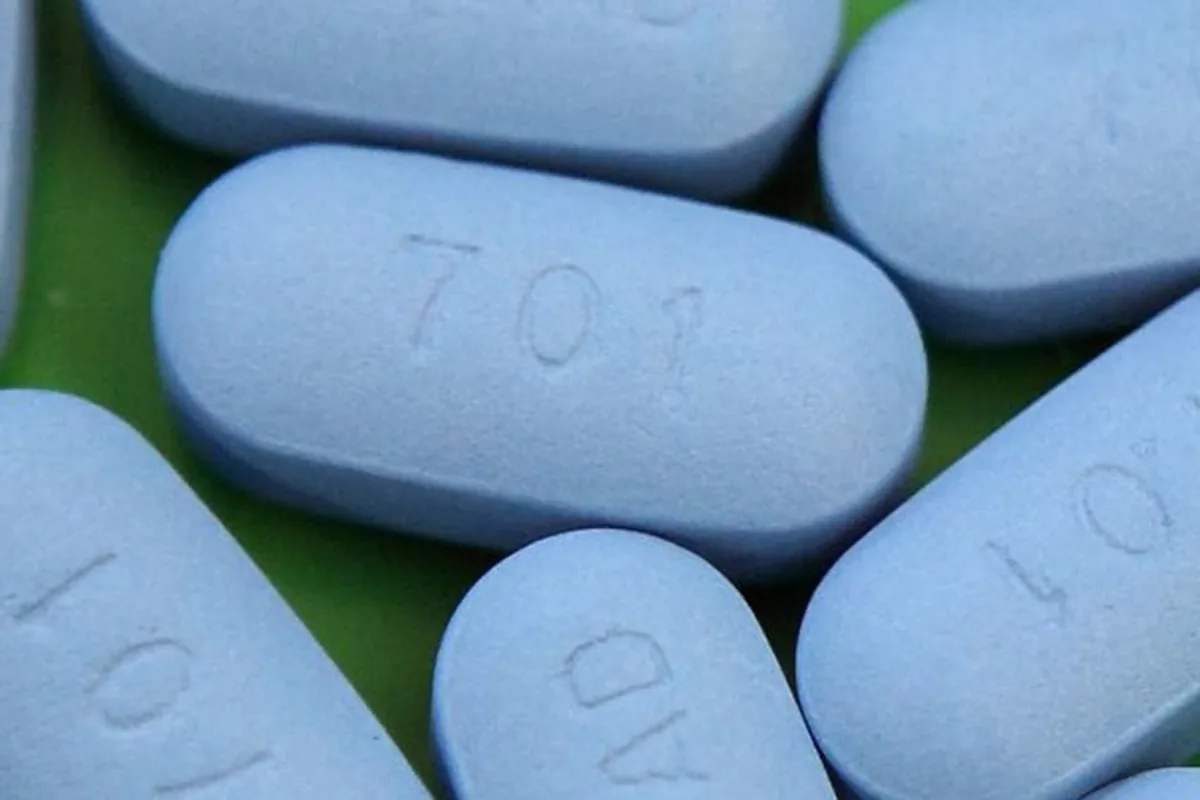
PrEP makes bareback sex far safer for HIV, but only for HIV. PrEP, short for pre-exposure prophylaxis, is medicine an HIV-negative person takes before possible exposure.
How well PrEP works
When taken as prescribed, PrEP lowers the risk of getting HIV from sex by about 99%, according to HIV.gov. It works much less well when doses are missed. So the protection depends on taking it on schedule, not just having a prescription.
There are now three main ways to take it. Daily pills are the most familiar. Apretude (cabotegravir) is an injection given every other month, and Yeztugo (lenacapavir) is an injection given twice a year. The FDA approved lenacapavir for PrEP on 18 June 2025. In the PURPOSE 1 trial, which enrolled about 5300 young women across lenacapavir and daily-pill groups, no one who received lenacapavir got HIV.
Shots can suit people who struggle to take a daily pill. They still mean clinic visits, so the choice often comes down to which routine a person can keep.
What PrEP does not cover
As HIV.gov notes, PrEP protects against HIV but not against other STIs. Gonorrhea, chlamydia, syphilis, herpes and HPV can all still pass between partners. PrEP also does not prevent pregnancy.
It comes with a check-up routine too. People on daily pills see a provider every 3 months for an HIV test and a refill. Those on shots return every two or six months, depending on the drug. Those visits are also a natural time for STI testing.
Some people combine PrEP with condoms for some partners and not others. HIV.gov notes that adding condoms lowers the risk of other STIs.
DoxyPEP and vaccines for other infections
For bacterial infections, the newest tool is doxyPEP. Vaccines cover several of the viral ones.
How doxyPEP works
DoxyPEP means taking 200 mg of the antibiotic doxycycline within 72 hours after sex. CDC says it can lower the chance of getting syphilis and chlamydia, and in some studies gonorrhea. CDC says not to take more than one dose in a 24-hour period, however many times someone has sex that day.
It is not meant for everyone. CDC advises providers to discuss doxyPEP with gay and bisexual men and transgender women who have had chlamydia, syphilis or gonorrhea in the last 12 months. That is the group the research showed it works for, and researchers are still learning whether it works for other groups. CDC also keeps the advice narrow to limit the chance of antibiotic resistance. It does not prevent HIV or herpes. People using it should still see a provider every 3-6 months for HIV and STI screening, because the dose is too low to treat an infection that is already there.
Vaccines worth asking about
Several infections passed during sex can be prevented with vaccines. One NHS sexual health service, for example, offers shots against hepatitis A, hepatitis B, HPV and mpox. It also offers the meningococcal B vaccine for some protection against gonorrhea.
Who qualifies varies by country. At that UK clinic, gay, bisexual and other men who have sex with men can get the HPV vaccine up to and including age 45. Hepatitis B vaccine is also offered to anyone starting PrEP or PEP. A sexual health clinic can check which shots you have had and which you still need.
Testing schedules that match the risk
How often to test depends on how many partners you have and what protection you use. For sexually active men who have sex with men, CDC advises chlamydia and gonorrhea tests at least once a year. That rises to every 3 to 6 months for men on PrEP, men with HIV, or anyone with multiple partners.
| Situation | HIV test | STI tests | Where to test |
|---|---|---|---|
| Sexually active gay or bisexual man | At least yearly | At least yearly | Urethra and rectum, plus the throat for gonorrhea |
| On PrEP, living with HIV, or multiple partners | With each PrEP visit | Every 3 to 6 months | Every site used for sex |
| Using doxyPEP | Every 3-6 months | Every 3-6 months | Every site used for sex |
| Women with rectal or oral exposure | Ask a provider | Rectal and throat tests can be considered | Based on the sex you have |
The “where” column matters as much as the “how often.” A urine test only checks the urethra. Rectal gonorrhea and chlamydia, and throat gonorrhea, can be missed unless those sites are swabbed. CDC advises testing at the sites of contact regardless of condom use. Ask for every site you use.
If a condom-free encounter was unplanned
A planned schedule does not help after an unexpected exposure to HIV. For that, there is PEP, a short course of HIV medicine. CDC says it must start within 72 hours, and every hour counts. A full course means taking it daily for 28 days. An emergency room or urgent care clinic can prescribe it. Emergency contraception and follow-up testing are separate steps on their own timelines.
Negotiated agreements between partners
Partners who want to stop using condoms with each other usually do it through an agreement. The most studied version is called negotiated safety.

What negotiated safety means
Negotiated safety is a plan between partners. Both test negative for HIV together and keep using condoms through the test’s window period. After a second negative test, they agree to drop condoms with each other. They also keep clear rules for any sex outside the relationship.
Timing matters because no HIV test detects a brand-new infection. A NAT usually picks up HIV 10 to 33 days after exposure, while antibody tests, including most rapid and home tests, take 23 to 90 days. A negative retest after that window, with no possible exposure in between, means no HIV. Researchers have described it since the early 1990s as a planned strategy, quite different from risky condomless sex with unknown partners. The same paper groups it with sequential testing and agreed monogamy as ways to drop condoms after clear precautions.
Couples are worth this attention. CDC researchers estimate that 33–67% of HIV infections among gay and bisexual men come from main partners. A plan built only around casual partners misses a large share of the risk.
What a clear agreement covers
A useful agreement answers a few practical questions:
- Testing: when you both test, for what, and how long you wait for the window period to pass before dropping condoms.
- Outside partners: whether sex with others is allowed, and whether condoms or PrEP are required then.
- Medicine: who takes PrEP, and whether doxyPEP makes sense for either of you.
- Disclosure: how and how soon you tell each other if a rule is broken.
HIV status shapes the plan too. A person with HIV who takes treatment and stays undetectable will not pass HIV to sex partners, according to CDC. This principle, often called U=U, lets mixed-status couples have condomless sex without HIV risk. Other STIs are still possible.
When agreements break down
Agreements are common, and so are misunderstandings. In a study of 566 gay male couples, 45 percent agreed they were monogamous and 47 percent agreed on an open relationship. In the other 8 percent, the partners disagreed about whether they were monogamous.
A broken or unclear agreement needs a plan, not blame. Go back to condoms for a while, test again, and consider PEP if the slip happened within the last 72 hours. Then talk through what changed and rewrite the rules together.
Frequently asked questions
What is the slang for unprotected sex?
The most common slang terms are bareback, BB, raw, and going raw. Bareback and BB come from gay culture and dating apps. Raw is more widely used, including between men and women. All of them mean sex without a condom. None of them tells you whether a partner uses PrEP, birth control or regular testing, so it is worth asking.
What does the term raw mean in sex?
Raw means sex without a condom. It does not mean rough sex. People use it in casual speech and on dating profiles as a shorter, less loaded word than bareback. A partner who says they “only go raw” is telling you they do not use condoms. It is a good moment to ask about PrEP, testing and other partners.
Can you get STDs from someone on PrEP?
Yes. PrEP prevents HIV only, so gonorrhea, chlamydia, syphilis, herpes and HPV can still pass between partners. That is one reason people on daily PrEP see a provider every 3 months, and why many test for other infections at the same visit.
Is bareback sex safe if you both test negative?
It can be much safer, but timing matters. No HIV test can detect a very recent infection. Depending on the test, HIV can take up to 90 days to show up, so a negative result does not cover recent exposures. A negative retest after that window, with no possible exposure in between, is reliable. Keep using condoms until then. After that, safety depends on what happens with other partners, which is why many couples write down a negotiated safety agreement.
The bottom line
Bareback and raw sex both mean sex without a condom. The word started as HIV-era slang in gay communities and now covers condom-free sex of any kind.
Risk depends on the details. PrEP covers HIV, doxyPEP and vaccines cover some other infections, and regular testing at every site catches what slips through. Birth control is a separate decision. A clear, honest agreement ties these pieces together for partners who want to stop using condoms.
If you are thinking about it, a sexual health clinic is the place to start. Staff there can test you, talk through PrEP and doxyPEP, and check your vaccines in one visit.
Related reading
- What Is Unprotected Sex? Risks and What to Do Next
- What Is a Dental Dam for Oral Sex?
- What Is Withdrawal in Sex? The Pull-Out Method, Its Effectiveness and Its Limits
- What Is Casual Sex? Expectations, Boundaries, Consent and Safer Sex
Sources
- Is ‘bareback’ a useful construct in primary HIV-prevention? Definitions, identity, and research - Culture, Health & Sexuality (via PubMed Central)
- How to Have Safer “Bareback” Sex Without a Condom - Healthline
- Estimating per-act HIV transmission risk: a systematic review - AIDS (CDC authors, via PubMed Central)
- Sexually Transmitted Infections Surveillance, 2024 (Provisional) - U.S. Centers for Disease Control and Prevention
- Sexual Pleasure and Intimacy Among Men who Engage in “Bareback sex” - AIDS and Behavior (via PubMed Central)
- Pre-Exposure Prophylaxis (PrEP) - HIV.gov (U.S. Department of Health and Human Services)
- FDA approval of injectable lenacapavir for Pre-Exposure Prophylaxis (PrEP) - Medicines Law & Policy
- Preventing STIs with Doxy PEP - U.S. Centers for Disease Control and Prevention
- Vaccinations for sexual health - Homerton Healthcare NHS Foundation Trust
- STI Screening Recommendations - U.S. Centers for Disease Control and Prevention
- Preventing HIV with PEP - U.S. Centers for Disease Control and Prevention
- Getting Tested for HIV - U.S. Centers for Disease Control and Prevention
- Incorporating Couples-Based Approaches into HIV Prevention for Gay and Bisexual Men: Opportunities and Challenges - CDC Stacks (Archives of Sexual Behavior)
- HIV Treatment as Prevention - U.S. Centers for Disease Control and Prevention
- Gay Couples Vulnerable to HIV When Monogamy Is Unsure - HealthDay