What Is Doggy Style Sex? The Position, Its Variations, and How to Keep It Comfortable
What doggy style sex is, what froggy style and rhino mean, and how to manage comfort, depth, consent and safety in rear-entry positions.

General education, not medical advice. If something here worries you, talk with a clinician.
Table of Contents
Doggy style sex is a rear-entry position. In its classic form, the receiving partner is on hands and knees, and the other partner kneels or stands behind them. That simple shape has many offshoots, and some of them carry names such as froggy style and rhino.
Those names are less settled than they sound. Different sites describe the same name in different ways, so this guide explains each one in plain terms and flags where the definitions clash.
The rest of the guide covers what matters more than the label. That means support for knees, wrists and backs, ways to control depth, and how to talk when you cannot see each other’s faces. It also covers the safety differences between vaginal and anal sex, and the signs that pain or bleeding needs a professional.
What doggy style means
The basic setup
The receiving partner kneels on all fours, with weight spread across the hands and knees. The other partner kneels or stands behind them and faces the same direction. Penetration can be vaginal or anal, with a penis or a sex toy.
Everything else is adjustable. The person in front can drop onto the forearms, rest the chest on a pillow, or lie flat. The person behind can kneel upright, lean forward, or stand at the edge of a bed. Each change shifts the angle, the depth, and how much effort each body is doing.
Other names, and one term that means something else
The position goes by several informal names. Trojan’s guide says “backshots” is slang for doggy style, and it treats prone bone, where the receiving partner lies flat on the stomach, as a variation of it.
One similar-sounding word is not a position at all. Dogging, in British English, means sexual activity in a public or semi-public place, or watching it. Mixing the two up can cause real confusion in a search bar or a conversation.
Why people choose it
Many couples like the angle. WebMD notes that rear entry can put more pressure on the front wall of the vagina, the area often called the G-spot. It is also easy for the receiving partner to shift their hips, which changes where contact lands.
That kind of small adjustment is common. In a national survey of 3017 American women, 87.5% said they make penetration more pleasurable by angling, which means raising, lowering, or rotating the hips. Rear entry gives the person in front plenty of room to do exactly that.
Others pick it for practical reasons. It needs no special flexibility in its basic form, and it adapts well to pillows, furniture and different heights.
Named variations: froggy style, rhino and other versions
Froggy style: a squat or a lowered chest?
Froggy style has no single agreed meaning. Sources describe at least two different body shapes under the name.
WeLovePlugs, a retailer, defines it as a rear-entry position in which the receiving partner sinks into a deep squat while the other partner kneels behind. That version asks a lot of the thighs, hips and balance. The same guide suggests skipping it with a back, hip or knee injury, or during pregnancy.
Blushcast describes it differently. In its version, the receiving partner stays on bent knees but lowers the chest while keeping the hips raised, and it treats froggy style and leapfrog as the same setup. Even WeLovePlugs admits that people use froggy, doggy and leapfrog interchangeably and that descriptions vary.
A third shape is easy to confuse with both. Here, the partner behind crouches on their feet instead of kneeling. Trojan calls that version “raised doggy style”, and Blushcast calls it the Bulldog.
Rhino: the version with a forward lean
Detailed definitions of the rhino are scarce. The clearest one comes from LoveQuarters, a lifestyle site. It describes the receiving partner kneeling with the chest low and the hips high, while the partner behind kneels close and leans forward over their back. The partner on top should hold their own weight on their arms rather than resting it on the other person’s back.
Notice the overlap. LoveQuarters’ rhino and Blushcast’s froggy style both put the receiving partner’s chest down and hips up. The main difference in the rhino is the forward lean from the partner behind. So two people using these names may picture the same thing, or two different things.
Searching the word turns up something unrelated, too. It appears in the names of some sexual enhancement products. The FDA found that one of these products, Rhino 7S Type F3 7000, contained hidden sildenafil, the drug in Viagra. The agency warns that a hidden ingredient like this can interact with nitrate medicines such as nitroglycerin and drop blood pressure to dangerous levels.
Flat and lazy versions
Lowering the body is the simplest way to save effort. In prone bone, the receiving partner lies flat on the stomach, and the other partner supports their own weight above. A lazy version keeps the knees bent but rests the chest on the bed instead of holding the body up on the hands.
Lying flat has a side effect that some people want. WebMD notes that lying on the stomach can keep penetration from going too deep.
Standing and furniture-supported versions
The receiving partner can also bend over a bed edge, a desk or a chair, with the other partner standing. WebMD suggests choosing furniture that sits at a good height for the person behind. Fully standing, with the person in front holding a wall, works best when both partners are a similar height.
Why the names do not match from site to site
These names come from blogs, retailers and word of mouth, not from any medical or official list. So the same word can point to different shapes.
| Name | What one site says | What another site says |
|---|---|---|
| Froggy style | Receiving partner in a deep squat, partner kneeling behind | Receiving partner’s chest lowered, hips raised over bent knees |
| Partner behind crouches on feet | Called raised doggy style by Trojan | Called the Bulldog by Blushcast |
The practical fix is simple. Describe the shape you have in mind, not just the name, before you try it together.
Making it comfortable: knees, wrists, back and pregnancy

Knees, wrists and support
Most discomfort in this position comes from load on a few joints. Knees press into the mattress, and wrists carry the upper body. A pillow under the knees helps, and so does a pillow under the belly or hips, whichever feels better.
If the wrists tire first, the receiving partner can drop onto the forearms or rest the chest on a firm pillow. Treat numbness, tingling, or sharp joint pain as a reason to stop and change position rather than push through.
Back pain: what the research says
Rear entry is sometimes the better choice for a bad back, depending on the kind of pain. A University of Waterloo study used motion capture to track the spines of 10 healthy couples across 5 positions. For men whose back pain gets worse when they bend forward, both rear-entry versions were the most spine-sparing.
The same study found limits. Rear entry with the receiving partner on their hands did not suit men whose pain is triggered by arching backward. For men whose pain flares with any spine movement, no position was ideal, and the authors suggested moving from the hips instead. The study analysed only the penetrating partner’s spine, so it says little about the partner in front.
The receiving partner faces a different problem: a deep arch in the lower back. Lowering the hips a little, or putting a pillow under the belly, can ease a pinched lower back.
Height differences and furniture
A big height gap makes kneeling-to-kneeling setups awkward. Moving to the edge of the bed, with the person behind standing, lets you adjust height by choosing the furniture. Standing on its own is easiest when both partners are a similar height.
Who it suits, and who may want another option
The basic version suits many bodies because it needs little flexibility and adapts to pillows and furniture. It can also suit some men with back pain, if bending forward is what sets the pain off.
Other people may do better with a different shape. Someone with sore knees or wrists may prefer prone bone or a supported bed-edge version, which take weight off those joints. Squat-based froggy versions are a poor fit for anyone with a back, hip or knee injury, according to the retailer that describes them.
Deep pain is another reason to switch. People with endometriosis often report rear entry as the most painful position, as the next section explains. In that case, a face-to-face position or a shallower variation is a reasonable first change.
During pregnancy
As long as you feel comfortable, most sex positions are safe during pregnancy, according to WebMD. Positions with the partner on top often become uncomfortable, first from tender breasts and later because the bump gets in the way. The NHS suggests trying other positions, such as side by side, to see what feels right.
The NHS advises saying what is and is not comfortable, and notes that a drier vagina in pregnancy can make water-based lubricant useful. A doctor or midwife may advise against sex in some cases, such as after heavy bleeding in pregnancy or when the waters have broken.
Depth control: why rear entry can feel deep and how to adjust
Why it can feel deeper
Depth in this position depends mostly on hip height and chest height. When the receiving partner raises the hips and lowers the chest, the pelvis tilts and the angle gets steeper. That is why variations like the rhino tend to feel deeper than the basic setup.
Deeper is not always better. Cleveland Clinic describes deep pain during penetration, sometimes called collision dyspareunia, and notes it may feel worse in certain positions. It can be linked to the bladder or bowel, the pelvic floor muscles, endometriosis, or pelvic congestion syndrome.
Ways to make it shallower
The receiving partner has several simple levers. Lying flatter on the stomach limits how deep penetration can go. Bringing the knees and thighs closer together narrows the range of movement, and a more upright torso helps too.
Movement style matters as much as body shape. In the national survey mentioned earlier, about 84% of women said shallow penetration just inside the entrance made sex more pleasurable. About 76% described rocking, which means staying inside and moving in small motions instead of thrusting in and out. Both habits keep depth under control without changing the position at all.
It helps to agree that the person in front sets the first depth and pace. They can move back toward their partner, or forward and away, far more precisely than the person behind can guess.
Endometriosis and positional pain
For some people, deep pain in this position points to a condition. Endometriosis is a disorder where tissue similar to the uterine lining grows outside the uterus. In a study of 71 women having surgery for it, 68.3% had pain only in certain positions, and doggy style was the one most often named as most painful.
The Sexual Medicine Society of North America suggests a reason. Rear-entry positions can push the uterus forward, so where the endometriosis sits may decide which positions hurt. Front-entry positions may be less painful for some patients, though the sample was too small to recommend any single position.
Consent and communication when you cannot see each other’s faces

Agree before you start
This is a face-away position, so the usual cues are missing. You cannot read each other’s expressions, and that makes the conversation beforehand more useful than usual.
Consent is agreement to a specific sexual act at a specific time, given through clear words or actions. Agreeing to rear entry is not automatic agreement to anal sex, to a toy, or to a rougher pace. So settle the basics first: vaginal or anal, which protection, and which words mean slower, shallower, pause and stop.
Talking about it outside the bedroom
The easiest time to raise a new position is not in the middle of sex. WebMD suggests picking a neutral, relaxed moment, because bringing it up during or right after sex can feel like pressure or criticism. Start by saying what you already enjoy, and use sentences that begin with “I” so the request does not sound like a complaint.
Give your partner time to think it over. A maybe, or a no, is a full answer.
Check-ins and stop signals
Silence does not count as a yes. Indiana University’s definition says consent cannot be assumed from silence, from the absence of a no, or from an existing relationship. Consent can also be withdrawn at any time, as long as it is clearly communicated.
Short questions work best in practice because they are easy to answer mid-movement. Try “Same depth?”, “Slower?”, or “Want to switch?” Pause whenever an answer is delayed or hard to hear. Some couples also agree on a touch signal, such as a tap on the thigh, which works even when talking is awkward. When either person says stop, the movement stops right away, with no debate.
Vaginal and anal sex: what changes for safety
Lubricant and condoms
Anal sex needs more care than vaginal sex in this position. Nuffield Health describes it as the riskiest sexual activity, because the lining of the anus and rectum is delicate and tears easily. Those small tears let bacteria and viruses, including HIV, pass between partners.
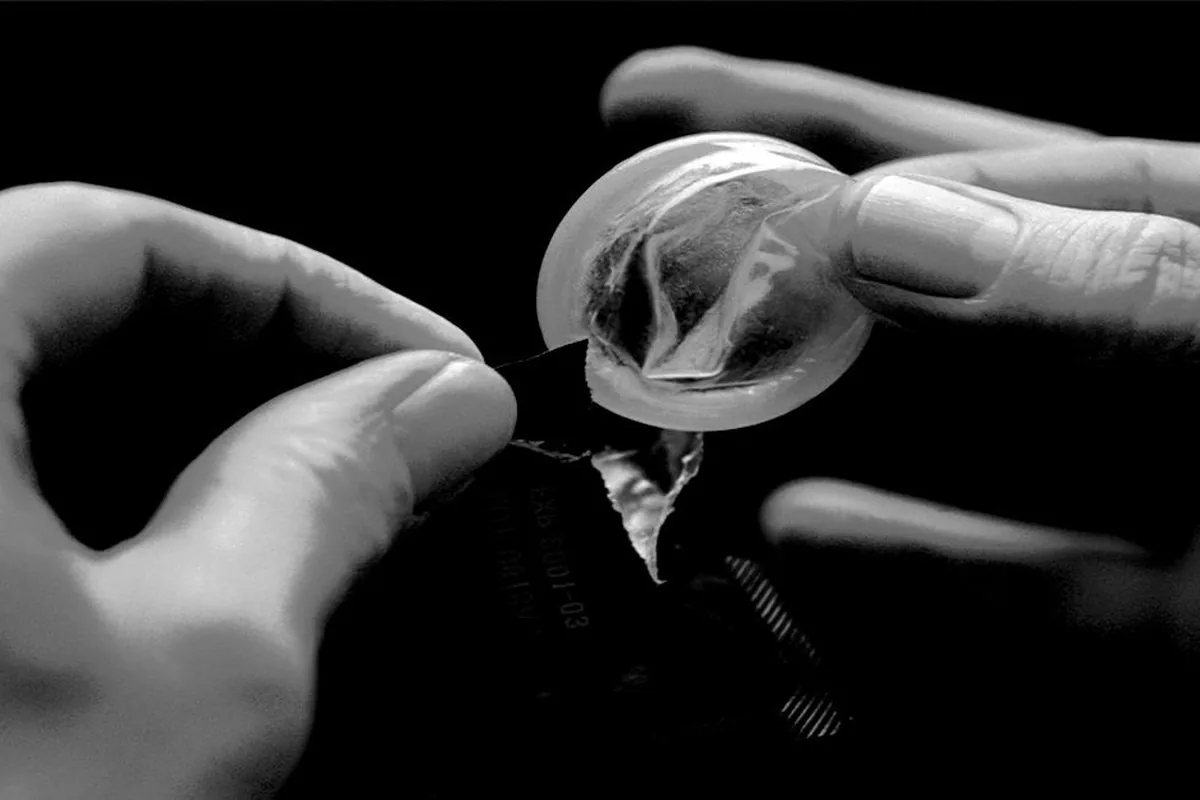
The rectum also makes little natural lubrication, which makes condoms more likely to break. Use a condom and plenty of water-based lubricant. Avoid oil-based products with latex condoms, since oils can weaken some condoms. For vaginal sex, a water-based lubricant also cuts friction and lowers the chance of a condom breaking.
Switching from anal to vaginal
Rear entry makes it easy to move between the anus and the vagina. That convenience carries a risk. Bacteria from the rectum can cause infection if they reach the vagina. Change to a fresh condom before switching, or clean the penis or toy first.
The penile fracture risk
A penile fracture is a rare but serious injury to an erect penis. It usually happens when the penis slips out and is bent hard against the partner’s pelvis or body. Rear entry is one of the positions most often linked to it.
The studies do not all rank the positions the same way. In one study of 90 men with this injury, 41% were hurt during doggy style, the most common position in that group. A Brazilian study of heterosexual cases found woman on top was more common, at 50%, with doggy style second at 28.6%. Either way, the habits that lower the risk are the same.
If the penis slips out, stop moving. Guide it back in by hand rather than thrusting toward an opening you cannot see. Keeping lube nearby helps as well. Rushed or stressful circumstances may raise the risk of this injury, so a slower pace is the safer habit.
Myths and what the evidence says
Myth: it only works for vaginal sex
The position works for vaginal or anal sex. What changes is the planning. Anal sex calls for a barrier, more lubricant, and a slower start, as covered above.
Myth: it cannot feel intimate
Not facing each other does not have to mean distance. WebMD suggests wrapping your arms around your partner, using a mirror to keep eye contact, and talking during sex. It also points to research linking communication during sex with greater sexual satisfaction. Leaning in close, as in the rhino, adds skin contact too.
Myth: a bit of pain is normal
No sex act should hurt. Pain is a signal to slow down, add lubricant, change the angle, or stop. Pain before, during or after sex has a medical name, dyspareunia, and it has causes a doctor can look for.
Myth: deeper always feels better
Depth is a setting, and many people prefer it lower. In the national survey of women described earlier, shallow penetration and rocking were both widely used ways to make sex more pleasurable. Deep penetration can also trigger pain in some people, especially in certain positions. Aim for the depth that feels good to the person in front, not the most the position allows.
Myth: it helps you conceive twins
Position has nothing to do with twins. Identical twins come from one fertilized egg splitting by chance. Fraternal twins come from two eggs being released and fertilized. Neither process depends on the position a couple used, so choosing doggy style will not change the odds of twins either way.
When pain or bleeding means seeing a professional
Pain that keeps coming back
Painful sex is common, and it is treatable. Up to 28% of people in the United States will have painful sex at least once, according to Cleveland Clinic. Make an appointment if pain keeps returning, if it happens in other positions too, or if it lingers after sex.
A provider can look for causes such as dryness, infection, pelvic floor problems or endometriosis. Treatment depends on the cause. It may include pelvic floor physical therapy, medication, or simply a lubricant. Changing positions while you wait for answers is a sensible step, not a failure.
Bleeding after sex
Vaginal bleeding after sex is common, and it has many possible causes. Friction from too little lubrication or foreplay is one. Others include hormonal birth control, an inflamed cervix, cervical polyps, and sexually transmitted infections.
Mayo Clinic advises seeing a professional for any bleeding that worries you. Get checked right away if the bleeding keeps happening, if you may have been exposed to an STI, or if you have gone through menopause.
Signs of an emergency
Some symptoms in the partner with a penis need urgent care. A cracking or popping sound, sudden pain, and a fast loss of erection can mean a penile fracture. Swelling or a change in colour may follow. WebMD calls this a medical emergency that needs an ER visit right away. Surgery can repair it, and quick treatment gives the best results.
Frequently asked questions
What is the difference between doggy and froggy style?
In doggy style, the receiving partner stays on hands and knees. Froggy style changes that shape. Sources disagree on how. One retailer describes the receiving partner in a deep squat. Another guide describes the chest lowered with the hips raised over bent knees. Ask your partner which shape they mean before you try it.
Why do I bleed after a doggy position?
Bleeding after sex is common and can come from friction, too little lubrication, or conditions of the cervix such as polyps or inflammation. Adding lubricant and trying a shallower angle are reasonable first steps. If the bleeding keeps happening, or you are past menopause, get checked.
Why is doggy a good position?
Many people like that the angle can stimulate the front vaginal wall. The receiving partner can also shift their hips to change depth and contact. For some men with back pain made worse by bending forward, rear entry was the most spine-friendly option in one study.
Is the rhino good for beginners?
It can be, if you ease into it. The rhino raises the hips and lowers the chest, which makes the angle steeper and deeper. Start from the basic hands-and-knees setup, lower in slowly, and pad the knees. If depth becomes uncomfortable, lie flatter.
What if you don’t like doggy style?
That is fine. Nobody needs to force themselves to like a position. Spooning, where both partners lie on their sides facing the same way, is another rear-entry option. Many people find it more comfortable and closer.
Is a doggy sex position safe during pregnancy?
Usually, yes, as long as it feels comfortable. Positions with a partner on top often become uncomfortable as the bump grows, so the NHS suggests trying other positions. A pillow under the knees makes kneeling easier, and a water-based lubricant can help if dryness becomes a problem. Follow your doctor’s or midwife’s advice if they have told you to avoid sex.
The bottom line
Doggy style is a rear-entry position with the receiving partner on hands and knees and the other partner behind. Froggy style and rhino are variations, but their names are used loosely, so describe the shape rather than relying on the label.
What makes any version work is the same short list. Support the knees, wrists and back. Let the person in front set the depth. Agree on words for slower and stop, and act on them. Use lubricant and condoms, and change condoms before moving from anal to vaginal sex.
Pain or bleeding that keeps coming back is worth a check with a doctor. A different position is always an option, and so is skipping this one entirely.
Related reading
- Low-Effort Lying-Down Sex Positions: Prone Bone, Speed Bump, and Dragon
- What Is the Jackhammer Sex Position? Meaning, Pace and Safety
- Advanced Sex Positions and Their Injury Risks
- How to Choose Lube: Water, Silicone or Oil?
Sources
- What Is Doggy Style? Sexual Positions, Safety, and Tips - WebMD
- All About Doggy Style Sex: Tips for Giving & Receiving Backshots - Trojan
- Doggy Style Positions: 10 Variations for Comfort and Control - Blushcast
- Women’s techniques for making vaginal penetration more pleasurable: Results from a nationally representative study of adult women in the United States - PLOS ONE (Hensel et al., via PubMed Central)
- Froggy Sex Position Guide - WeLovePlugs
- How to Do the Rhino Sex Position - LoveQuarters
- Rhino 7S Type F3 7000 contains hidden drug ingredients - U.S. Food and Drug Administration
- Male Spine Motion During Coitus: Implications for the Low Back Pain Patient - Spine (Sidorkewicz and McGill, University of Waterloo, via PubMed Central)
- Painful Sex Positions for Endometriosis Patients - Sexual Medicine Society of North America (SMSNA)
- Sex Positions During Pregnancy: What’s Safe, How to Try Them, and More - WebMD
- Sex in pregnancy - NHS
- Dyspareunia (Painful Intercourse): Causes & Treatment - Cleveland Clinic
- What is Consent?: Policies & Key Terms - Indiana University
- Safer Sex - Nuffield Health
- What Are the Risk Factors for Penile Fracture? - Sexual Medicine Society of North America (SMSNA)
- Mechanisms Predisposing Penile Fracture and Long-Term Outcomes on Erectile and Voiding Functions - Advances in Urology (Reis et al., via PubMed Central)
- Vaginal bleeding after sex - Causes and definition - Mayo Clinic