What Is Head in Sex? Oral Sex Slang, Definitions and STI Risks
What does head mean in sex? A plain guide to oral sex slang like hummer, teabagging and queening, whether oral counts as sex, and how to lower STI risk.

General education, not medical advice. If something here worries you, talk with a clinician.
Table of Contents
If you have been wondering what is head in sex, the short answer is simple. Head is slang for oral sex, meaning one partner uses their mouth on the other’s genitals. “Giving head” means doing it, and “getting head” means receiving it.
The word is casual, but the health facts behind it are not. Health groups treat oral sex as real sex, and it can pass on infections such as gonorrhea, herpes and HPV.
This guide explains the common slang, from hummer to teabagging to queening, in plain and non-graphic terms. It then looks at whether oral sex “counts” as sex in surveys and in law. The last part covers STI risk and the simple steps that lower it.
What does head mean in sex?
Giving head and getting head
Head means oral sex. The Cambridge Dictionary defines “give head” as performing oral sex on a penis or a vulva, using the clinical terms fellatio and cunnilingus. Wiktionary labels the phrase as vulgar slang and dates it to the 1950s.
The verb shows who is doing what. The person giving head uses their lips, mouth or tongue, while the person getting head is on the receiving end. People of any gender can be in either role, and the slang does not change with the partners involved.
You may also hear close cousins such as “giving brain” or “giving dome”. These phrases mean the same thing. Most of them are informal, and many people find them crude, so they rarely show up in a doctor’s office.
The clinical terms: fellatio, cunnilingus and anilingus
Doctors and health sites use three formal words. Fellatio is oral contact with the penis, often called a blow job. Cunnilingus is oral contact with the clitoris, vulva or vaginal opening, sometimes called going down. Anilingus is oral contact with the anus, often called rimming.
The CDC groups all three under one definition: using the mouth to stimulate a partner’s genitals or genital area. That broad view matters later. When a clinic asks whether you have had oral sex, it means any of these acts, not only one of them.
Knowing the formal words also helps you read health information. A page about “fellatio” and a friend talking about “head” may be describing the same thing.
Other oral sex slang: hummer, teabagging, queening and more
A quick glossary
Few sex acts have as many nicknames as oral sex. The table below covers the terms people search for most, described in plain words.
| Term | Plain meaning | Notes |
|---|---|---|
| Head | Oral sex on any partner | Short for “giving head” |
| Blow job | Oral sex on a penis | Everyday name for fellatio |
| Going down | Oral sex, often on a vulva | Common name for cunnilingus |
| Eating out | Oral sex on the genitals | Listed by Planned Parenthood as a name for oral sex |
| Hummer | Oral sex on a penis with humming | Defined in Green’s Dictionary of Slang |
| Teabagging | Oral contact with the scrotum | Named after dipping a tea bag |
| Queening | A vulva version of teabagging | Also called face-sitting |
| Rimming | Oral contact with the anus | Everyday name for anilingus |
A few of these need a little more context. Green’s Dictionary of Slang traces “hummer” back to a 1971 underground slang dictionary. Etymologist Barry Popik told MEL Magazine the sexual sense came before the Humvee, which was built in 1983. An army veteran interviewed for the same piece saw no link between the slang and the vehicle name.
Teabagging is named after the motion of steeping a tea bag, according to a psychotherapist quoted by Women’s Health. The same article says the term has widened to include a vulva version, which is better known as face-sitting or queening.
Why slang terms shift
Slang does not come with an official rulebook. One group may use “going down” only for oral sex on a vulva, while another uses it for any oral sex. Teabagging is also a well-known taunt in online shooter games, where it dates back to around 1999. The same word can mean very different things in different settings.
Because meanings drift, asking is better than guessing. If a partner uses a term you do not know, a quick “what do you mean by that?” avoids confusion. It also opens the door to talking about what each of you is comfortable with.
Is oral sex considered sexual intercourse?
Yes, by most health definitions oral sex is sex. Plenty of people still disagree, though, and the gap between those two views has real health effects.
What surveys show people believe
Researchers at the Kinsey Institute have asked this question for decades. In a 1991 survey of nearly 600 Indiana University students, 59 percent said oral sex did not count as having “had sex”. Stephanie Sanders and June Reinisch published those results in 1999.
A later Kinsey study asked 484 people aged 18 to 96 the same kind of question, as ABC News reported. Nearly 95 percent agreed that penile-vaginal intercourse meant having sex, while only about 70 percent said the same for oral sex. In other words, close to a third of adults in that study did not see oral sex as sex.
WebMD notes a similar pattern among younger people. Studies of teens and college students show that many do not see oral sex as “real” sex, and some view it as a lower-risk option.
What health organizations say
Health groups take a clear position. Teaching Sexual Health, a resource from Alberta Health Services, answers the question with a plain yes: oral sex is a type of sexual activity. Planned Parenthood lists oral sex alongside vaginal sex, anal sex and hand-to-genital contact as different types of sex.
The reason is practical, because infections do not care what you call the act. University of Minnesota researcher Eli Coleman told ABC News that “having sex” is a vague phrase, so clinicians should ask more specific questions. If you tell a nurse you are “not sexually active” because you only have oral sex, you may miss the tests you need.
Does oral sex affect virginity?
Virginity is a personal, cultural or religious idea rather than a medical one, and people define it in their own way. WebMD reports that many teens and young adults see oral sex as a way to stay a virgin.
You get to decide what the word means to you, but keep the health side separate. Whether or not you call it sex, oral sex can still spread STIs.
How laws and official definitions treat oral sex
Some official definitions of sexual assault name oral contact outright. Two well-known examples come from the United States and from England and Wales.

Two definitions that name oral contact
The FBI changed the definition of rape it uses for national crime statistics, starting with 2013 data. This is a reporting definition for police data, not a criminal law; each state still writes its own laws. The old definition covered only forced intercourse with a female. Its revised wording includes oral penetration without the victim’s consent, and applies to people of any gender.
The UK takes a similar view. Rape Crisis England & Wales explains that the Sexual Offences Act 2003 defines rape to include penetrating the mouth with a penis without consent. The same group points out that agreeing to one kind of sex does not mean agreeing to another.
These are only two examples. Laws vary from country to country and from state to state, and this guide is not legal advice.
Why the definition matters
Where a definition includes oral sex, two things follow. First, consent rules apply to oral sex in full. Better Health Channel, a Victorian Government health site, puts it simply: by law, sex must be consensual, and sex without consent is sexual assault.
Second, do not assume that “it’s only oral” puts an act outside the law on consent. Both examples above name oral contact outright. Rules on age and other legal limits differ by place, and this guide does not cover them. If you are unsure what applies where you live, a local legal aid service or sexual health clinic can point you to the right information.
How common is oral sex?
Oral sex is very common among adults. According to the CDC, more than 85% of sexually active adults aged 18 to 44 have had oral sex at least once with an opposite-sex partner.
It is common among teens too. A CDC-cited survey from 2011 to 2015 found that 41% of teenagers aged 15 to 19 had had oral sex with an opposite-sex partner. WebMD adds that many teens and young adults try oral sex before they have intercourse.
Because these numbers come from surveys about opposite-sex partners, they do not capture everyone. Oral sex is a common practice for people of all genders and sexual orientations, as the American Sexual Health Association notes.
These figures carry a health point. If most sexually active adults have oral sex, then most sexually active adults have some exposure to oral STI risk. That is why the next two sections matter for nearly everyone who is sexually active, not just a small group.
STI risks of oral sex
You can get an STI from oral sex. The risk is lower than with vaginal or anal sex, according to the American Sexual Health Association, but it is not zero.
Which infections can spread
The CDC says many STIs spread through oral sex, and an infection can land in the mouth, throat, genitals or rectum. Both partners carry risk. Giving oral sex to someone with a genital infection can lead to a throat infection, and receiving it from someone with a mouth infection can lead to a genital one.
The main infections to know about are these:
- Gonorrhea is one of the most common oral STIs, and it spreads more easily through oral sex than most.
- Herpes passes readily this way. A cold sore virus can move from a partner’s mouth to the genitals.
- Syphilis can spread in both directions between mouth and genitals.
- Chlamydia can infect the throat, though that is uncommon.
- HPV can move from the genitals to the mouth and throat.
- Hepatitis A and B and some gut infections can spread through oral contact with the anus.
HIV is the main exception. The CDC puts the risk of HIV from oral sex at little to none.
HPV and throat cancer
HPV, the human papillomavirus, deserves its own mention. The CDC calls it the most common STI in the United States and says oral sex is one way it reaches the mouth. About 10% of men and 3.6% of women have oral HPV.
Most people clear HPV within 1 to 2 years, although in some people the infection lingers. The CDC says HPV is thought to cause 60% to 70% of oropharyngeal cancers in the US, meaning cancers at the back of the throat. Those cancers usually develop years after infection. WebMD stresses the other side: fewer than 1% of people who get HPV develop a related cancer.
The HPV vaccine protects against the types linked to throat cancer. That makes it one of the few cancer-prevention tools tied directly to sexual health.
Lower risk is not no risk
Many oral STIs cause no symptoms, so people pass them on without knowing. ASHA says over 90% of oral gonorrhea cases have no symptoms at all. When symptoms do appear, they may look like a sore throat or a mouth sore.
Certain factors may raise the odds. The CDC names poor oral health such as bleeding gums, sores in the mouth or on the genitals, and contact with pre-ejaculate or ejaculate. It also notes that no studies have confirmed these factors.
Even so, oral sex on its own can be enough. In a CDC-cited study of gay men with syphilis, 1 out of 5 reported having only oral sex. That figure suggests oral contact alone can pass an infection on.
How to make oral sex safer
The surest way to lower the STI risk of oral sex is to use a barrier every time. Testing and vaccines fill in the gaps that barriers cannot cover.
Condoms and dental dams
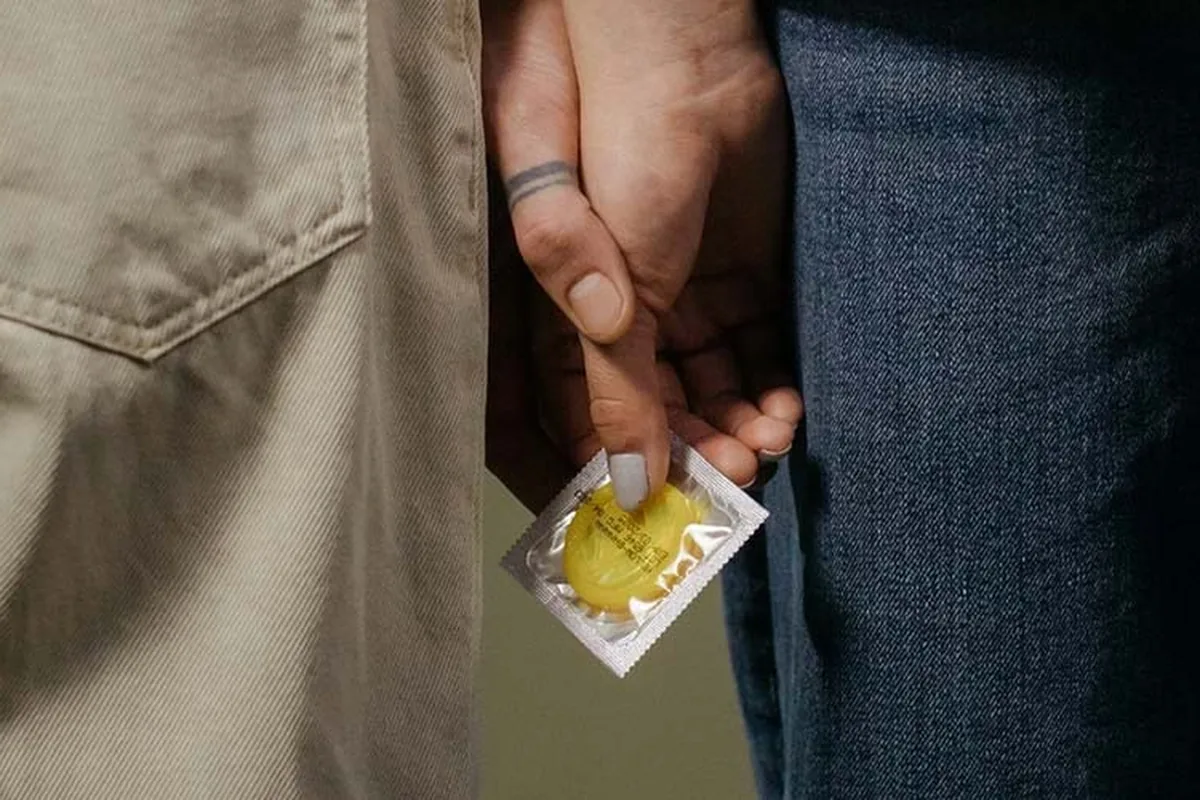
For oral sex on a penis, the CDC recommends a non-lubricated latex condom, or a polyurethane one if either partner has a latex allergy. Flavored condoms exist for the same purpose, as ASHA notes.
On a vulva or anus, the tool is a dental dam. The CDC describes it as a thin latex or polyurethane sheet placed between the mouth and the genitals or anus. Its basic rules are simple:
- Use a new dam every time, and never reuse one.
- Check the expiry date and look for tears first.
- Put it in place before oral sex starts.
- Use water-based or silicone-based lubricant, never oil-based products.
No dam on hand? You can make one from a latex or polyurethane condom. Cut off the tip and the base, then cut down one side and lay it flat. A fuller walk-through is in our guide on what a dental dam is for oral sex.
Teabagging is a tricky case, since no condom is made for the scrotum. A sex therapist quoted by Women’s Health says a dental dam held over the mouth gives some protection.
Testing and vaccines
Many oral STIs are silent, so testing is the only way to know. ASHA says testing can use a throat swab, a swab of any sore, or a blood test. A standard STI check may not include a throat swab, so tell the clinician you have oral sex and ask about it. The CDC advises talking openly with your provider about oral sex for this reason.
Two kinds of vaccine are worth asking about. The HPV vaccine is recommended for everyone through age 26, and some adults 27 through 45 may choose it after talking with a doctor. Hepatitis vaccines matter because hepatitis A and B can spread through oral contact with the anus.
When to skip oral sex
Better Health Channel advises skipping oral sex when either partner has sores, cuts, ulcers, blisters, warts or rashes around the mouth, genitals or anus. Unhealed piercings in the mouth or genitals are another reason to wait.
Cold sores deserve special care. The virus behind them is commonly passed on during oral sex to someone who has not had it before. If you or a partner has an active cold sore, wait until it has fully healed.
Consent and talking about oral sex
Consent applies to oral sex exactly as it does to any other sex. WebMD says oral sex needs ongoing consent, and that you should never give or receive it because you feel pressured. A person who cannot act because of drugs or alcohol cannot consent.
Consent is also specific. Agreeing to one kind of sex does not mean agreeing to another, a point Rape Crisis England & Wales makes about the law. Either partner can stop at any time, as Planned Parenthood reminds readers.
Talking first makes the experience safer and easier. Better Health Channel suggests talking openly about how you feel before bringing oral sex into a relationship. Useful topics include:
- what each of you likes and does not want to try
- whether you will use condoms or dental dams
- when each of you was last tested, and for what
Some acts make speaking hard in the moment. For those, a sex therapist quoted by Women’s Health suggests agreeing on a non-verbal signal, such as a hand gesture, that means stop or pause.
Frequently asked questions
Why is it called head?
Nobody knows for sure. Wiktionary, a community-edited dictionary, says the phrase refers to the giver’s head. It dates “give head” to the 1950s. Other slang, such as “giving brain” or “giving dome,” plays on the same idea.
Does oral count as being sexually active?
For health purposes, it does. Teaching Sexual Health describes oral sex as a type of sexual activity. When a doctor or nurse asks if you are sexually active, include oral sex in your answer. It changes which STI tests they may offer, including a throat swab.
What are the chances of an STI from oral?
There is no single number, because the risk depends on the infection and the act. The CDC says it is hard to compare the risks of specific STIs across types of sex. ASHA says STIs are much less likely to spread through oral sex than through vaginal or anal sex. Gonorrhea and herpes are the ones most likely to pass this way, and ASHA names mouth-to-penis contact as the type of oral sex most likely to pass on STIs.
Is STD from oral sex curable?
Several are. ASHA says gonorrhea, chlamydia and syphilis can be cured with antibiotics, and all partners should be treated so they do not reinfect each other. Herpes has no cure, but treatment can limit outbreaks. Oral HPV has no treatment, though most infections clear up on their own. The CDC notes that gonorrhea in the throat can be harder to treat, so ask your clinician whether you need a follow-up test.
Can you get pregnant from oral sex?
No. Planned Parenthood confirms you cannot get pregnant from oral sex. Pregnancy needs sperm to reach an egg through the vagina, which oral sex alone does not involve. You can still get an STI, so barriers are still worth using.
The bottom line
Head is simply slang for oral sex, and terms like hummer, teabagging and queening name particular versions of it. Whatever the word, health groups count oral sex as real sex. Some official definitions of rape, such as the FBI’s and the one in England and Wales, name oral contact too.
That framing matters because oral sex can pass on gonorrhea, herpes, syphilis and HPV, often without symptoms. The steps that help are not complicated: use a condom or a dental dam, and skip oral sex when sores are present. Get the HPV vaccine if you are eligible, and tell your clinician you have oral sex so they can test the right places. Above all, make sure both partners want it, every time.
Related reading
- What Is a Dental Dam for Oral Sex?
- What Is a Cream Pie in Sex? Plus Creaming, Milking, Facials and Snowballing
- What Is Unprotected Sex? Risks and What to Do Next
- Arousal and consent
Sources
- GIVE HEAD | English meaning - Cambridge Dictionary - Cambridge Dictionary
- Oral Sex and STIs - American Sexual Health Association
- give head - Wiktionary, the free dictionary - Wiktionary
- About STI Risk and Oral Sex - Centers for Disease Control and Prevention
- What Is Oral and Anal Sex? | Sexual Intercourse Definition - Planned Parenthood
- hummer, n.8 - Green’s Dictionary of Slang - Green’s Dictionary of Slang
- What Is Teabagging? How To Try The Intimate Sex Act - Women’s Health
- Which Came First - Hummer the Truck, or Hummer the Sex Act? - MEL Magazine
- A Strongly Steeped History of Teabagging - MEL Magazine
- Study: Adults Can’t Agree What ‘Sex’ Means - ABC News
- Oral Sex: What It Is and What It Means - WebMD
- Is oral sex considered sex? - Teaching Sexual Health (Alberta Health Services)
- Rape - Crime in the U.S. 2013 - Federal Bureau of Investigation
- What is rape? - Rape Crisis England & Wales
- Oral sex - Better Health Channel (Victorian Government)
- HPV and Oropharyngeal Cancer - Centers for Disease Control and Prevention
- How to Use a Dental Dam - Centers for Disease Control and Prevention