What Is Pegging? Meaning, Consent, and Safety Basics
What is pegging? Learn what the term means, where it came from, how to talk about it with a partner, and the anal-sex safety basics to know first.

General education, not medical advice. If something here worries you, talk with a clinician.
Table of Contents
What is pegging? In short, it is a sex act in which one partner wears a strap-on toy and uses it to penetrate the other partner anally. The word usually describes a woman doing this with a male partner, but people of any gender can take either role.
If a partner has brought it up, or you have simply seen the word online, you probably want a plain answer before anything else. This guide explains where the term came from, why some people are curious about it, and how to raise it with a partner. It closes with the safety basics for any anal play, from lube and patience to hygiene and condoms on toys.
What pegging means
The everyday meaning of pegging is anal penetration with a strap-on dildo, usually by a woman with a man. The partner wearing the harness is often called the giver, and the partner being penetrated is the receiver. Nothing about the act requires a particular body, gender, or relationship style.

Where the term came from
The word is younger than many people assume. In 2001, the advice columnist Dan Savage asked readers of his Savage Love column to vote on a name for the act. Three options made the ballot: bob, short for Bend Over Boyfriend, along with punt and peg.
Savage Love reported that peg won with 5,216 of 12,103 votes, or 43 percent. Punt came second with 34.5 percent, and bob trailed with 22.5 percent. Today the word appears on health sites and in everyday conversation.
Who can take part
Most descriptions picture a woman as the giver and a man as the receiver, because that is the pairing the word was coined for. In practice, couples of all genders and orientations use the term for strap-on play. A trans woman, a nonbinary partner, or a man with a male partner might all describe what they do as pegging.
What matters more than labels is the arrangement both people agree on. One partner wears the harness and toy. The other receives and usually sets the pace, since their body carries more of the physical risk. Either partner can set limits or stop at any time.
Why some people are curious about it
People try pegging for physical reasons, emotional reasons, or simple curiosity. For many couples it is a mix of all three.
The physical side
For receivers who have a prostate, the gland is a big part of the appeal. Medical News Today places the prostate inside the body, between the base of the penis and the rectum. It is sensitive to pressure, and that pressure can produce sexual pleasure. Researchers are still unsure exactly how.
The gland sits about 2 inches inside the rectum, which is why a toy can reach it. Healthline notes that prostate play tends to go best when the person is relaxed and fully aroused. People without a prostate can enjoy anal play too, though the sensations differ from person to person.
The relational side
Role reversal is another draw, because pegging can flip familiar patterns: a partner who usually receives gets to lead, and one who usually leads gets to let go. Some couples find that shift exciting, while others value the trust it takes to hand over control.
Curiosity is a good enough reason on its own. Plenty of people try pegging once, decide it is not for them, and move on. Others make it a regular part of their sex life. Either outcome is fine as long as both partners chose it freely.
Does pegging say anything about sexual orientation?
No. Enjoying pegging does not, by itself, tell you anything about a person’s sexual orientation. This is one of the most common worries straight men have when the topic comes up.
The sex-education group AMAZE separates three ideas. Sexual orientation is about who you are attracted to, romantically or sexually. Sexual behavior is what you actually do. Identity is the label you choose for yourself. These three may line up, but they do not have to.
Researchers treat them as separate for the same reason. A 2021 study of survey data from 116,950 sexually active adults measured identity and behavior on their own scales. It found that the two do not always match, and argued for measuring orientation in more than one way.
A straight man who enjoys prostate stimulation from his female partner is still a straight man in a relationship with a woman. The act describes what a couple does together. It does not rewrite who either of them is attracted to.
Consent and communication come first
Both partners have to want it, and the way you find out is by talking. Australia’s Department of Social Services defines consent as a free, voluntary and informed agreement to take part in a sexual act. Under that definition, both people genuinely want it and check in with each other.
Bringing it up
Choose a calm, private moment that is not in the middle of sex. A relaxed setting lets your partner react honestly, without feeling put on the spot. You might mention something you read, or simply say you are curious and ask what they think.
Expect a range of reactions, since your partner may feel excited, hesitant, or simply uninterested. Curiosity is not a promise to try anything, and a “no” or “not yet” deserves the same respect as a “yes.”
Agreeing on limits and a stop signal
Before trying anything, agree on what is on the table and what is off it. Talk through toy size, positions you would both feel comfortable in, and whether you will start with fingers or a small toy first. The receiver should set the pace, since they will feel any discomfort first.
Pick a clear stop signal as well. A simple word such as “stop,” or a tap on the arm if talking is awkward, works fine. When the signal comes, everything stops at once, with no questions in the moment.
Consent keeps going
Agreeing at the start is only the first step. Texas State University’s Title IX office puts it plainly: consent can end at any time, and if a partner wants to stop, you must stop. Moving from one activity to another also needs a fresh yes. People who are drunk, high, or asleep cannot consent.
The American Sexual Health Association advises partners to keep communicating before, during, and after sex. Saying yes once does not mean saying yes next time. A quick “How does this feel?” along the way, and a real conversation afterward, keeps both of you on the same page.
Anal-sex safety basics
Safe pegging rests on the same basics as any anal play. Use plenty of lube, go slowly, keep things clean, put a condom on the toy, and treat pain as a sign to stop.
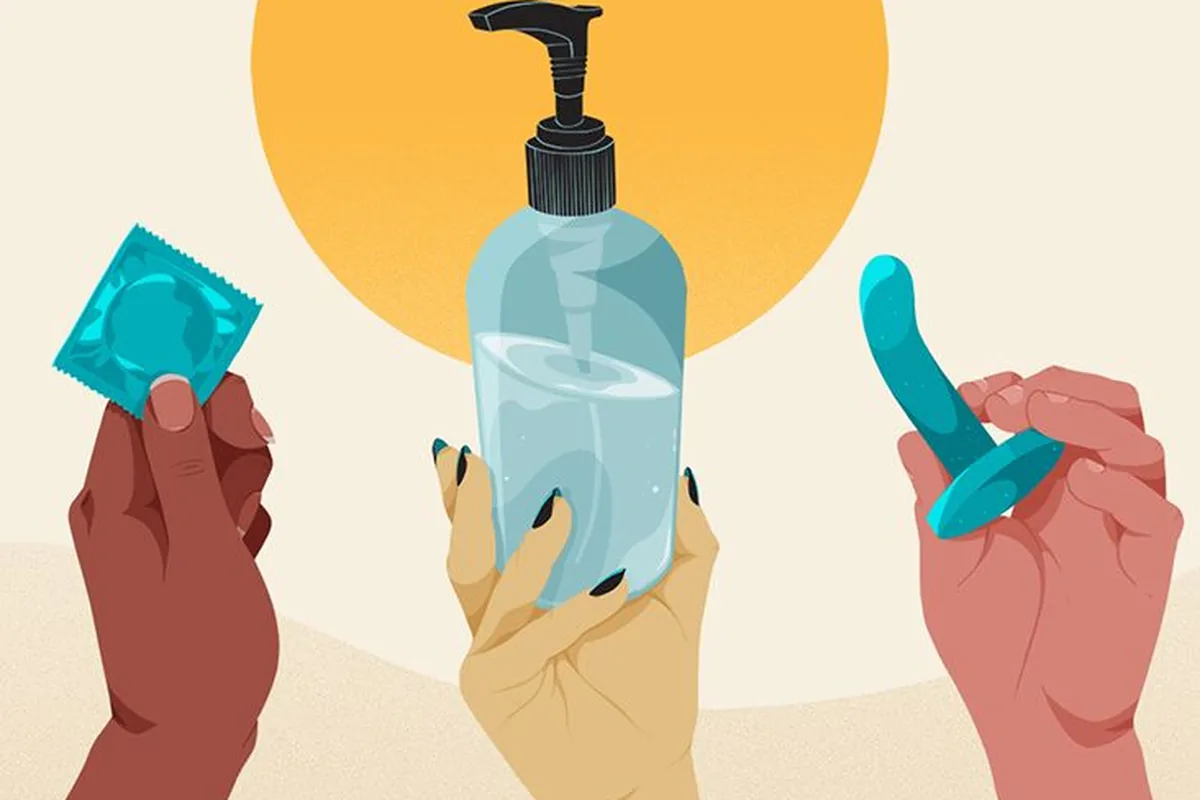
Use plenty of lube
The anus does not make enough natural lubrication for comfortable penetration, so lube is essential. Planned Parenthood notes that tense muscles combined with too little lube make pain likely. A 2021 study adds that limited natural lubrication in the rectum can raise the risk of small tissue injuries and STI transmission. In that study, people who used saliva as lube were more likely to pick up a rectal STI.
Use a store-bought lube and reapply it whenever things start to feel dry. Match the lube to what you are using. The CDC warns that oil-based lube can weaken a latex condom and make it break, and recommends water-based or silicone-based lube instead.
Go slowly and treat pain as a stop signal
The muscles around the anus need time to relax. Rushing and starting with a toy that is too large are common causes of pain and small tears. Many people warm up with a finger or a small toy before moving to anything bigger.
Planned Parenthood’s advice is direct: relax, go slowly, stop if anything hurts, and tell your partner how you feel. Mild pressure or fullness is normal. Sharp pain, burning, or a feeling that something is wrong is the body asking you to stop. Pushing through it raises the chance of injury, so pause, add lube, or end the session. For the same reason, skip numbing lubes and creams, because they hide the pain that tells you to stop.
Hygiene before and after
Wash your hands and genital area before you start, and keep fingernails short and smooth. Some people like to use the bathroom beforehand for peace of mind. A towel underneath makes cleanup easier, and wipes nearby save a trip mid-session.
Clean the toy after every use. Trojan’s care guide recommends washing by hand with antibacterial soap and warm water, then drying the toy and storing it somewhere clean. Trojan warns that skipping this step lets germs linger on the toy, which can contribute to urinary tract infections, yeast infections, or passing on an STI.
Put a condom on the toy
A toy cannot create an infection, but it can carry one from one person to another. Healthline notes that any STI passed through sexual contact can spread through a shared toy. A toy moved from the vagina to the anus can also carry an infection like gonorrhea from one site to the other.
A condom over the toy lowers that risk and makes cleanup simpler. Trojan says a fresh condom can stand in for washing between partners. Change the condom whenever the toy switches partners or moves from the anus to the vagina or mouth. Wash the toy afterward anyway.
Choosing beginner-friendly gear
You need three things to start: a harness, a beginner-sized toy, and a lube that suits both. The safety details matter more than the brand names. Here is what to look for in each.

| Item | What to look for | Why it matters |
|---|---|---|
| Toy material | Body-safe silicone, glass, or another nonporous material | Porous materials keep bacteria even after washing, while nonporous toys can be fully cleaned |
| Toy base | A wide, flared base that sits against the harness | Objects without a flared base can cause deeper tears |
| Toy size | Slim and short to start, with a gentle taper | A smaller toy gives muscles time to relax and adjust |
| Harness | Adjustable straps and a secure O-ring that fits the toy | A stable fit keeps the giver in control of movement |
| Lube | Water-based for silicone toys; silicone-based only with a condom over the toy | Silicone lube may degrade some silicone toys; check the toy maker’s advice |
| Condoms | A new condom for each partner or switch of body area | Washing after every use plus a new condom for each person is the safest approach |
The lube rule trips up many beginners. Trojan, which makes lubes, warns that silicone lube may make some silicone toys gummy and more prone to holding bacteria over time. Not every silicone toy reacts this way, so check the toy maker’s care instructions or test a small hidden spot first. Water-based lube is the safest pairing for silicone toys.
Material choice also affects how clean a toy can get. Better2Know, a commercial testing company, summarizes a small US study in which HPV was still found on some toys right after cleaning. By its account, the virus remained 24 hours later on some toys made of a soft plastic called TPE, but on none made of silicone. Treat that as a single small study rather than settled proof.
When to stop and when to see a doctor
Most discomfort after anal play fades quickly, but a few signs mean you should stop and get checked. Many beginner guides skip this part, so the signs are gathered here in one place.
A few spots of bright-red blood that stop soon are often caused by minor irritation or a small tear. Until the bleeding and soreness have fully cleared, skip anal penetration, and book a visit if the bleeding continues, comes back, or comes with lasting pain. Healthline sets a low bar for getting checked: more than a couple of drops of light pink blood, or discomfort or bleeding that lasts more than two days. Planned Parenthood gives similar advice for pain that is still there a few days later.
Some symptoms need emergency care right away. A colorectal practice lists these warning signs:
- Heavy bleeding, or bleeding that will not stop
- Severe or worsening pain in the anus, pelvis, or belly
- Fever, chills, or feeling suddenly unwell
- Dizziness or fainting
- Trouble passing stool or gas
- A toy or object stuck inside
When a toy slips inside and will not come out, do not try to fish it out with another object. That can push it farther in or cause injury, so go to an emergency department instead.
Regular STI testing is a good idea for anyone with a new partner or more than one partner. Doctors and sexual health clinics see these issues often, so there is no need to feel embarrassed.
Frequently asked questions
Does pegging feel good for guys?
Many men say it does, though experiences vary. For people with a prostate, pressure on the gland can produce sexual pleasure. Some men love it, some feel neutral, and some find it uncomfortable. Going slowly with plenty of lube gives you the best chance of finding out which group you are in.
Is it normal for straight guys to get pegged?
Yes. Plenty of straight men enjoy pegging with their female partners. What a person does in bed and who they are attracted to are separate things, and the two do not always match. Enjoying prostate stimulation does not change a man’s orientation.
What does pegging mean in slang?
In sexual slang, pegging means one partner penetrating another anally with a strap-on toy. The term came from a 2001 reader vote in the Savage Love advice column. Outside sex, “peg” has older everyday meanings, such as throwing something hard or identifying someone, so context tells you which one is meant.
Do you need a condom for pegging?
The toy itself cannot cause pregnancy, but a condom is still a smart choice. Shared toys can pass on STIs, and a condom lowers that risk. It also means you can skip washing between partners by putting a fresh condom on instead. Change it, too, when the toy moves between body areas. Use water-based or silicone-based lube with latex condoms, never oil.
What is pegging aftercare?
Aftercare means looking after each other once you finish. Clean the toy, wash up, and drink some water. Then check in with your partner about what felt good and what to change next time. Ongoing communication like this is part of consent.
The bottom line
In short, pegging is strap-on anal play, named by a reader vote in 2001 and now used by couples of every gender. It says nothing about anyone’s orientation, and it is safe to skip if it does not appeal.
For couples who want to try it, the starting point is an honest conversation and a clear stop signal. Then follow the basics: plenty of lube, a slow pace, clean hands and toys, and a condom on the toy. Treat pain as a reason to stop, and see a doctor if bleeding or pain lingers.
Related reading
- How to Choose Lube: Water, Silicone or Oil?
- What Is Considered Kinky Sex? Kink, BDSM and S&M Explained
- Aftercare After Sex: What It Is and How to Do It Well
- Arousal and consent
Sources
- We Have a Winner - Savage Love (Dan Savage)
- Male G-spot: What is it and where is it located? - Medical News Today
- Male G-Spot: How to Find and Stimulate the Prostate - Healthline
- Sexual Orientation, Behavior and Identity - AMAZE
- When Sexual Identity and Sexual Behaviors Do Not Align: The Prevalence of Discordance and its Physical and Psychological Health Correlates - Stigma and Health (via PubMed Central)
- Sexual consent - Australian Government Department of Social Services
- Consent - Texas State University Office of Equal Opportunity and Title IX
- Consent must be given voluntarily and continuously with enthusiasm - I Wanna Know (American Sexual Health Association)
- What causes pain during anal sex? - Planned Parenthood
- Lubrication Practices and Receptive Anal Sex: Implications for STI Transmission and Prevention - Sexual Medicine (via PubMed Central)
- Preventing HIV with Condoms - U.S. Centers for Disease Control and Prevention
- Rectal Bleeding After Anal Sex: When to See a Doctor - MyColonDoc
- How to Wash a Sex Toy - Trojan
- Sex Toys and STIs: 20 Facts About Risk, Safer Sex, Cleaning, More - Healthline
- Lube for Sex Toys - Trojan
- How long can an STI stay on a sex toy? - Better2Know
- Bleeding After Anal Sex: Causes, Treatment, Prevention - Healthline