What Is Period Sex? Safety, Pregnancy and STI Risk Explained
What is period sex? A plain-English guide with medical facts on safety, pregnancy odds, STI risk, hygiene and comfort during menstruation.

General education, not medical advice. If something here worries you, talk with a clinician.
Table of Contents
Period sex is any sexual activity that happens while you or a partner is bleeding from a period. That includes intercourse, oral sex, hand play and anything else the two of you enjoy. It is a personal choice rather than a medical problem, and for most people it is safe.
Practical questions deserve the attention here. Pregnancy is still possible, infections can pass a little more easily, and comfort takes a bit of planning. This guide covers the safety facts, the pregnancy and STI questions people ask most, and the tricks that keep it comfortable.
What period sex is, and why some people like it
What counts as period sex
Sex on your period means any sexual activity during menstrual bleeding, not only vaginal intercourse. Oral sex, mutual masturbation and non-penetrative play all count. There is no rulebook: some couples keep their usual routine, some switch to lower-mess options, and some wait until the bleed ends. All of those are normal.
Wanting it is just as normal. Sexual desire changes across the cycle, and plenty of people notice it rising during their period or around ovulation. Hormones shift, sensitivity shifts, and appetite follows. If your interest drops instead, that is common too.
Possible benefits: cramps, libido and lubrication
For some people, period sex comes with real perks. The contractions of orgasm might help relieve menstrual cramping, and the vagina can become more lubricated from menstrual secretions, which some people find makes sex feel better. Medical News Today lists shorter and lighter, less painful periods among the possible benefits, since orgasm triggers uterine contractions.
Treat those benefits as a pleasant possibility rather than a prescription. The same guide is careful to note that not every claimed benefit of period sex has been scientifically proven. Cramp relief is the one people report most, and an orgasm costs less than a painkiller if you feel like it. If you do not, nothing about your period obliges you to try.
Is it safe to have sex on your period?
What health authorities say
Yes, period sex is safe for most people. Medical News Today’s medically reviewed guide says most people can keep having sex during a period. A peer-reviewed paper in a Baylor University medical journal calls intercourse during menstruation normal. The University of North Carolina’s wellness team puts it plainly: having sex while a partner is on their period is not harmful.
What the blood itself does not do is damage either partner. The risks worth planning for are the familiar ones - pregnancy and infections - and they exist at every point in the cycle. A period changes how some of those risks behave, which is what the next two sections cover.
Skipping it makes sense in a few situations: a heavy flu-like illness, cramps that leave you curled up, or simply not feeling like it. Desire counts as a reason. Sex should never be something you push through because a partner expects it.
Does period sex make you bleed more?
It can look that way for a little while, but the period itself does not get heavier. Intercourse causes contractions in the uterus, which push menstrual material out more quickly, so the flow may briefly seem stronger. The same mechanism can work the other way: some women notice their period stops one or two days after sex because the uterus has emptied faster.
The Baylor paper also notes the flow can increase temporarily, because the veins of the uterus are congested and prone to rupture during menstruation. That extra blood is what you already had. Your total bleed over the whole period stays in the same range, and nothing about orgasm extends it.
Can you get pregnant from period sex?
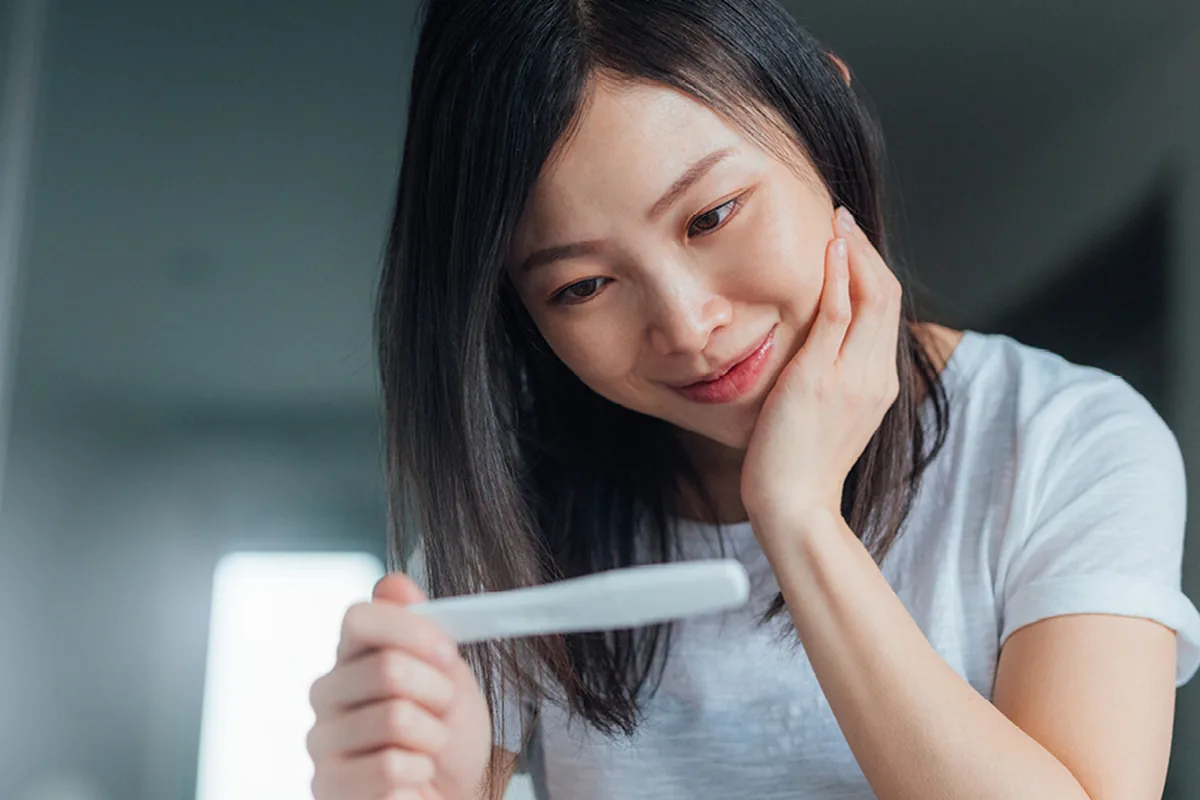
You can get pregnant from sex during your period. It is not super common, Planned Parenthood says, especially in the first days of heavy bleeding, but unprotected period sex can still end in pregnancy. Here is the biology behind that, and what to do about it.
How sperm survival makes it possible
Sperm do not die on contact with menstrual blood. They are built to wait. According to the NHS, sperm can survive in the fallopian tubes for up to 7 days after sex. Inside the vagina, they can live for up to five days.
Now put that waiting room next to an early ovulation. Ovulation usually happens about 14 days before the next period starts. Normal cycles run anywhere from 21 to 35 days, and the NHS notes most women ovulate somewhere in the 10 to 16 days before bleeding begins. In a short cycle, sex late in a period can leave live sperm inside you when an egg arrives a few days later. Planned Parenthood’s take: the shorter your cycle, the higher the chance pregnancy comes from period sex.
When bleeding is not a period
Some bleeding that looks like a period is not one. Ovulation spotting is uncommon, and it usually shows up as a few drops of light red or pink blood around mid-cycle. The UNC wellness team warns that this spotting can be confused with a period - at exactly the moment an egg is available. Irregular cycles add the same problem from the other side. If you cannot predict bleeding, you cannot assume any given bleed rules out pregnancy.
What this means for contraception
Keep using contraception during your period if you want to avoid pregnancy. The most reliable approach is an effective method such as the pill, implant or shot, used every time, with condoms as backup.
If contraception was skipped, emergency contraception is not off the table just because you are bleeding. Emergency contraceptive pills work best the sooner you take them. They can still have some effect up to 4 to 5 days - 96 to 120 hours - after unprotected sex. A copper IUD is the most effective form of emergency contraception. The fertile window, for reference, runs about 6 days: from about 5 days before ovulation until about 24 hours after it.
STI and infection risk during your period
Why blood-borne infections matter more
You can get or pass on sexually transmitted infections during a period, and some of them travel in blood. The CDC explains that during vaginal sex, HIV in vaginal fluid and blood can enter a partner in several ways. It passes through the opening at the tip of the penis, the foreskin, or cuts and sores. A period puts more blood in contact with skin and mucous membranes, which is why HIV protection matters on heavy days too.
Hepatitis B behaves the same way. The CDC’s Pink Book says HBV spreads through mucosal exposure to the body fluids of an infected person, and the highest concentrations of the virus are in blood. Hepatitis B also spreads through sexual contact, and a vaccine prevents it - worth knowing if you have never had one.
So the blood itself is not the hazard. The hazard is any infection already in it. If no infection is present, menstrual blood cannot transmit one - and since many STIs cause no symptoms, protection is how anyone makes sure.
What research says about menstruation and STIs
Evidence suggests infections pass a little more easily during menstruation. A peer-reviewed review notes that sexually transmitted pathogens may be passed on more easily during a period, in both directions between partners. The reasons are mechanical. During bleeding, the cervical mucus plug that usually blocks the uterus is gone, menstrual fluid contains iron, and the cervical opening is dilated. The vagina is also less acidic than usual while you bleed, which is the next point.
That acidity matters more than it sounds like it would. Cleveland Clinic puts a typical vaginal pH between 3.8 and 4.5, a slightly acidic level that keeps good bacteria strong and blocks harmful germs. Menstrual blood is less acidic, so it dilutes that defense while it is present.
Yeast infections deserve a mention here. Hormonal changes during menstruation can raise the risk of one, and vaginal sex can pass a yeast infection to a partner. Unlike HIV or hepatitis B, yeast is uncomfortable rather than dangerous - but it is another reason hygiene after period sex is worth the two minutes.
Condoms, dental dams and oral sex
Barriers work during a period exactly as they do the rest of the month. Condoms for vaginal or anal sex, and dental dams for oral sex, are the protection Medical News Today singles out as the way to reduce STI risk. Used correctly, they significantly cut the chance of passing infections. The CDC adds that getting tested with your partner lowers risk further, since many STIs cause no symptoms. Barrier protection does not take days off for bleeding.
Period sex myths vs. the evidence
Few bedroom topics collect as much folklore as period sex. Here are the beliefs people arrive with, set against what the health sources actually say.
| The belief | What the evidence says |
|---|---|
| You cannot get pregnant during a period. | False. Pregnancy is possible, just uncommon, and the odds rise with shorter cycles. |
| Sex during a period is dirty or unsafe. | Safe for most people, with pregnancy and infection as the risks that actually matter. |
| Period blood can harm the partner. | Healthy blood harms no one, but HIV and hepatitis B travel in blood, so barriers still matter. |
| Sex makes a period heavier or longer. | Neither. Contractions may push blood out faster, so the flow can look stronger briefly, then finish sooner. |
| You should douche afterward to get clean. | Doctors recommend against douching. It is linked to bacterial vaginosis and pelvic inflammatory disease. |
Notice the pattern: every myth points away from the boring, useful advice. Track your cycle, use contraception and barriers, wash with water. The dramatic rules are the ones with nothing behind them.
How to make period sex comfortable and clean

Talk first, then pick your timing
Comfort begins as a conversation. Ask how your partner feels about period sex, and say plainly how you feel - including whether today is a bad cramp day. Enthusiasm on both sides is the whole brief; a hesitant yes deserves a check-in before anything starts.
Timing shapes the mess more than any gadget does. The lighter days of a period mean less blood to manage, so many couples start again as the flow tapers. The shower is the other classic move, since running water rinses as you go. A dark towel under you protects the sheets and takes seconds to throw down.
Tampons, cups and discs
One hard rule: take a tampon out before penetrative sex. A tampon pushed deep during intercourse can be forgotten, and tampons carry a small risk of serious infection, including toxic shock syndrome, the FDA warns. The FDA advises the lowest absorbency needed and a change every 4 to 8 hours; Cleveland Clinic recommends changing tampons and pads every few hours regardless.
Cups and discs are the middle ground. Some people remove a reusable cup before sex; others use a disposable menstrual cup to cut the mess, an option on Medical News Today’s tip list. Whichever product you use, hands washed before and after keep the bacteria count where it belongs.
Positions and pain
When cramps are already pulling at your belly, pressure on it does not help. Missionary and lying on your side keep weight off the lower abdomen and keep the angle shallow, and both also appear on Medical News Today’s tip list. Rear-entry positions put more pressure on the cervix; if you try one, go slow.
Stop if anything hurts - period or no period. Pain during sex can be a sign of a gynecologic problem such as ovarian cysts or endometriosis, according to ACOG. Pain that keeps happening is worth a medical visit. A position change fixes most one-off discomfort. The next section covers what deserves more than a position change.
Cleaning up afterward
Afterward is simple: warm water and a soft cloth for both of you, then a quick rinse for any toys. Wash the vulva with plain water - Cleveland Clinic is explicit that soap belongs on the outside only, if anywhere.
Skip the douche, though. Doctors recommend against it outright. Douching is linked to bacterial vaginosis, pelvic inflammatory disease and problems getting pregnant, and it can push infection-causing bacteria further inside. The vagina manages its own hygiene. Your job is the vulva and the towel.
When to see a doctor or nurse
Most period sex needs no doctor’s visit. A handful of signs do, and they are specific:
- Bleeding after sex that is not your period. This affects between 0.7 and 9.0 percent of menstruating women. Most causes, like cervicitis or cervical polyps, are benign. The most serious is cervical cancer, so bleeding that keeps recurring deserves an exam.
- Pain during sex that happens again and again. ACOG lists ovarian cysts, endometriosis, pelvic inflammatory disease and vaginismus among the causes, and all of them have treatments.
- Cramps that change character. Contact a provider if cramps suddenly worsen, if severe cramps begin for the first time after age 25, if fever joins period pain, or if pain continues between periods.
- Flu-like symptoms while using a tampon. A sudden high fever, vomiting or a sunburn-like rash are possible signs of toxic shock syndrome. The FDA says to stop using tampons and get medical care immediately if they show up during your period.
- Unusual discharge or a strong fishy odor. Both are signs of a vaginal pH or infection problem rather than normal menstruation, and a provider can test and treat it quickly.
None of these mean period sex caused anything. Most have nothing to do with sex at all. They are simply the moments when a professional should take a look, and knowing them is part of having a period you can trust.
Frequently asked questions
Can sperm survive in period blood?
Yes. Sperm survive up to five days inside the vagina and up to 7 days in the fallopian tubes, and menstrual blood does nothing to change that. If ovulation arrives while they are waiting, pregnancy can follow - which is why a period is not a free pass.
Does a period mean 100% not pregnant?
No. Bleeding makes pregnancy less likely but never rules it out, and short cycles or early ovulation raise the odds. Ovulation spotting can also be mistaken for a period at the most fertile moment of the cycle. If your bleeding is lighter than usual or arrives at an odd time, a pregnancy test settles the question.
Can period blood affect a man during sex?
The blood itself will not harm him. What can affect him are infections that travel in blood. The CDC notes that HIV in blood can enter a partner through the urethra, the foreskin or broken skin. Hepatitis B is concentrated in blood as well. A condom removes most of that risk during vaginal sex, and a dental dam does the same for oral sex.
Is sex after 2 days of period safe?
It can be, if you both want it - sex during a period is not harmful, and day two is no different from any other day. The fine print does not change: pregnancy remains possible, and infections pass at least as easily as on other days. Use the same protection you would use any other week.
Does period sex feel different?
For many people, yes, though there is no single version of it. The extra lubrication from menstrual fluid makes sex feel smoother for some, and orgasm may even ease cramps. Others feel bloated or tender and enjoy it less. Desire itself shifts across the cycle, rising around the period or ovulation for some people and dipping for others. Neither reaction is unusual.
The bottom line on period sex
The short version: period sex is a normal choice, safe for most people, with three facts worth carrying away. Contraception still matters, because sperm can wait out a short cycle. Barrier protection matters even more than usual, because blood can carry HIV and hepatitis B, and infections pass a little more easily while you bleed.
Everything else is logistics. A towel, a shower, a tampon removed beforehand - comfort on a period is planning. And if sex hurts repeatedly, bleeding after sex keeps happening, or cramps change suddenly, let a clinician take a look. The whole decision stays yours.
Related reading
- What Is Unprotected Sex? Risks and What to Do Next
- What Is a Dental Dam for Oral Sex?
- How to Choose Lube: Water, Silicone or Oil?
- What Is a Healthy Sex Life? Communication, Satisfaction, Safety and Choice
Sources
- Sex On Your Period - UNC Student Wellness
- Sex during menstruation: Safety, can you get pregnant, and benefits - Medical News Today
- Is Vaginal Sexual Intercourse Permitted during Menstruation? A Biblical (Christian) and Medical Approach - Proceedings (Baylor University Medical Center), PMC
- Can you get pregnant if you have sex during your period? - Planned Parenthood Federation of America
- Periods and fertility in the menstrual cycle - National Health Service (UK)
- Ovulation bleeding and ovulation spotting: What it is, & why it happens - Clue (helloclue.com)
- How effective is the morning-after pill and emergency contraception? - Clue (helloclue.com)
- How HIV Spreads - Centers for Disease Control and Prevention
- Pink Book Chapter 10: Hepatitis B - Centers for Disease Control and Prevention
- Vaginal pH: Balance, Range & What Causes Fluctuations - Cleveland Clinic
- Douching - Office on Women’s Health (womenshealth.gov)
- The Facts on Tampons and Tampon Safety - U.S. Food and Drug Administration
- When Sex Is Painful - American College of Obstetricians and Gynecologists
- Postcoital Bleeding: A Review on Etiology, Diagnosis, and Management - Southern Medical Journal, PMC
- Period Pain | Menstrual Cramps - MedlinePlus (National Library of Medicine)