What Is Sex? What the Word Means and What Counts
What does sex mean as an activity? Learn what counts as sex, the main types of sexual activity, and why people define the word differently.

General education, not medical advice. If something here worries you, talk with a clinician.
Table of Contents
Sex has no single agreed definition. The word can mean biological sex, and it can mean sexual activity. This article covers the second meaning: what people count as sex, what kinds of activity the word can cover, and why people disagree. Biological sex and how it differs from gender is a separate topic.
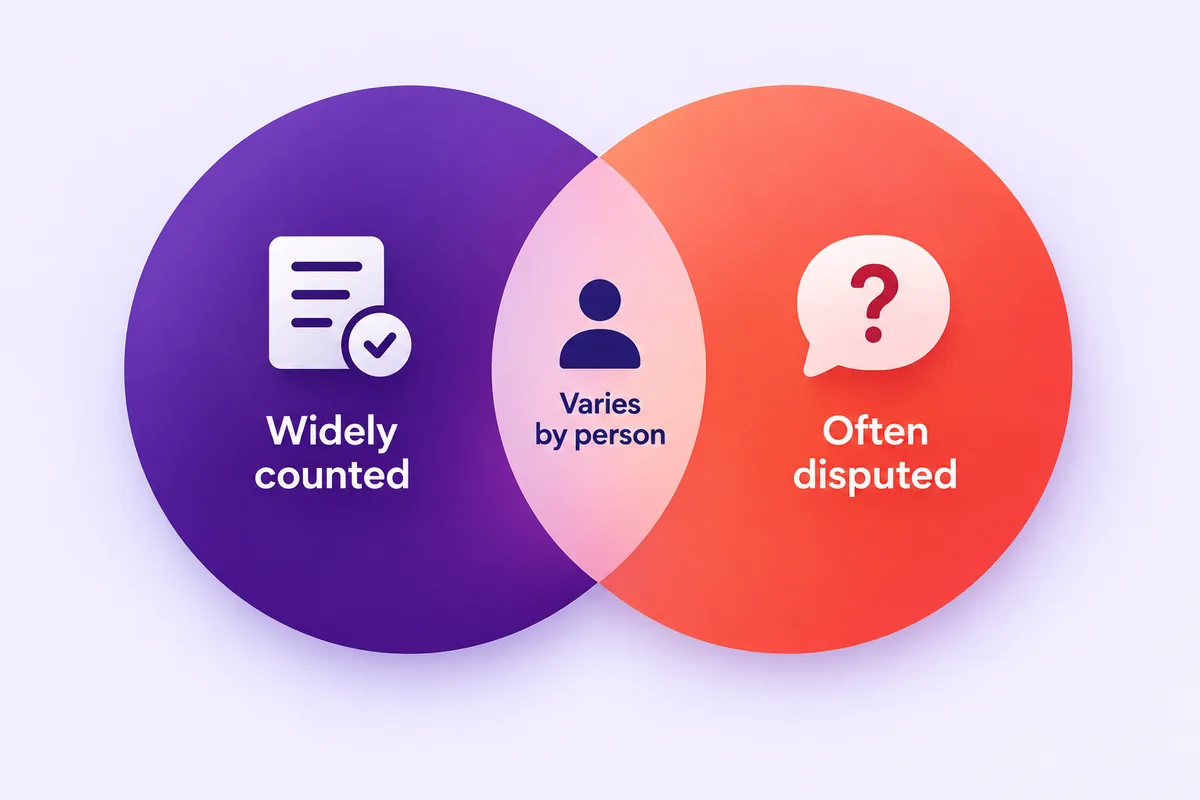
The short answer is that people do not always agree on which behaviors count as sex. A survey of undergraduates at one Midwestern US state university found widely divergent opinions. The question was what counts as having “had sex.” That gap shapes how people talk about consent, about health, and about their own experience.
What the word sex means
One word, more than one meaning
The World Health Organization (WHO) prefers a biological definition of sex for technical purposes. It also notes that in general use the word often means sexual activity. Both meanings are in common use, so context decides which one a speaker intends. Only the activity meaning is covered here.
Sex within the wider idea of sexuality
WHO places sex inside a larger idea called sexuality. Its working definition includes eroticism, pleasure, intimacy and reproduction, alongside gender identities, roles and sexual orientation. The Centre for Sexuality suggests focusing on the goals of sex more than the act. It says this reframing can help people reach greater sexual satisfaction.
Working definitions from health organizations
No two organizations use quite the same wording. The Sexuality Education Resource Centre defines sex as an activity in which one, two or more people use words or touch to arouse themselves or each other. An NHS Scotland board defines sexual activity as any interaction involving sexual organs, sexual stimulation and sexual communication.
The American Sexual Health Association (ASHA) offers a looser version: sharing your body with someone else for sexual pleasure. It admits that this is not precise, because masturbation is often done alone and the reason someone “had sex” is not always clear.
People also have sex for different reasons. The Centre for Sexuality lists pleasure, pregnancy, closeness with a partner, relief of stress or physical pain, and fun. ASHA adds that sex is also about pleasure, intimacy, relationships and feeling close to another person. A definition built only on the act misses much of that.
Types of sexual activity
Health organizations answer “what counts?” mostly by listing activities rather than drawing one line. The lists overlap a great deal.
Penetrative sex
Flo Health divides sex into three main categories: vaginal, anal, and oral sex. Western Australia’s health department describes all three as penetrative sex, where something such as a penis or sex toy goes inside the mouth, vagina or anus.
Flo Health points out that the dictionary meaning of intercourse is narrower. It covers penetration of the vagina by a penis, and it does not reach the wide range of activities people engage in.
Manual contact, masturbation and toys
The Centre for Sexuality adds digital sex, meaning fingers touching a partner’s genitals or anus. It also lists sex with toys and masturbation. Flo describes manual stimulation as hand jobs or fingering.
Masturbation can happen alone or with a partner. Planned Parenthood lists it as a common kind of sexual activity either way.
Kissing, touching and sexual communication
Many people are sexual without penetration. Non-penetrative sex, as the Western Australia guide puts it, does not involve penetration of the mouth, vagina or anus. The Western Australia guide says it is possible to be sexual without having sex, through kissing, touching, rubbing and stroking. NHS Greater Glasgow and Clyde counts anything from kissing to sexual touching, and online activity, as sexual activity.
Phone sex and sexting appear on Planned Parenthood’s list too. Flo describes cybersex as partners trading suggestive messages, photos or videos. ASHA includes threesomes and group sex among the behaviors it explains.
Flo notes that sexual activity can include things meant to attract or elicit sexual desire in another person, such as flirting, dirty dancing or sending risque texts and photos.
ASHA also warns that the word “foreplay” can mislead, because it makes these behaviors sound like warm-ups. For some people oral sex or mutual masturbation is the main event.
How common activities compare
The same activity can matter in different ways depending on whether the question is “does it count?”, “can it lead to pregnancy?”, or “can it pass on an infection?”. This table keeps those questions apart.
| Activity | How health sources treat it | Pregnancy, infection or legal note |
|---|---|---|
| Vaginal sex | Named as a type of sex; many people use “had sex” to mean this alone | Only kind of sex that could result in pregnancy; can spread all types of STIs |
| Anal sex | Named as a type of sex | Pretty much any STI that can infect the genitals can infect the anus; HIV is more likely for the receptive partner |
| Oral sex | Named as a type of sex; sometimes seen as a gray area | Cannot cause pregnancy; some STIs can spread, but much less likely than with vaginal or anal sex |
| Fingering and hand jobs | Called digital sex or manual stimulation | Considered safe for STIs |
| Masturbation | Listed by some sources; whether it makes you “sexually active” depends on the expert | No risk of giving yourself an STI when alone |
| Kissing | Included in sexual activity by NHS Scotland; a sexual behavior in ASHA’s guide | Little STI risk apart from herpes; HIV very unlikely |
| Sexting | Named by Planned Parenthood among sexual activities | Consent matters; sharing explicit pictures of someone under 18 can be illegal |
Why people define sex differently
What surveys have found
The clearest evidence comes from college surveys. In a 1991 survey of 599 US undergraduates, 59 percent said oral-genital contact did not count as having “had sex.” Another 19 percent said the same of penile-anal intercourse. The sample came from one state university, and about 79 percent called themselves politically moderate to conservative, so it does not speak for everyone.
A later survey asked 477 students in 2007. About 20 percent counted oral-genital contact as sex, which the authors describe as about half the share in 1991. In 1991 a majority said it did not count, so the group that counted it was the minority. The 1991 sample was random and from one university, while the 2007 sample was a convenience sample, so the two are not a strict like-for-like comparison. Penile-vaginal intercourse was counted by 98 percent and penile-anal intercourse by 78 percent. Responses did not vary by sexual experience or demographics.
Experience, identity and who is asking
Acts seem to sit on a scale rather than in two boxes. In a study of 300 adults aged 18 to 30, acts with genital contact going both ways were rated as most clearly sex. One-way or non-penetrative contact came next, and acts with no genital contact ranked lowest.
A narrow definition also leaves people out. The Centre for Sexuality notes that some same-sex couples may not have penis-in-vagina sex. Some heterosexual couples will not either, because of pain, lack of pleasure, lack of interest or sexual dysfunction.
Ratings differed by group. The lesbian group rated one-way or non-penetrative genital contact higher than other groups did, and the gay male sample rated anal intercourse higher. The authors tie these differences to experience, context and identity, not identity alone.
The setting matters too. Flo says the common meaning centers on vaginal intercourse. A clinic uses a wider term, “sexually active,” which the next section covers.
Terms that overlap with sex
What “sexually active” means in a clinic
Cleveland Clinic defines sexually active as intimate physical contact with someone involving parts of the body that a swimsuit would cover. Anal sex, oral sex and sexual touching all count. Masturbation depends: some experts count it, and others count it only with a partner.
Providers ask because the answer shows whether to offer screenings, STI testing or vaccines such as the one for HPV. The term can mean different things depending on who asks and why, so you can ask what the provider means. Some questions cover only the last three months or 12 months.
If you say yes, follow-up questions usually cover partners, practices, protection from STIs and pregnancy. Cleveland Clinic calls them the eight Ps.
Hooking up and abstinence
“Hooking up” is just as slippery. ASHA calls it vague, since it may mean intercourse or only kissing. A survey of 1,468 undergraduates found three clusters of definitions. One group used a broad meaning that covered sex in general and making out. Another stressed social aspects. A third tied it to specific sexual acts.
Abstinence sits at the other end. The Centre for Sexuality describes it as the active choice not to have sex, and calls it a healthy and normal choice.
Consent applies to every type of sexual activity
What consent looks like
Whatever the word means to you, consent applies to every type of sexual activity. Planned Parenthood defines consent as actively agreeing to be sexual with someone. Both people must agree every single time, including couples who have had sex before.
The same source describes consent as freely given, reversible, informed, enthusiastic and specific. Anyone can change their mind at any time, and silence is not consent.
Capacity and the law
People who are drunk, high or passed out cannot consent. NHS Greater Glasgow and Clyde also lists age and mental capacity as factors in capacity to consent. Laws on age of consent differ by place. The same NHS Scotland page gives the age of consent as 16 in Scotland and the UK, and Planned Parenthood notes it varies across the US and between countries.
Sexual activity without consent is rape or sexual assault.
Consent also covers words, not only touch. SERC says every person involved has to give consent before any sexual touching or sexual talking happens. WHO’s working definition of sexual health calls for pleasurable and safe sexual experiences, free of coercion, discrimination and violence.
Why the definition matters for health
Infection and pregnancy risk follow the activity
Risk depends on what people do, not on what they call it. The CDC says STIs pass from one person to another through vaginal, oral and anal sex. They can also spread through intimate contact like heavy petting, though that is not very common.
Planned Parenthood describes a healthy sex life as including safer sex, regular STD testing, preventing unintended pregnancy, and seeing a doctor or nurse about sexual problems.
All STIs are treatable with medicine, and some are curable. Many STIs have no symptoms. The NHS says this means you can have an STI without knowing it, and testing is the only way to know for sure. An STI can take up to 7 weeks after unprotected sex to show up on a test. The NHS advises a condom or dental dam for oral sex until you have been checked if you think you may have an STI. You do not usually need a GP referral to attend an NHS sexual health clinic.
When a narrow definition hides risk
If oral-genital contact does not feel like sex, people may skip the precautions they would use for intercourse. The authors of that later survey warned that this shift may leave people unmindful of the health risks. They suggested sex education could explain those risks.
Honest answers to a provider help here. They use the answer to decide on screening, testing and vaccines.
How to be clear about what you mean
Because the word is loose, specifics help. ASHA says being specific is always better, which is why its guide names each behavior. The same applies to partners. Saying what you like and don’t like lets a partner know what is okay and what is off limits, as Planned Parenthood notes. The same page says a partner should respect your boundaries, and you should respect theirs.

With a clinician, the same habit works in reverse. If a term such as “sexually active” is unclear, you can ask what they mean and why they are asking.
Context matters as well. ASHA notes that “hooking up” could mean anything from kissing to intercourse, so it cannot say whether STIs are a risk without more detail.
Frequently asked questions
What is the definition of sex?
There is no single agreed definition. WHO prefers a biological meaning for technical use, but in general use the word often means sexual activity. As an activity, NHS Greater Glasgow and Clyde describes sex broadly, covering touch, sexual stimulation and sexual communication between consenting people.
Does oral sex count as sex?
Health sources list oral sex as a type of sex. Surveys show people disagree. In a 1991 survey of undergraduates, 59 percent said oral-genital contact did not count as having “had sex.”
Western Australia’s health department calls the idea that oral sex is not really sex a common myth. It adds that you cannot get pregnant this way, but STIs can be passed on.
Does masturbation count as sex?
It depends on who is asking. Cleveland Clinic says some experts count masturbation as being sexually active and others count it only with a partner. ASHA includes masturbation on its list of behaviors, even though you are often alone for it.
How much sex is normal?
According to Planned Parenthood, no amount of sex is considered normal. It says how often people have sex depends on whether they have a partner, what else is happening in their life, and their sex drive. Some people want sex every day, and some hardly ever want it.
Is there a set order for sexual activity?
There is not. ASHA says there is no set order that sexual behaviors have to follow and no finish line to reach. For some people oral sex or mutual masturbation is the main event, and for others kissing and touching is enough. What matters is that everyone involved wants what is happening.
Is being sexually active the same as having sex?
Not quite. “Sexually active” is the term clinics use, and it covers intimate contact with the parts a swimsuit would cover, including oral sex and sexual touching. Whether masturbation counts depends on the expert.
The short version
Sex, as a word for activity, covers a range with no agreed edge. Health organizations list vaginal, anal and oral sex, manual contact, masturbation, toys, and sexual communication such as sexting. Surveys show that people draw the line in different places.
The practical points hold wherever you draw it. Every type of sexual activity needs consent. Infection risk follows the activity, so testing and clear conversations matter.
This article is general educational information, not medical advice. Talk to a health professional about your own situation.
Related reading
Sources
- Sexual health - World Health Organization
- What is sex? - American Sexual Health Association (ASHA)
- Would you say you “had sex” if…? - JAMA (Sanders and Reinisch, Kinsey Institute)
- What is Sex? - Centre for Sexuality
- What is Sex? - Sexuality Education Resource Centre (SERC), Manitoba
- What is sexual activity? - NHS Greater Glasgow and Clyde (Right Decisions)
- Sex Definition and Types: What Is Considered Sex? - Flo Health
- Sex - Get the Facts, WA Department of Health
- What is Sex? | Sex and Pleasure - Planned Parenthood
- What Does “Sexually Active” Mean? - Cleveland Clinic
- Sex redefined: the reclassification of oral-genital contact - Perspectives on Sexual and Reproductive Health (Hans, Gillen and Akande)
- Graded Structure in Sexual Definitions: Categorizations of Having “Had Sex” and Virginity Loss Among Homosexual and Heterosexual Men and Women - Archives of Sexual Behavior
- What is hooking up? Examining definitions of hooking up in relation to behavior and normative perceptions - Journal of Sex Research
- What Is Sexual Consent? - Planned Parenthood
- About Sexually Transmitted Infections (STIs) - Centers for Disease Control and Prevention
- Sexually transmitted infections (STIs) - NHS