Sexual Arousal vs. Sexual Attraction
Sexual attraction is interest in a person; sexual arousal is a bodily and mental response. See how they differ and how asexual people describe them.
General education, not medical advice. If something here worries you, talk with a clinician.
Table of Contents
Sexual attraction is sexual interest in a person, which Psychology Today describes as complex and not based only on looks or personality. Sexual arousal is the state of being turned on, with physical and emotional changes. One points toward someone. The other describes what is happening in your body and mind.
They often occur together, but they are different ideas. The difference matters most to people who are asexual, who do not experience sexual attraction. For the full definition of arousal, see what sexual arousal is.
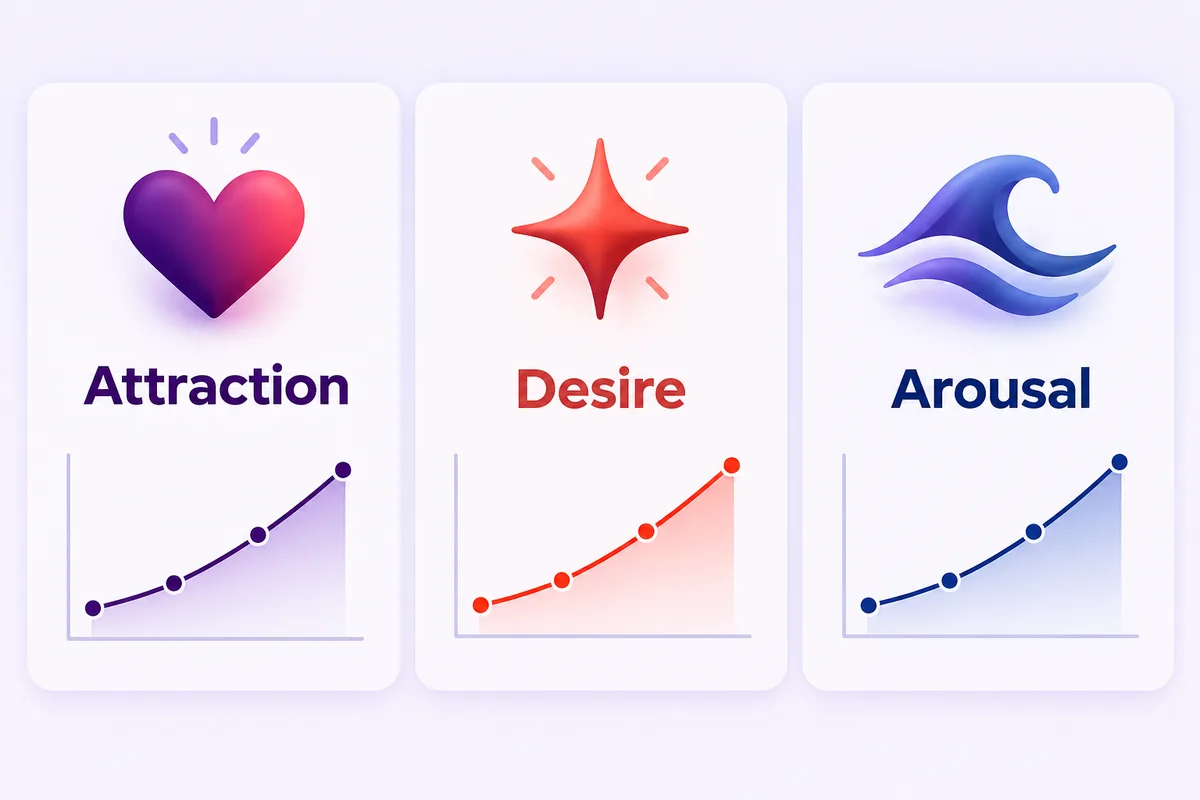
Attraction, desire and arousal side by side
Three terms are easy to blur. Each answers a different question.
| Attraction | Desire | Arousal | |
|---|---|---|---|
| What it is | Sexual interest in a person; complex and not based only on looks or personality | The wish to engage in sexual activity | Being turned on, with physical and emotional changes |
| What it points to | A person, which is why ISSM defines asexuality by its absence | Sexual activity | A state of body and mind, which can follow touch, fantasy or erotic material |
| Typical signs | Leaning in, eye contact and touch can be signs of potential attraction | Feeling desire to be sexual, which sources call sex drive or libido | Faster heart rate and breathing, flushing, more blood flow to the genitals |
| Where it is covered | This page | Arousal vs. desire | What sexual arousal is |
Can you be aroused without attraction?
Planned Parenthood lists several triggers of arousal: sexual stimulation alone, fantasy or sexual thoughts, and reading, watching or listening to erotic material. The page does not discuss attraction.
The Asexuality Archive is a community education site. It states that arousal is a physical response and does not require sexual attraction. It says attraction is one trigger of arousal among many.
The sources used here include no controlled study of this question. The point rests on definitions and on a community source. Treat it as a framework, not a measured result.
Asexual, graysexual and demisexual: how sources define the terms
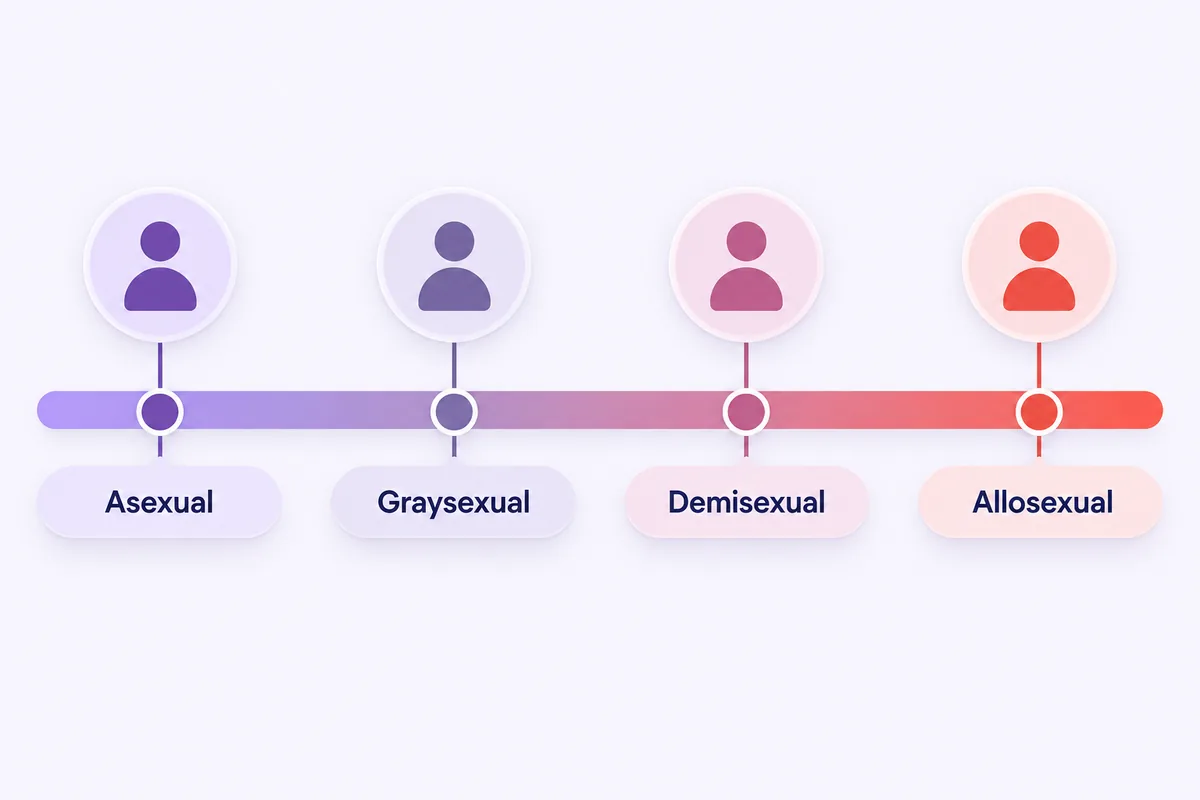
The International Society for Sexual Medicine (ISSM) describes asexual people as those who do not feel sexual attraction or want partnered sex. Some may still be interested in masturbation. ISSM says a person’s own label matters most in the definition.
| Term | How ISSM describes it |
|---|---|
| Asexual | Does not feel sexual attraction or interest in partnered sex; may still be interested in masturbation |
| Graysexual | Falls between asexual and sexual, which may mean occasionally feeling romantic or sexual attraction |
| Demisexual | Feels sexual attraction only after a strong emotional bond has formed |
Three further points from the same source:
- Asexuality is considered a sexual orientation, as bisexuality and heterosexuality are.
- It differs from celibacy, which is a choice about behavior.
- Some asexual people want romantic relationships and some do not.
- Some choose to have sex for reasons such as curiosity or a wish to please a partner.
A 2021 eye-tracking study compared 29 asexual people with 25 heterosexual women who have sexual interest/arousal disorder. It tracked where first glances went when people viewed sexual and neutral images. It did not measure arousal or desire. On two of three indices of initial attention, women with the disorder showed an initial attention preference for sexual over neutral images compared with asexual participants. People who identified as demisexual were left out of the analyses. The authors say early attention may help tell the groups apart.
Asexuality is not a disorder
ISSM considers asexuality a sexual orientation. The Merck Manual’s page on sexual interest/arousal disorder in women sets two conditions. Lack of interest counts as a disorder only if it distresses the woman and interest is absent throughout the sexual experience. That page does not mention asexuality, so the link is this page’s.
Even so, the same lack of interest can mean two different things. For one person it is part of who they are. For another it is a change that bothers them. The 2021 study above compared the two groups on one early-attention measure. If a change in interest or arousal distresses you, see difficulty getting aroused.
When arousal is misread as attraction
Arousal in the body is not always sexual, and it is not always about the person nearby. Psychology Today describes misattribution of arousal: nonsexual arousal can be confused with sexual arousal. Its examples are people who cross a scary bridge or ride a roller-coaster together.

This is a confusion between two kinds of arousal. That is a reason not to read a body response, in yourself or in someone else, as proof of attraction. The same page lists leaning in, eye contact and touch as signs of potential attraction. Those are signs of interest in a person, and not of arousal alone. The related question of anxiety and arousal is covered in stress and anxiety.
Frequently asked questions
Is sexual attraction the same as sexual desire?
No. The Merck Manual describes desire as the wish to engage in sexual activity. Thoughts, words, sights, smell or touch may trigger it. Attraction is sexual interest in a person, which Psychology Today describes as complex. See arousal vs. desire.
Can a person be aroused without feeling attracted to anyone?
Planned Parenthood lists stimulation alone, fantasy and erotic material as triggers of arousal. It does not discuss attraction. A community source for asexual people says arousal does not require sexual attraction. The sources used here include no controlled research on this exact question.
Is asexuality the same as having no arousal?
Not by definition. ISSM defines asexuality by the lack of sexual attraction and of interest in partnered sex. Its definition does not mention arousal. The Asexuality Archive, a community source, says most asexual people can get aroused. It adds that if someone cannot get aroused at all, something else may be at work and a doctor can help.
What is demisexuality?
ISSM describes it as feeling sexual attraction only after a strong emotional bond has formed. It places demisexuality under graysexuality, the area between asexual and sexual.
Does being aroused mean someone is attracted to you?
Not necessarily. Nonsexual arousal can be mistaken for sexual arousal. Planned Parenthood lists several triggers of arousal, such as stimulation alone, fantasy and erotic material. A clinical psychologist writes that a physical sexual response and desire for sex are not always connected.
Keeping the terms apart
Attraction points toward a person, desire toward activity, and arousal describes the body and mind. They can show up together or apart.
How people name their own experience matters most. If you want to know more, arousal vs. desire covers the second pair, and the overview of sexual arousal shows how the pieces fit.
Sources
- Sexual Attraction and Desire - Psychology Today
- Arousal - Planned Parenthood
- What Is Asexuality? - International Society for Sexual Medicine
- Overview of Sexual Function and Dysfunction in Men - Merck Manual Consumer Version
- Sexual Response Cycle: Order, Phases & What To Know - Cleveland Clinic
- An Asexual’s Guide To … Arousal - Asexuality Archive
- Asexuality vs. sexual interest/arousal disorder: Examining group differences in initial attention to sexual stimuli - PLoS ONE (PMC)
- Sexual Interest/Arousal Disorder - Merck Manual Consumer Version
- Arousal Non-concordance and Involuntary Sexual Response - Psychology Professional Development (psychpd.com.au)