Difficulty Getting Aroused
Trouble getting aroused is common and often has more than one cause. Learn the main causes, when it counts as a disorder, and when to see a doctor.

General education, not medical advice. If something here worries you, talk with a clinician.
Table of Contents
If getting aroused has become hard, you are in large company. Cleveland Clinic reports that up to 43% of females and 31% of males report some degree of sexual dysfunction. The cause is rarely a single thing. Hormones, health conditions, medicines, stress, past experiences and relationship problems can each play a part.
The Merck Manual says temporary changes in desire or arousal are common throughout a woman’s sexual life. A problem that lasts and bothers you is worth taking seriously, because treatment depends on the cause. This is general education, not a diagnosis. For the basics, see what sexual arousal is.
What difficulty getting aroused can mean
“Difficulty getting aroused” covers several experiences. The table lists the patterns that sources describe.
| Pattern | What happens |
|---|---|
| Subjective type (women) | A woman does not feel aroused by any type of stimulation, though her body may respond with swelling and more secretions. |
| Genital type (women) | A woman feels aroused by non-genital stimulation, such as an erotic video, but her genitals do not respond to touch. |
| Genital arousal disorder | Trouble getting or staying aroused, together with feeling sad or worried about it. |
| Erectile dysfunction, or ED (men) | A condition that prevents getting or keeping an erection firm enough for sex. |
Problems can occur at any point of the sexual response cycle, Cleveland Clinic says.
Symptoms and signs
Cleveland Clinic groups the signs of sexual dysfunction by who they affect most. Difficulty becoming aroused is on the list for anyone.
| Who it affects most | Examples |
|---|---|
| Males more often | Inability to achieve or maintain an erection; absent or delayed ejaculation; premature ejaculation |
| Females more often | Inability to reach orgasm; vaginal dryness before and during intercourse; vaginismus |
| Anyone | Low interest in sex; inability to become aroused; pain during intercourse |
The same source says sexual dysfunction can affect anyone at any age, although it is more common over 40. It also lists low interest and inability to become aroused as separate problems.
Common causes
Most causes fall into a few groups, and several can be present at once.
| Group | Examples | Source |
|---|---|---|
| Physical health | Cancer, diabetes, heart problems, multiple sclerosis, bladder problems; for ED, diseases of blood vessels, nerves or hormones | |
| Hormones and life stage | Low sex hormone levels, menopause, recent pregnancy, birth or breastfeeding | |
| Medicines | Antidepressants, blood pressure medicines, chemotherapy; for ED also antihistamines, diuretics, some pain relievers and sedatives | |
| Mind and stress | Depression, anxiety, stress, a history of sexual trauma; for ED also low self-esteem or negative body image | |
| Relationship | Problems with a partner, relationship issues | |
| Lifestyle | For ED, too little physical activity, heavy drinking and recreational drug use |
ED may be a symptom of another health problem. It becomes more common with age, but it is not a routine part of aging.
A small study of women found that high chronic stress was linked to lower genital arousal but not lower mental arousal, and that distraction was the main predictor. The study had 15 women in each group, so treat it as an early signal.
If you suspect a medicine is involved, talk to the prescriber before changing anything.
Stress and worry have a page of their own: stress, anxiety and sexual arousal.
Medicines that can affect arousal
Both prescription and over-the-counter medicines can have sexual side effects. Some affect interest in sex, and others affect the ability to become aroused or reach orgasm.
Cleveland Clinic ties these groups to low interest, inability to become aroused and difficulty reaching orgasm:
- Antidepressants, including tricyclics, MAOIs and SSRIs.
- Antipsychotic medicines.
- Lithium.
It ties some over-the-counter antihistamines and decongestants, and some blood pressure medicines, to erectile dysfunction.
Only a prescriber can judge whether a medicine is responsible, so do not stop one on your own. When a medicine is the cause, a change in the medicine may help.
For a closer look at which medicines are linked to sexual side effects, see medications and sexual arousal.
When it counts as a disorder
Not every difficulty is a disorder. The Merck Manual describes the criteria for women. Doctors look for a lack of or decrease in at least three of several listed features, present for at least 6 months and causing significant distress. Lack of interest and inability to be aroused count as a disorder only if they cause distress and interest is absent throughout the sexual experience. Distress is part of the definition at Planned Parenthood too, which refers to feeling sad or worried about the problem.
Many people have some difficulty at some point. Cleveland Clinic reports that up to 43% of females and 31% of males report some degree of sexual dysfunction. The same page calls sexual dysfunction very common and highly treatable.
How a clinician looks for the cause
A visit usually starts with a conversation. The provider takes a complete history of symptoms and does a physical exam. Lab testing plays a very limited role in diagnosing sexual dysfunction, the clinic says.

The provider also asks about attitudes toward sex and about relationship concerns, anxiety, sexual history, medications, and alcohol or drug use. Planned Parenthood adds that a clinician may draw blood to check for medical issues. Bring a list of the medicines and supplements you take.
What can help
Treatment depends on the cause. A doctor may ask about your health and sex life, examine you and order blood tests.
Planned Parenthood lists these things people can try:
- Talking with a partner about likes and dislikes.
- Using lubricants or moisturizers.
- Reducing stress through sleep, meditation and breathing exercises.
- Limiting alcohol and avoiding smoking and drugs.
- Exercising regularly.
- Pelvic floor physical therapy.
- Counseling with someone who specializes in sex and relationship problems.
- Medicines, if prescribed by a doctor or nurse.
The Merck Manual adds that improving the relationship and the setting for sex can help, as can mindfulness-based cognitive therapy.
These are options to discuss with a professional, not a plan to follow alone.
Treatment options
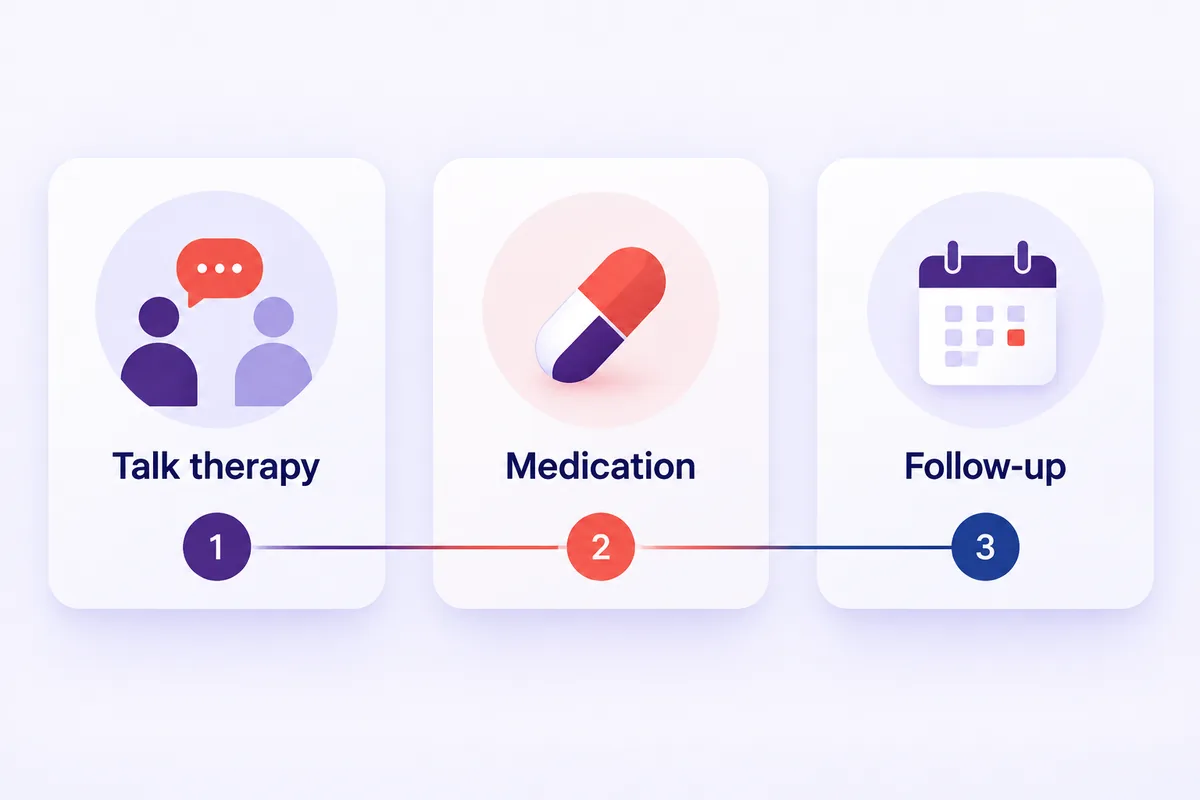
Cleveland Clinic says most types of sexual dysfunction are treated by addressing the underlying physical or psychological problem. The main approaches are below.
| Approach | What it involves |
|---|---|
| Medicine changes | If a medicine is the cause, a change in the medicine may help |
| Hormone treatment | Shots, pills or creams when hormones are deficient, and hormone therapy for low desire linked to menopause |
| Medicines for erections | Drugs that help some males get or keep an erection |
| Medicines for low desire in females | Cleveland Clinic lists medicines that can help increase sexual desire in females; a clinician decides what fits |
| Mechanical aids | Vacuum devices and implants for ED, a vacuum device for females, dilators, and vibrators |
| Sex therapy | Sex therapists help with problems that a primary care provider cannot address |
| Behavioral treatment and psychotherapy | Techniques to change harmful patterns, and therapy for past trauma, anxiety, guilt and poor body image |
| Education and communication | Learning about sexual responses and talking openly with partners |
When to see a health professional
Contact a doctor or nurse if the problem lasts three months or longer, or if it interferes with your relationships or causes you or a partner distress.
ED in particular may signal another health problem, such as a blood vessel or hormone condition. Be honest with the clinician, since doctors and nurses have heard it all.
Who can help
Different professionals cover different parts of the problem.
| Professional | What they can do |
|---|---|
| Primary care doctor or nurse | Takes a history, examines you, checks medicines, and orders tests when needed |
| Doctor treating an underlying condition | Treats a physical cause such as a hormone deficiency or a blood vessel disease |
| Sex therapist | Treats sexual problems that a primary care provider cannot address |
| Counselor or psychotherapist | Helps with trauma, anxiety, guilt, body image and relationship problems |
| Pelvic floor physical therapist | Provides physical therapy for the muscles around the genitals |
Will it get better?
The outlook is generally good. Most people return to a healthy and pleasant sex life after treatment, and most causes are treatable, according to Cleveland Clinic. How well treatment works depends on the underlying cause.
The same source says you cannot prevent sexual dysfunction, and that in most cases you did nothing to cause it.
Frequently asked questions
Why am I struggling to be turned on?
Usually for more than one reason. Hormones, health conditions, medicines, stress or anxiety, relationship problems and past trauma are the common ones. A doctor can help sort out which apply to you.
Is difficulty getting aroused common?
Sexual problems in general are common. Cleveland Clinic says up to 43% of females and 31% of males report some degree of sexual dysfunction. That figure covers all kinds of sexual dysfunction, not arousal difficulty alone. For ED, NIDDK says research suggests that 30 million to 50 million men in the United States are affected.
Can stress make it harder to get aroused?
It can. In one small study, women with high chronic stress had lower genital arousal than women with average stress, and distraction was the main predictor. Another study of women found a curved relationship between anxiety and physical arousal, so more anxiety did not always mean less arousal. Neither study included men.
Will difficulty getting aroused go away?
Often, with the right treatment. Cleveland Clinic says the outlook is generally good, and most people return to a healthy sex life after treatment.
Is erectile dysfunction the same as low arousal?
They are related but not the same thing. ED is the inability to get or keep an erection firm enough for sex. Cleveland Clinic lists erectile dysfunction and inability to become aroused as separate symptoms.
Where to start
Start by noting when the difficulty began and what changed around then: a new medicine, a stressful season, a health issue, a shift in the relationship. That list is useful to bring to a doctor or nurse, who can look for the cause and suggest treatment. Most causes are treatable.
For how arousal normally works, see what causes sexual arousal.
Sources
- Sexual Dysfunction: Disorders, Causes, Types & Treatment - Cleveland Clinic
- Genital Arousal Disorder - Planned Parenthood
- Sexual Interest/Arousal Disorder - Merck Manual Consumer Version
- Definition & Facts for Erectile Dysfunction - NIDDK, National Institutes of Health
- Symptoms & Causes of Erectile Dysfunction - NIDDK, National Institutes of Health
- Chronic stress and sexual function in women - Journal of Sexual Medicine (PMC)
- The impact of anxiety on sexual arousal in women - Behaviour Research and Therapy (PMC)