Female Sexual Arousal
Female sexual arousal combines mental excitement with physical changes such as more blood flow. Learn what happens, how fast, and why the two can differ.

General education, not medical advice. If something here worries you, talk with a clinician.
Table of Contents
Female sexual arousal has two parts that usually travel together: a mental feeling of excitement and a physical response in the genitals. The Merck Manual calls these the subjective and physical elements of arousal.
They do not always match, and neither one alone tells the whole story. The sources used here say “women” or “females,” and this page follows their wording. For the general definition, see what sexual arousal is.
The mental and physical parts
Arousal has a subjective element, which is sexual excitement that is felt and thought about. It also has a physical element, an increase in blood flow to the genital area.
Usually the two happen together. The Merck Manual notes that blood flow may increase without the woman being aware of it and without her feeling aroused.
What changes in the body
Health sources describe these physical changes. They are possibilities, and no one has all of them every time.
| Change | What may happen |
|---|---|
| Blood flow to the genitals | Increases, so the clitoris and vaginal walls swell, a process called engorgement |
| Lubrication | Vaginal secretions increase and provide lubrication |
| Heart rate and breathing | Blood pressure, heart rate, breathing and temperature go up |
| Nipples, labia and clitoris | Fill with blood and become more sensitive |
| Vagina | Continues to swell as arousal builds, and its walls darken |
| Clitoris | Becomes highly sensitive |
| Muscles | Muscle tension keeps rising, and spasms may begin in the feet, face and hands |
Planned Parenthood says feeling aroused can lead to many physical reactions or none at all.
How fast it happens, and how age changes it
The Merck Manual describes engorgement and lubrication as a reflex that occurs within seconds of a sexual stimulus. The brain sensing something sexual triggers it, and the stimulus need not be erotic or feel arousing.
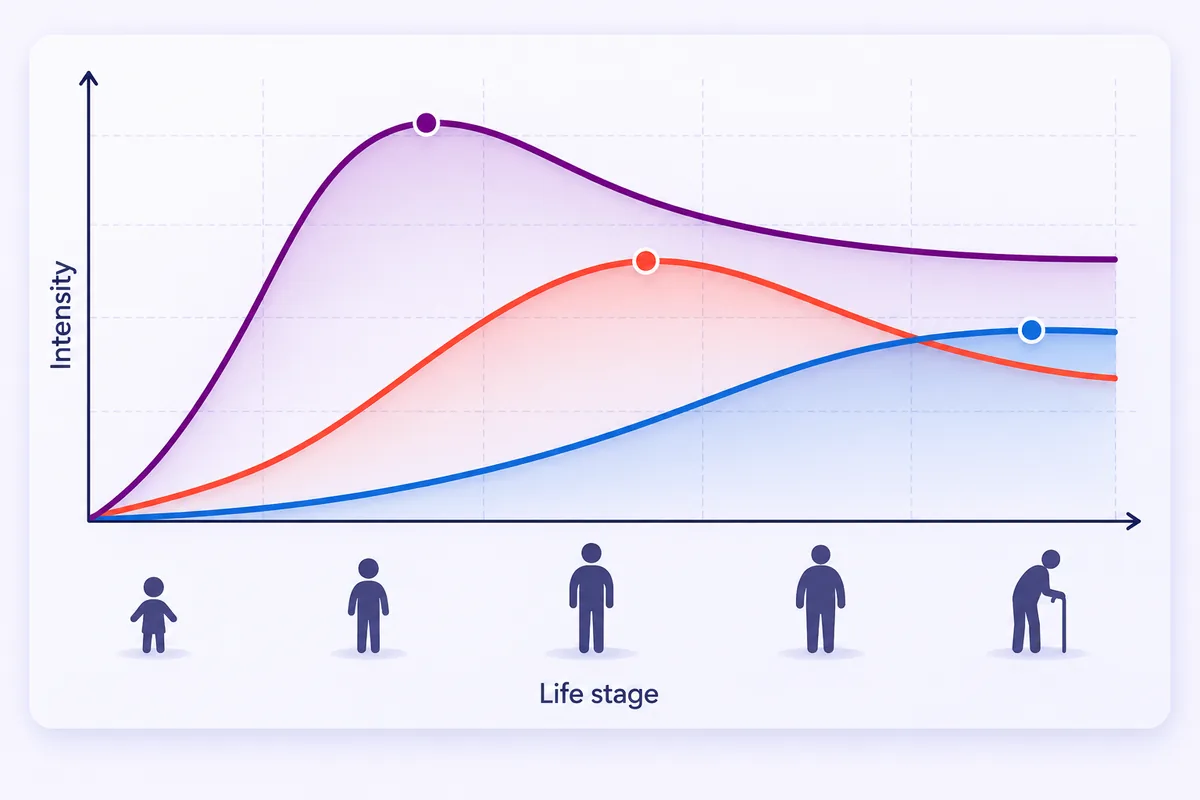
Age changes parts of the picture. Genital tingling and throbbing are more typically reported by younger women. As women age, genital blood flow from sexual stimuli decreases, but lubrication in response to stimuli may not.
Desire and arousal in women
For women, desire and arousal are often closely related. Desire may be obvious at the outset, or it may build once sexual activity and stimulation begin. The International Society for Sexual Medicine calls the second pattern responsive desire and notes that qualitative studies find women often experience arousal before desire.
That is a pattern across studies, and no rule for any one person. The page on arousal vs. desire sets out the difference.
How arousal is measured in research
Laboratory studies are one way to record physical arousal in women. In two of the studies cited here, participants watched a film with sexual content while genital response and self-reported arousal were recorded.
One genital measure used in this research is vaginal pulse amplitude. Researchers then compare that reading with the woman’s own rating. In a meta-analysis of 132 studies, average agreement in women was weak (r = .26).
When feelings and the body do not match
The two parts do not always match. The Merck Manual says blood flow may increase without the woman being aware of it and without her feeling aroused. It also describes two types of arousal problem:

- In the subjective type, a woman does not feel aroused by stimulation but may have a physical response such as clitoral swelling.
- In the genital type, she feels aroused by non-genital stimulation, such as an erotic video, but does not respond to genital stimulation.
Laboratory research points the same way:
- A meta-analysis of 132 studies found weaker agreement between self-reported and genital arousal in women (r = .26) than in men (r = .66).
- A 2020 study of 55 women found tremendous between-person variability in how subjective and physical arousal related, both in women with and without arousal concerns.
- Interoception, the awareness of changes within the body, moderated that link.
The authors of the 2020 study question using this agreement as a clinical outcome in treatment research. The full discussion is in arousal non-concordance.
After arousal: resolution
After arousal peaks, the body returns to its resting state. The Merck Manual calls this resolution: a sense of well-being and widespread muscular relaxation that typically follows orgasm. It can also occur slowly after highly arousing activity without orgasm.
Cleveland Clinic adds that some females can return to orgasm with further stimulation. The Merck Manual likewise says some women can respond to additional stimulation almost immediately after resolution.
Factors that can change arousal
Many things can raise or lower arousal. The sources name these:

- Mental health and the relationship. A woman’s sexual response is strongly influenced by her mental health and by the quality of her relationship with her partner.
- Depression and anxiety. The Merck Manual lists both among many factors that affect interest and arousal.
- Menopause. The same page lists menopause among those factors, and Cleveland Clinic names low estrogen as a hormone change that can contribute to sexual dysfunction.
- Stress. In one small study, 15 women with high chronic stress had lower genital arousal than 15 women with average stress, though not lower psychological arousal. Distraction was the only significant predictor.
- Medicines. Planned Parenthood names antidepressants, blood pressure medicines and chemotherapy as medicines that can contribute to arousal problems.
- Health and hormones. Medical problems such as cancer, diabetes or heart problems, and low sex hormone levels, can play a part.
- Life events. Recent pregnancy, birth or breastfeeding can affect arousal.
- Experiences and body image. Sexual abuse or trauma and body image are listed causes.
Related pages cover stress and anxiety and medications.
When to talk to a clinician
Short-lived changes in desire or arousal are common. Cleveland Clinic suggests contacting a provider if sexual problems last three months or longer, or if they cause distress.
The Merck Manual says lack of interest and inability to be aroused count as a disorder only if they cause distress and interest is absent throughout the sexual experience. Treatment depends on the cause. See difficulty getting aroused for causes and options.
Frequently asked questions
What are the signs a woman is aroused?
Physical signs may include a faster heart rate and breathing, flushing, harder nipples, and swelling and wetness of the genitals. Planned Parenthood says arousal can bring many physical reactions or none at all.
Body signals alone do not show how someone feels or whether they want sex.
Can a woman be physically aroused and not feel it?
Yes. The Merck Manual says blood flow may increase without the woman being aware of it and without her feeling aroused. In the subjective type of arousal problem described there, a woman does not feel aroused by stimulation but may have a physical response such as clitoral swelling.
Is female arousal the same as male arousal?
A neurology review states that the neural mechanisms of desire, arousal and orgasm are the same in males and females, while sexual responses differ between genders. The same review says these systems are not fully understood. See male sexual arousal.
Does arousal always mean a woman wants sex?
No. A clinical psychologist writes that physical sexual response and desire for sex are not always connected. Arousal also does not mean consent, which is covered in arousal and consent.
Does arousal change with age?
Genital blood flow from sexual stimuli decreases with age, but lubrication may not. Initial desire typically lessens with age but increases with a new partner at any age.
What to take from this
Female arousal is a mental and a physical response, and the two can come apart. A body signal is not a verdict on what someone feels or wants.
Variation between people is large, even among women with no concerns. If a lasting change bothers you, a clinician can look for the cause. For how arousal differs from wanting sex, see arousal vs. desire.
Sources
- Overview of Sexual Function and Dysfunction in Women - Merck Manual Consumer Version
- Arousal - Planned Parenthood
- Sexual Response Cycle: Order, Phases & What To Know - Cleveland Clinic
- What Is Responsive Sexual Desire? - International Society for Sexual Medicine
- Study of Sexual Concordance in Men and Women with Different Typologies of Adherence to the Sexual Double Standard - International Journal of Clinical and Health Psychology (PMC)
- The Relationship between Subjective and Physiological Sexual Arousal in Women with and without Arousal Concerns - Journal of Sex & Marital Therapy (PubMed)
- The impact of anxiety on sexual arousal in women - Behaviour Research and Therapy (PMC)
- Agreement of self-reported and genital measures of sexual arousal in men and women: a meta-analysis - Archives of Sexual Behavior (PubMed)
- Sexual Interest/Arousal Disorder - Merck Manual Consumer Version
- Sexual Dysfunction: Disorders, Causes, Types & Treatment - Cleveland Clinic
- Chronic stress and sexual function in women - Journal of Sexual Medicine (PMC)
- Genital Arousal Disorder - Planned Parenthood
- Arousal Non-concordance and Involuntary Sexual Response - Psychology Professional Development (psychpd.com.au)
- Neuroanatomy and function of human sexual behavior: A neglected or unknown issue? - Brain and Behavior (PMC)
- What is sexual consent? - Rape Crisis England & Wales